Quick answer
Start small: pick one deck that fits your household, set a no-pressure tone, and draw one card at a time during a calm moment. Use the questions to name feelings, share stories, and remind each other of past challenges you've already survived. Stop while the conversation still feels connecting, not draining.
Why hard seasons need a different approach
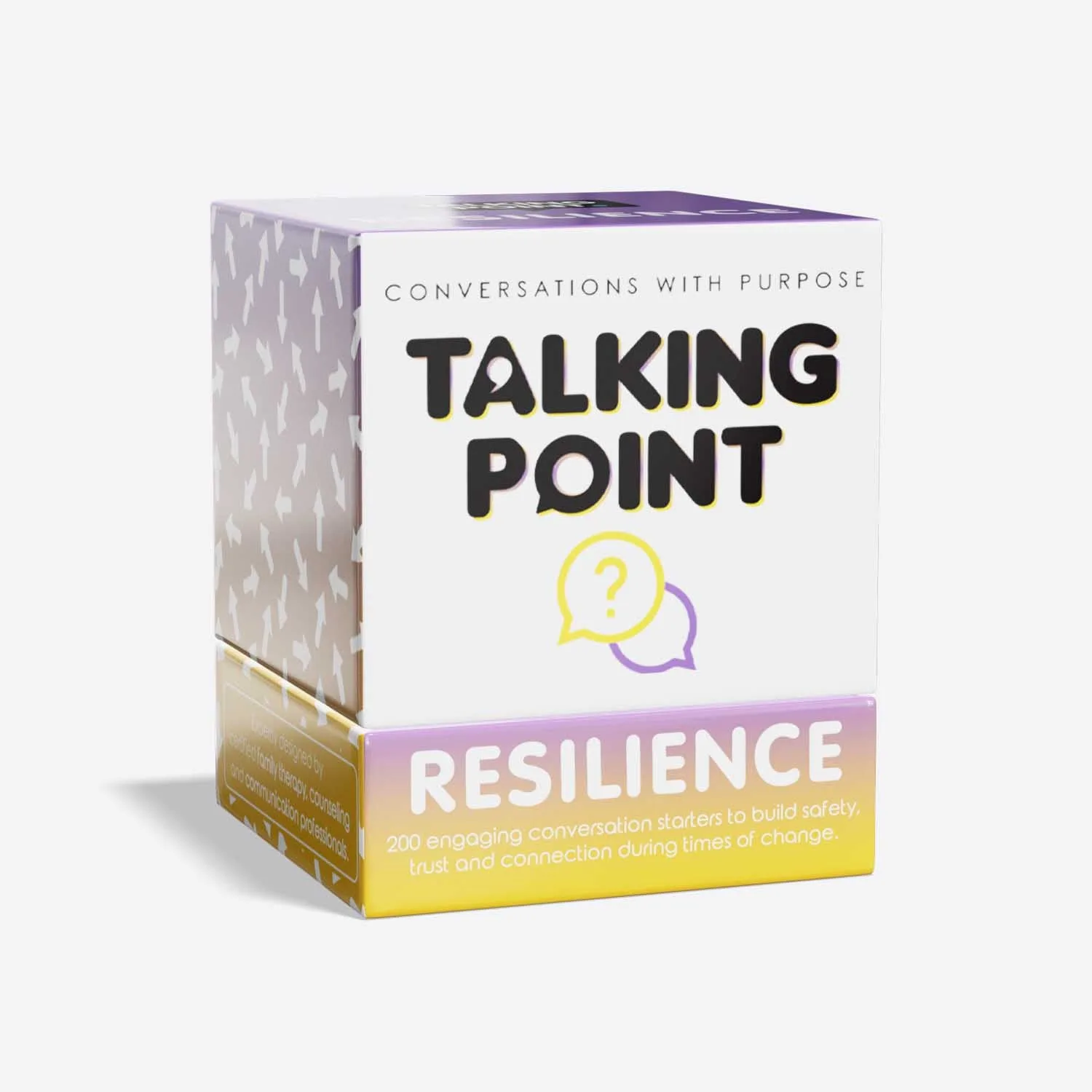
When your family is in a difficult season, the usual conversation starters can feel too light or too intrusive. Resilience conversation cards work best when you treat them as a gentle structure, not a therapy session. The goal is to create small, repeatable moments where people feel heard and remember their own strength.
Resilience
That's why timing matters more than the cards themselves. A deck opened during a calm evening walk or a quiet Sunday morning will land very differently than one pulled out in the middle of an argument or a crisis. Choose a moment when everyone has enough emotional bandwidth to listen, even if only for ten minutes.
Step 1: Choose the deck that matches your household
Not every resilience deck fits every family. If you're supporting younger kids or want something that feels like a game, a general family deck with light, open-ended prompts is a safer starting point. If your hard season involves questions of faith or meaning, a faith-based deck can give the conversation a shared vocabulary. If the challenge is generational, such as caring for an aging parent or connecting with teens, a deck designed for mixed ages keeps everyone on equal footing.
The practical move is to pick one deck and commit to it for a month. Switching decks every week signals that the conversation itself is temporary. Consistency is what turns coping with hard times cards into a familiar ritual rather than an emergency intervention.
Step 2: Set the ground rules before you draw
Before the first card comes out, agree on three things: anyone can pass, no one has to explain their answer, and nothing said in the circle gets repeated outside it. These rules sound simple, but they are what make emotional strength conversation starters feel safe instead of performative.
A common mistake is letting one person dominate or turning a card into a lecture. If that starts happening, gently redirect by saying, 'Let's hear from someone who hasn't gone yet.' You're not policing the conversation; you're protecting the space so quieter family members stay in it.
Step 3: Draw one card at a time and go slow
Resist the urge to work through the whole deck. One card can carry a twenty-minute conversation if you let it. Read the prompt aloud, then wait. Silence is not failure; it's often the moment someone is deciding whether to be honest.
If a question lands too close to a raw wound, offer an alternative: 'We can skip this one or come back to it next week.' That option keeps the deck from feeling like an interrogation. Over time, the cards become a way to check in on heavy topics without ambushing anyone.
Step 4: Connect the card to a real memory or action
After someone answers, ask a follow-up that ties the answer to something concrete: 'When did you first notice that about yourself?' or 'What's one small thing we could try this week?' This turns reflection into a family resilience activity rather than a one-off talk.
You can also use the deck to mark progress. Keep a note of one strength or strategy that came up each time you play. Reading those notes back a month later shows your family evidence of building resilience at home, even when the hard season hasn't ended yet.
Your five-step resilience card routine
- Pick the right deck for your household: Match the deck to who is in the room: a general family deck for younger kids, a generations deck for mixed ages, or a faith-based deck when shared beliefs are part of how you cope. Choose one deck and stick with it for at least a month. Checkpoint: if you're debating between three decks, you're overthinking it. Pick the one that feels least intimidating to the most quiet person in your family.
- Agree on the ground rules first: Before drawing a card, confirm that anyone can pass, no one has to explain, and what's shared stays in the room. These rules protect the space and keep emotional strength conversation starters from feeling like a test. Common mistake: skipping this step because it feels awkward. The awkwardness now prevents real hurt later.
- Draw one card and let the silence work: Read one prompt, then wait. Don't rush to fill the pause or answer for someone else. If a question hits too close to a raw spot, offer to skip it or return to it next week. Checkpoint: if you've gone through more than three cards in one sitting, you're probably moving too fast for a hard season.
- Turn the answer into one concrete next step: After someone shares, ask a follow-up that connects the thought to action: 'What's one small thing we could try this week?' Write down one strength or strategy that came up. This is what makes it a family resilience activity instead of just a talk. Keep the notes somewhere everyone can see them.
- Stop while it still feels connecting: End the session before fatigue or tension sets in. A ten-minute conversation that ends warmly will be repeated; a ninety-minute one that ends in tears may not be. Next step: schedule the next session now, even if it's just a placeholder. Consistency is what builds resilience at home over time.
Decks that fit this process
- Family Deck: The Family Deck is a set of beautifully crafted playing cards designed to celebrate your closest loved ones through meaningful conversation starters, and it is available in special editions like For Mom, For Dad, and Love You, plus a 3-deck bundle. The special editions let you tailor the prompts to the person who needs encouragement most, and the bundle keeps a deck in reach for game nights, gatherings, or quiet check-ins.
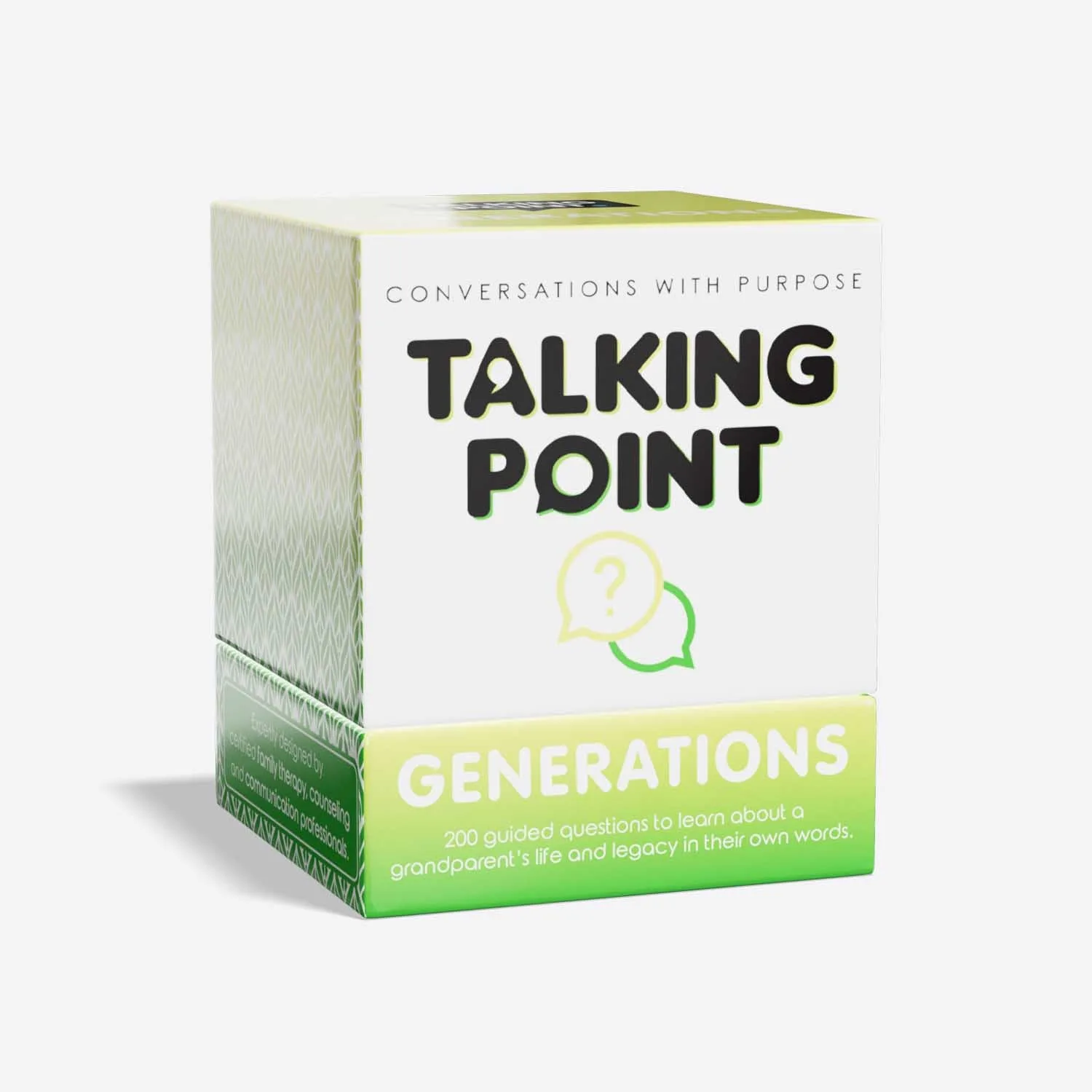
- Generations: Generations is a thoughtful card set designed to help you connect across ages and share memories with your grandparents, and it is described as perfect for teens and family gatherings. When a hard season involves multiple generations, this deck gives everyone from teens to grandparents a shared way into the conversation without putting one age group on the spot.
- Christian: The Christian Edition is designed to spark meaningful discussions and build a faith-filled home, encouraging open, faith-centered dialogue among family and friends, and it is available in multiple languages. If your family draws strength from shared faith, this deck frames resilience in terms of values and reflection, and the language options help households that speak more than one language at home.