Quick answer
To use a reusable pantyliner for light bladder leaks, choose a mini-long pad made with organic cotton and a waterproof backing, position it snugly against your underwear, and wash it properly after each use to maintain absorbency and hygiene.
Why a reusable pantyliner works for light bladder leaks
Light bladder leaks, often caused by sneezing, laughing, or exercise, involve small amounts of urine. A reusable pantyliner is designed for very light flow—think a teaspoon or less—and offers a comfortable, eco-friendly alternative to disposable incontinence pads. The key is the waterproof layer that prevents leaks from soaking through to your clothes.
Not all pantyliners are created equal. For bladder leaks, you need a pad with a waterproof backing (like PUL) and a soft, absorbent top layer. Organic cotton velour is ideal because it wicks moisture away from the skin while staying gentle on sensitive areas. Avoid pantyliners without a waterproof layer—they won't hold up against liquid leaks.
When to choose a mini-long pad over a regular pad
A mini-long pad, like the Silver Mini-Long Pad, offers a bit more length and width than a standard pantyliner, which helps with positioning and coverage for unexpected leaks. It's suitable for your lightest flow days, ovulation days, or everyday wear, but also works well for light bladder leaks because the extra coverage reduces the chance of side leaks.
For heavier bladder leaks (more than a few teaspoons), consider a dedicated reusable incontinence pad or a heavier flow cloth pad. The mini-long is not designed for heavy or overnight use, and its single-layer construction means it won't hold large volumes. If you experience frequent or heavy leaks, you'll need a pad with more absorbent layers.
How to use a reusable pantyliner for light bladder leaks
- Step 1: Choose the right pad: Select a mini-long pad with a waterproof layer (PUL) and an absorbent top layer like organic cotton velour. Avoid pantyliners without waterproof backing—they won't stop liquid leaks. The Silver Mini-Long Pad is a good option for very light leaks. Check the pad's absorbency: single-layer pads are for drops only, not steady flow.
- Step 2: Position the pad in your underwear: Place the pad with the waterproof backing facing down against your underwear. Center it so the extra length covers the front and back of your underwear's gusset area. Smooth out any wrinkles to ensure full contact with your skin. A common mistake is placing the pad too far back—it should sit where the leak occurs, usually toward the front.
- Step 3: Secure the pad with wings (if present): If your pantyliner has wings, fold them around the edges of your underwear and snap or press them in place. This prevents shifting during movement. If there are no wings, the pad should still stay put due to the snug fit of your underwear. Wings help with stability, but a well-fitting pair of underwear can also keep a wingless pad in place.
- Step 4: Wear and monitor for leaks: Wear the pad for up to 4-6 hours, depending on your leak frequency. Check periodically by feeling the pad's surface—if it feels damp or wet, it's time to change. Do not wait until you feel a leak on your clothes. Change the pad sooner if you're active or coughing/sneezing frequently, as leaks can accumulate faster.
- Step 5: Remove and rinse immediately: After removing, rinse the pad under cold water until the water runs clear. This prevents stains and odor. Do not use hot water, as it can set protein-based stains from urine. Squeeze out excess water gently—do not wring. Rinsing within an hour makes cleaning much easier; dried stains require soaking.
- Step 6: Machine wash properly: Machine wash your reusable pantyliner at up to 60°C (140°F) with your regular laundry. Use a mild, fragrance-free detergent. Avoid fabric softeners, bleach, and dryer sheets, as they can reduce absorbency and damage the waterproof PUL layer. Washing at 60°C sanitizes the pad without harming the organic cotton or PUL.
- Step 7: Dry thoroughly: Air dry the pad flat or hang it. Avoid high heat in the dryer, which can degrade the PUL waterproofing over time. If you must use a dryer, use the lowest heat setting and remove the pad while still slightly damp. A fully dried pad lasts longer and prevents mildew; check that the PUL layer is not cracked or peeling.
Product facts
-
Silver Mini-Long Pad - Reusable Pantyliner Period Pad Incontinence Pad: This is our Mini pad with a little extra length and width. It is made from a single layer of 100% organic cotton velour on top, and is backed with natural 100% organic cotton jersey with a small strip of non-organic waterproof PUL inside. The organic cotton velour top is soft against sensitive skin and wicks moisture, while the PUL strip provides a waterproof barrier—essential for containing light bladder leaks without bulk.
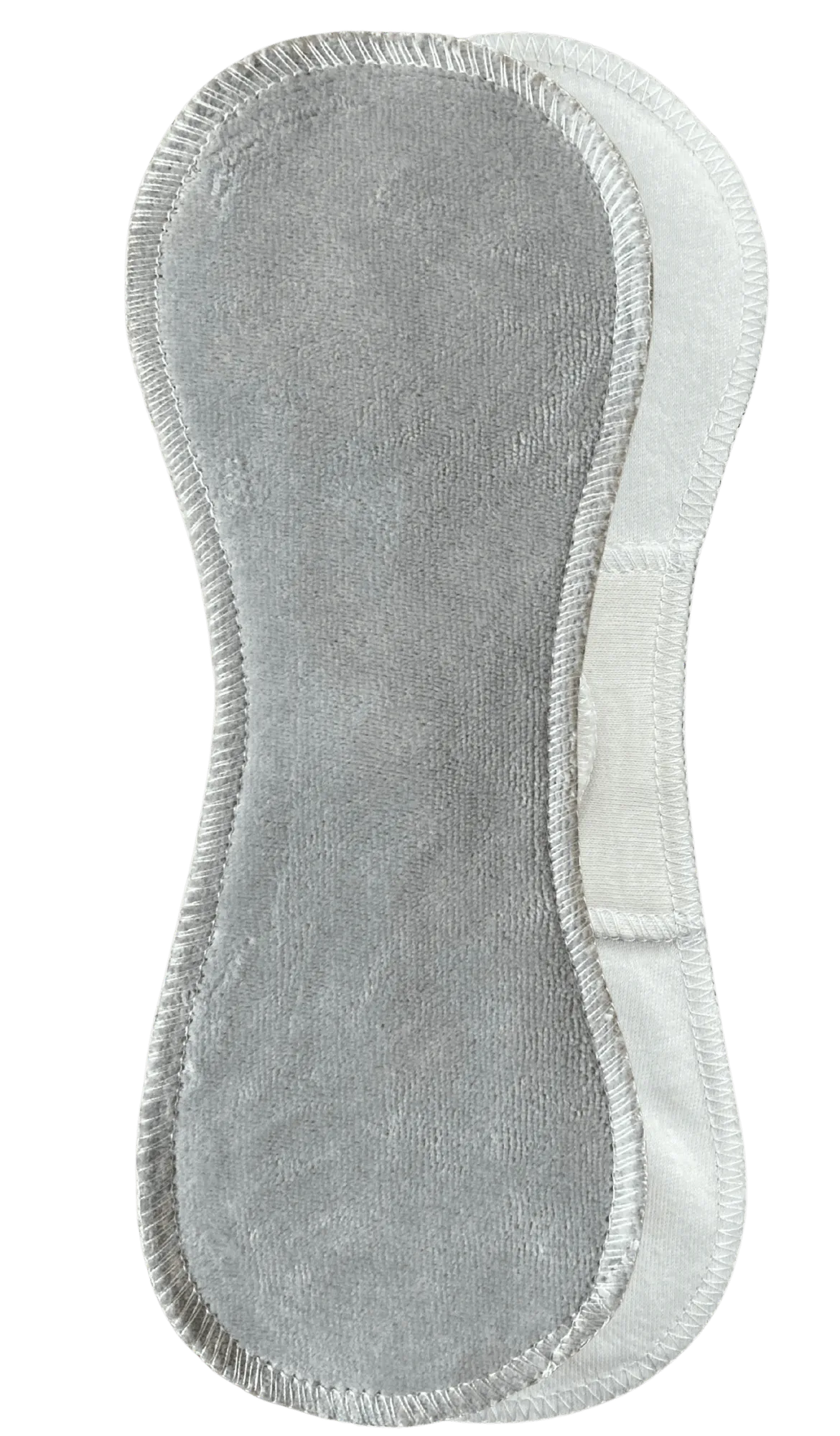
Silver Mini-Long Pad - Reusable Pantyliner Period Pad Incontinence Pad