Quick answer
Attach the EzyDog Seat Belt Restraint to your dog's harness and buckle it into the seat belt receiver. Adjust the tether so your dog can sit or lie down but cannot climb into the front seat.
Why use a seat belt restraint instead of a crate or loose dog
A loose dog in the car is a distraction and a projectile in a sudden stop. The EzyDog Seat Belt Restraint works with your dog's harness to limit movement while still giving them room to be comfortable. It is also required by law in several US states, so using one keeps you compliant and your pup safe.
Important: This restraint must be used with a harness, not a collar
The EzyDog Seat Belt Restraint is designed to attach to a dog harness, not a collar. A collar can injure your dog's neck in a sudden stop. If you do not have a compatible harness, the restraint will not work as intended and could be unsafe.
How to install the EzyDog Seat Belt Restraint
- 1. Attach the restraint to your dog's harness: Clip the seat belt restraint's snap hook to the D-ring on the back of your dog's harness. Make sure the clip is fully closed and secure. Check that the clip cannot accidentally release by tugging gently after attaching.
- 2. Buckle the restraint into the seat belt receiver: Insert the seat belt buckle end of the restraint into the rear seat's seat belt receiver until you hear a click. Pull on the buckle to confirm it is locked. If the buckle does not click, try a different seat belt receiver—some vehicles have different latch shapes.
- 3. Adjust the tether length for comfort and safety: Shorten or lengthen the tether so your dog can sit, stand, or lie down but cannot reach the front seats or put their head out the window. The tether should not be so long that your dog can get tangled. A good rule: your dog should be able to turn around but not jump into the front seat.
- 4. Test the setup before driving: Let your dog move around in the back seat while you observe. Ensure the restraint does not wrap around their legs or neck. Make final adjustments to the tether length if needed. If your dog seems uncomfortable or the restraint twists, try repositioning the harness D-ring or adjusting the tether.
- 5. Check the restraint regularly for wear: Inspect the webbing, stitching, and clip for signs of fraying, cracking, or damage before each trip. Replace the restraint if any part looks worn. A damaged restraint can fail in a crash, so do not skip this check.
Product facts
-
Seat Belt Restraint: One size fits all dog seat belt restraint from EzyDog. Designed to be used with an EzyDog Harness to prevent driver distraction and restrain the dog. This means you need a compatible harness to use the restraint safely; it is not a standalone solution.
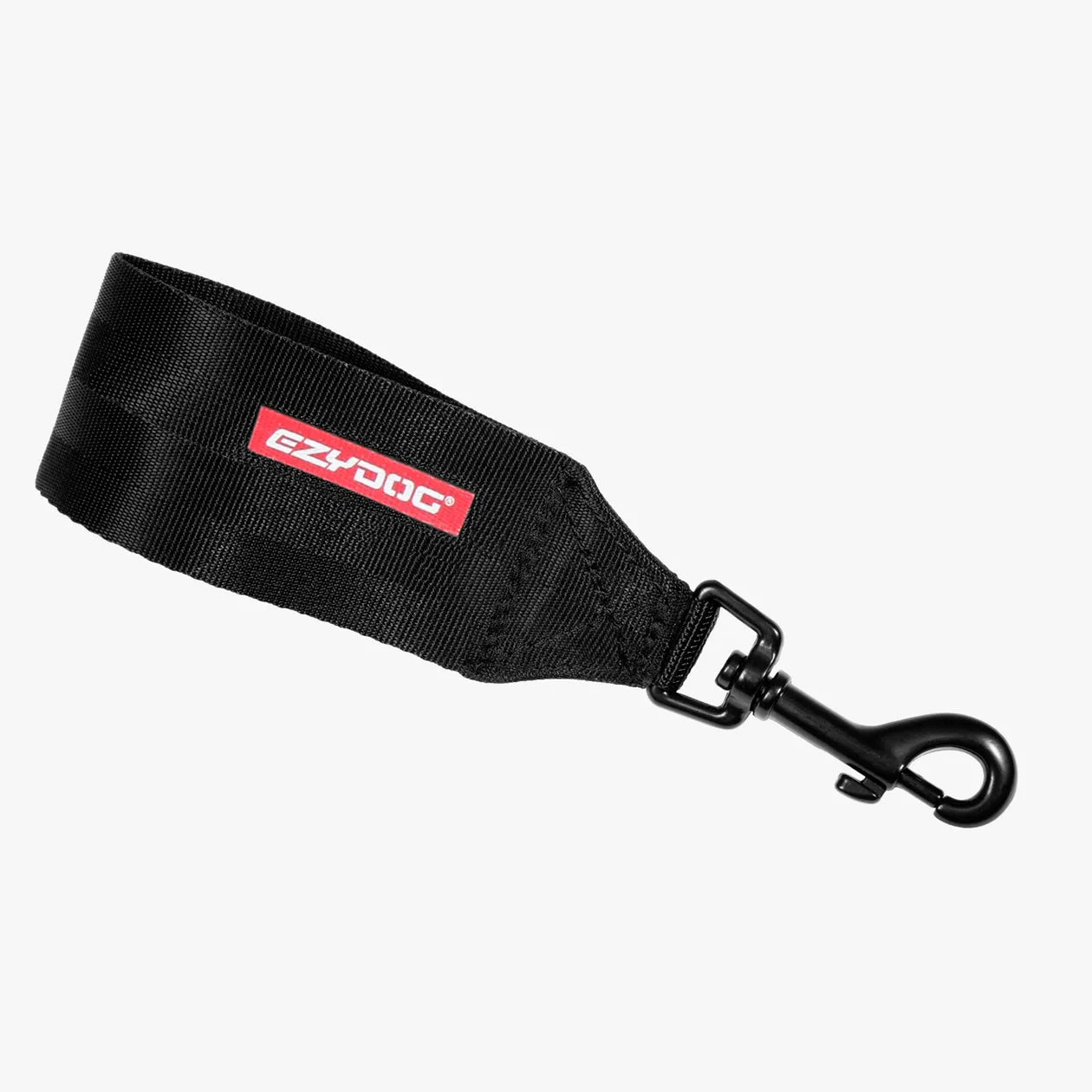
Seat Belt Restraint