Teaching your dog to move away from you on command is a fundamental skill in many dog sports and practical obedience. The 'send away' or 'send out' command directs your dog to a specific target or location, which is essential for activities like agility, IPO/IGP, and even everyday recall. While many trainers rely on verbal cues alone, using a tug toy can make the process more engaging and precise. In this guide, we'll explore how to use a send away tug to teach distance commands effectively, turning play into a powerful training tool.
A send away tug is not just any toy—it's a training aid designed to motivate your dog to move away from you and interact with a target. By incorporating a tug into your distance training, you can build drive, focus, and reliability. Whether you're a professional trainer or a dedicated pet owner, this method can transform your dog's response to distance cues. Let's dive into the step-by-step process and the best tugs to use.
What Is a Send Away Tug and Why Use It?
A send away tug is a tug toy that you can place at a distance or throw to a specific spot, encouraging your dog to run to it and engage. Unlike a standard tug used for close-quarters play, a send away tug is designed to be used in distance training exercises. It often features a long handle or a shape that's easy for your dog to grab and carry back to you, reinforcing the out-and-back pattern of a send away command.
Using a tug for distance training offers several benefits. First, it taps into your dog's natural prey drive, making the exercise more rewarding than a simple verbal cue. Second, it provides a clear visual target, helping your dog understand where to go. Third, it allows you to reward the dog at the target, reinforcing the behavior of moving away from you. This method is especially effective for dogs that are toy-motivated, but it can be adapted for food-motivated dogs as well.
- Choose a tug that is durable and easy for your dog to grip, such as a French Linen Tug or a Rolled Leather Tug.
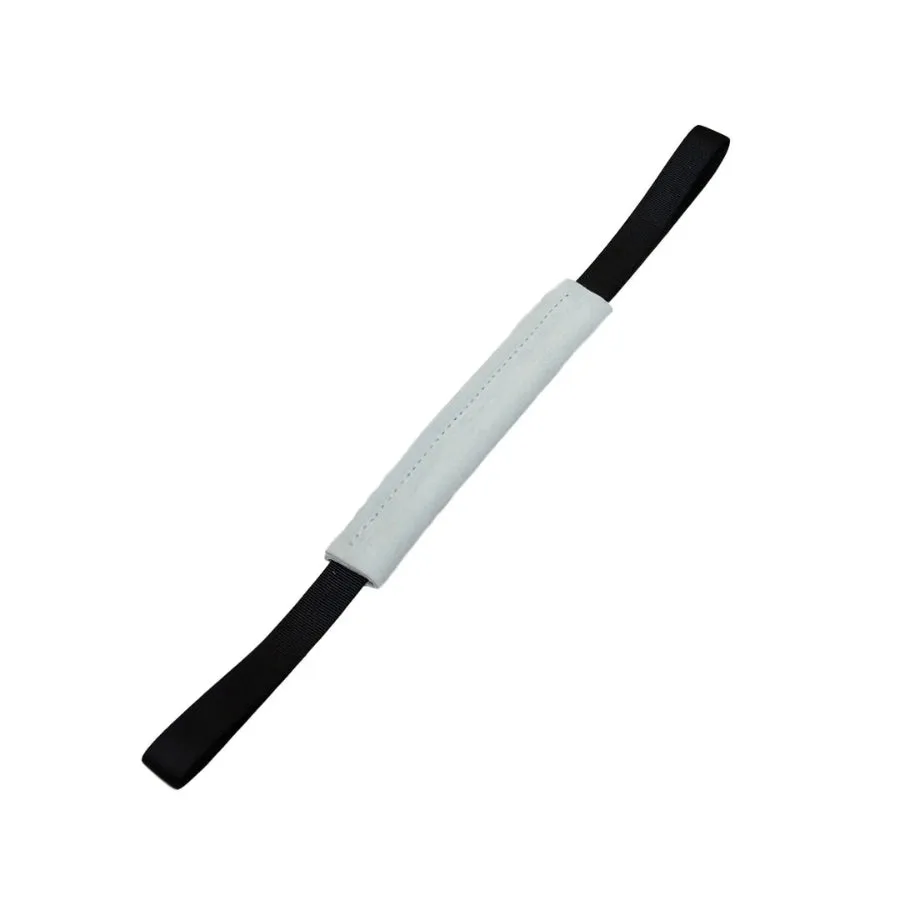
Rolled Leather Tug
- Use a tug that is visible against the training surface to avoid confusion.
- Start with short distances and gradually increase as your dog becomes more reliable.
Step-by-Step: Teaching the Send Away with a Tug
Begin in a low-distraction environment, such as your backyard or a quiet training hall. Have your dog on a long line if needed, and hold the tug in your hand. Start by getting your dog excited about the tug with a quick game of tug-of-war. Then, toss the tug a short distance (about 2-3 meters) and give your verbal cue, such as 'Away' or 'Send.' As your dog runs to the tug, encourage them with your voice. When they pick it up, praise them and let them tug for a few seconds before calling them back.
Repeat this several times, gradually increasing the distance. Once your dog is consistently running to the tug, you can introduce a target, such as a mat or a specific spot on the ground. Place the tug on the target and cue the send away. When your dog reaches the target and grabs the tug, reward them with a game of tug. This teaches your dog that the send away means moving to a specific location, not just chasing a toy.
As your dog becomes more proficient, you can phase out the tug by using a marker word and rewarding with the tug after they return. However, keep the tug as a variable reward to maintain enthusiasm. Practice in different locations and with varying distances to generalize the behavior.
- Always use a clear, consistent verbal cue for the send away.
- Keep training sessions short (5-10 minutes) to maintain focus.
- Use a high-value tug, such as the Rolled Leather Tug, for maximum motivation.
Common Mistakes and How to Avoid Them
One common mistake is using the tug as a lure, pulling the dog towards you instead of sending them away. The tug should be placed or thrown away from you, not used to guide the dog. Another error is rewarding the dog only when they return, which can confuse the send away with a recall. Instead, reward at the target to reinforce the distance behavior.
Also, avoid increasing distance too quickly. If your dog fails, go back to a shorter distance and rebuild success. Consistency is key—use the same cue and hand signal every time. Finally, don't overuse the tug; it should remain a special reward, not a daily toy, to keep its value high.
- Never chase your dog when they have the tug; instead, call them back and reward.
- If your dog drops the tug, ignore it and try again from a shorter distance.
- Use a long line initially to prevent your dog from running off with the tug.
Choosing the Right Tug for Distance Training
The type of tug you use can significantly impact your training success. For distance work, you need a tug that is easy to throw and easy for your dog to pick up. The Rolled Leather Tug is a classic choice—it's durable, has a comfortable grip, and is highly appealing to many dogs. Alternatively, a French Linen Tug offers a softer texture that some dogs prefer, and it's less likely to cause mouth injuries during enthusiastic grabs.
If your dog is a powerful chewer, consider a rubber ring tug, which is more resilient and provides a different texture. For puppies or smaller dogs, a mini tug might be easier to handle. The key is to choose a tug that your dog is excited about and that you can easily throw and retrieve. In our store, you'll find a variety of tugs, including the Rolled Leather Tug and French Linen Tug, both excellent for distance training.
- Test a few different tugs to see which your dog prefers.
- Rotate tugs to keep your dog's interest high.
- Ensure the tug is clean and in good condition to prevent injuries.
Advanced Tips: Adding Distractions and Proofing
Once your dog is reliable in a quiet environment, it's time to proof the behavior. Start adding distractions, such as other toys, food on the ground, or people nearby. Gradually increase the level of distraction, always rewarding successful sends. You can also practice in different locations—parks, training fields, or even at competitions—to ensure your dog generalizes the command.
Another advanced technique is to use a target plate or mat. Place the tug on the target and send your dog to it. Over time, you can remove the tug and rely on the target alone, then eventually fade the target. This builds a strong send away that is independent of the toy. Remember to always reward with a game of tug when your dog returns, to keep the behavior reinforcing.
- Use a clicker to mark the exact moment your dog reaches the target.
- Practice send aways in both directions to avoid side bias.
- Incorporate the send away into your regular training routine to maintain proficiency.
Using a send away tug is a powerful method to teach distance commands, combining play with precision. By following the steps outlined above and choosing the right tug, you'll see rapid progress in your dog's ability to move away on cue. Ready to start? Check out our selection of training tugs, including the Rolled Leather Tug and French Linen Tug, to find the perfect tool for your training sessions.