Quick Answer
Introduce stainless steel toddler utensils by starting with the spoon, using the fork for spearing soft foods, and adding the knife only after your child shows good control.
Why Stainless Steel Works for Toddlers
Stainless steel utensils are durable, easy to clean, and have a weight that helps kids feel the tool in their hand. The smooth metal heads glide through food without bending, unlike plastic alternatives that can warp or stain. This makes them a practical choice for toddlers learning to self-feed.
When to Start Using Metal Utensils
Most children are ready for stainless steel utensils around age 4, when they have better hand control and can handle the weight. If your toddler is younger and still uses plastic, you can still offer a stainless steel spoon for soft foods like yogurt or mashed potatoes under supervision. Wait until your child no longer throws utensils before switching fully.
Step-by-Step Guide to Using Stainless Steel Toddler Utensils
- Start with the Spoon: Place the spoon in your child's dominant hand and guide it to scoop soft foods like applesauce or oatmeal. Let them practice bringing the spoon to their mouth. A common mistake is holding the spoon too high on the handle, which reduces control. Check that your child grips the silicone handle near the base for better leverage.
- Introduce the Fork for Spearing: Offer the fork with pre-cut soft foods like banana slices or cooked pasta. Show your child how to press down gently to spear the food. A common mistake is using the fork like a shovel, which can push food off the plate. Practice spearing with a single piece of food before moving to a full plate.
- Add the Knife for Cutting Soft Foods: Once your child is comfortable with the spoon and fork, introduce the knife for cutting soft items like pancakes or cheese. Demonstrate a sawing motion while holding the food with the fork. A common mistake is applying too much pressure, which can cause the food to slide. Use the knife only when your child can hold the fork steady with the other hand.
- Practice the Full Set at Meals: Set the table with all three utensils and let your child choose which to use for each food. Encourage them to switch between utensils as needed. A common mistake is expecting perfect use from the start—messy meals are part of learning. Praise effort, not perfection, and keep meals low-pressure.
- Clean and Store Properly: Rinse utensils immediately after use to prevent food from drying on the silicone handles. Wash with warm soapy water or place on the top rack of the dishwasher. A common mistake is leaving them in the dishwasher's utensil basket where small pieces can fall through. Store the set in a drawer organizer so your child can reach them independently.
Product Facts
-
Stainless Steel & Silicone Kids Utensils – Set of 6 (2 Knives, 2 Forks, 2 Spoons): WeeSprout Kids Utensils are sized for ages 4–7 and feature ergonomic silicone handles with 18/8 stainless steel heads. The silicone grip helps little hands hold the utensil correctly, while the stainless steel head is sturdy enough for cutting soft foods without bending.
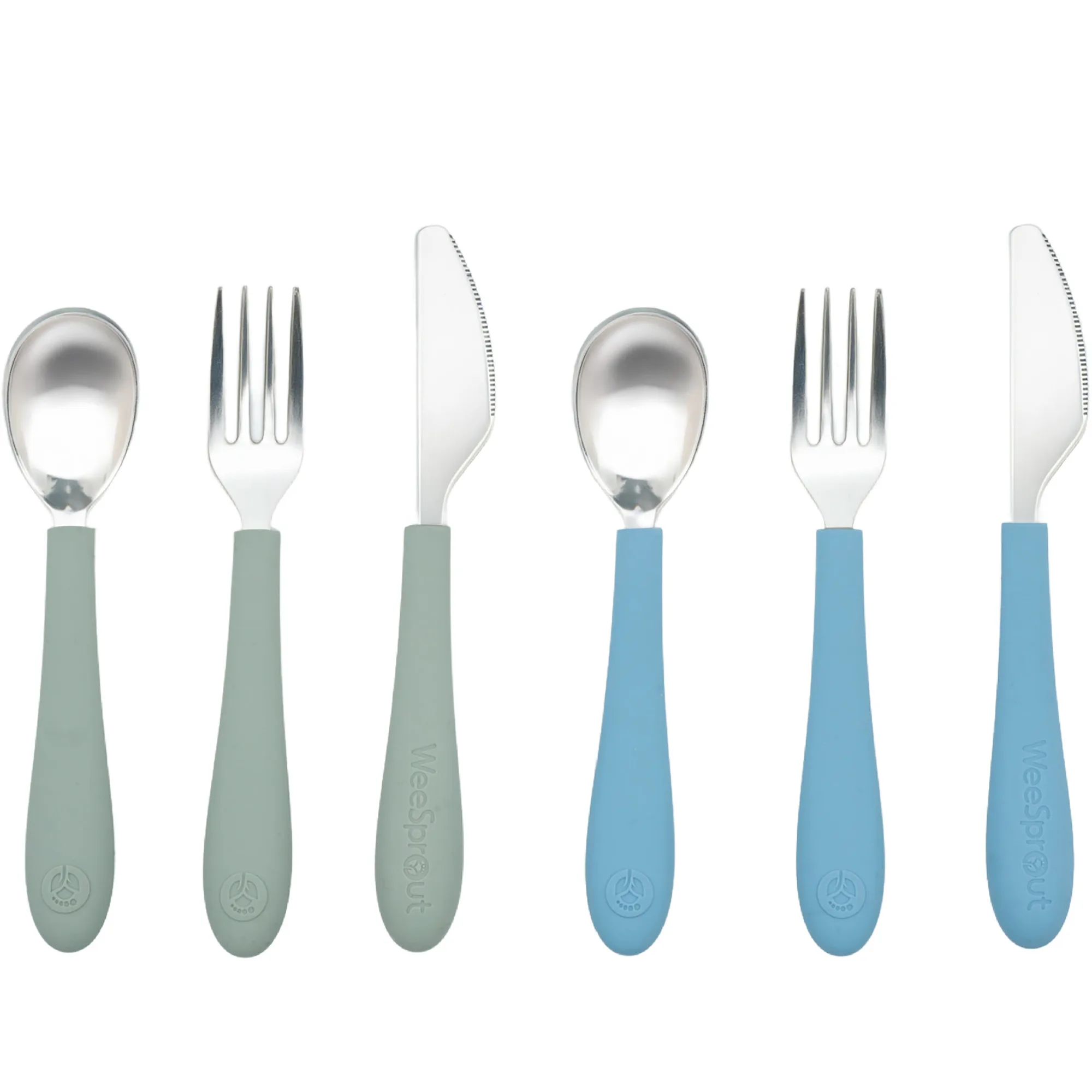
Stainless Steel & Silicone Kids Utensils – Set of 6 (2 Knives, 2 Forks, 2 Spoons)