When you're dealing with a wound that has been closed with surgical staples, knowing how to remove them properly is a critical first aid skill. Whether you're in a remote outdoor setting, a workplace, or at home, the ability to safely remove staples can prevent infection and promote healing. This guide will walk you through the essential steps, tools, and precautions for staple removal in a first aid scenario.
While staple removal is often performed by healthcare professionals, there are situations where you may need to do it yourself or assist someone else. Understanding the correct technique and having the right supplies on hand can make all the difference. In this article, we'll cover the anatomy of a staple, when removal is appropriate, and a detailed step-by-step process to ensure safety and effectiveness.
Understanding Wound Staples and When Removal is Needed
Wound staples are commonly used to close surgical incisions or traumatic lacerations because they are quick to apply and provide strong closure. They are typically made of stainless steel or titanium and are designed to be removed once the wound has healed sufficiently. In a first aid context, you might encounter staples in a situation where someone has recently had surgery and is now in a remote area, or if you are providing care for an injury that was stapled by a medical professional.
It is crucial to know when staple removal is appropriate. Generally, staples should be removed within 7 to 14 days, depending on the location of the wound and the doctor's instructions. However, in an emergency, you should only remove staples if you have the proper training or if there is no alternative and the staples are causing complications such as infection, severe pain, or the wound edges are pulling apart. If you are unsure, it is always best to seek professional medical advice.
- Do not remove staples if the wound shows signs of infection (redness, swelling, pus) unless directed by a medical professional.
- If the wound is not fully healed, or if you are in a sterile environment, consider leaving the staples in place and seeking help.
Essential Tools for Staple Removal
To safely remove staples, you need a staple remover, which is a specialized instrument designed to bend the staple in the middle and pull it out. While you can use other tools like tweezers or forceps, a dedicated staple remover is the safest and most effective option. In a first aid kit, you might also find a staple removal kit that includes antiseptic wipes, gloves, and a sterile dressing for aftercare.
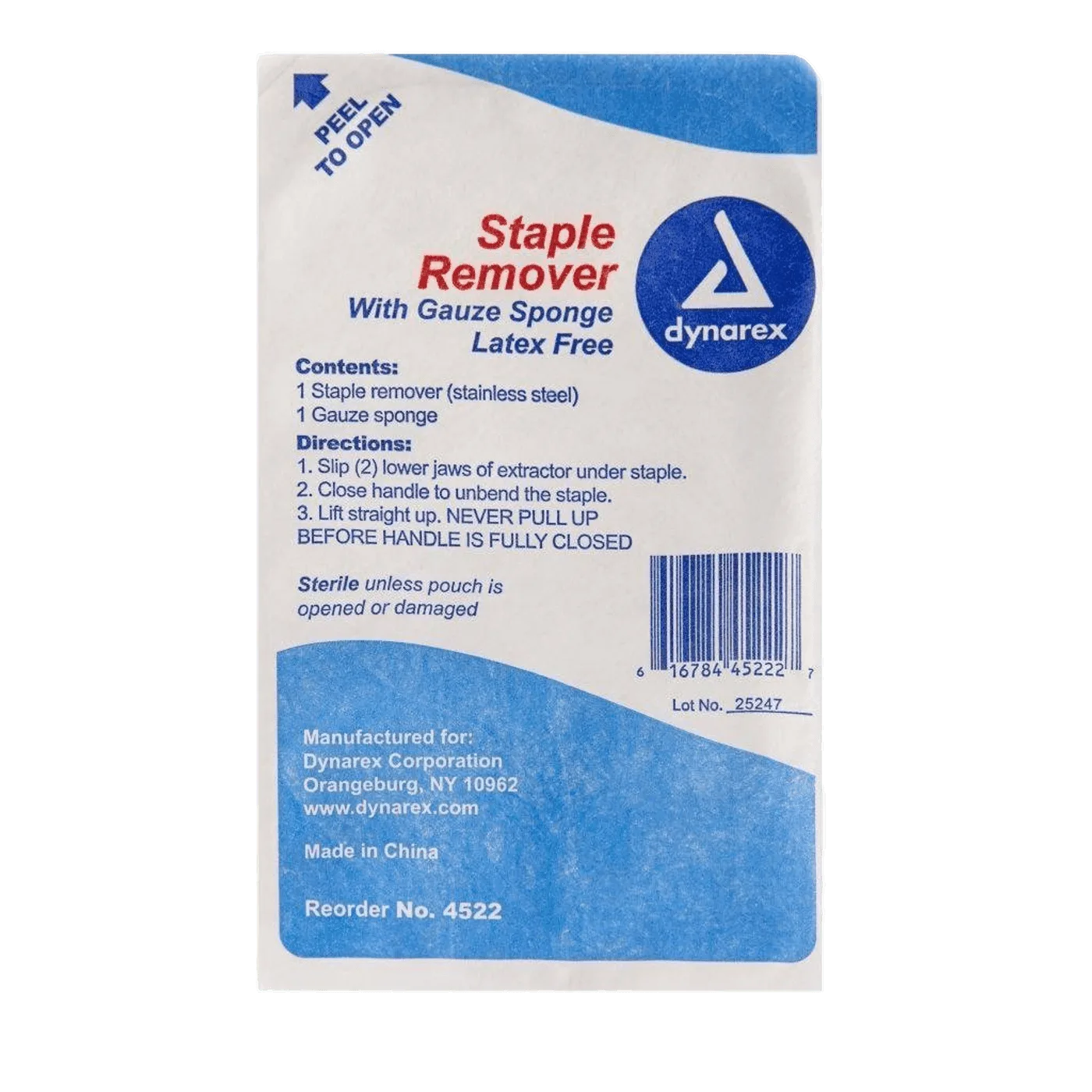
staple removal kit
Before you begin, gather all necessary supplies: a staple remover, medical gloves, antiseptic wipes or solution, sterile gauze, and a bandage or adhesive strips. It's also wise to have a container for the removed staples, such as a Sharps Container Large to safely dispose of them. Additionally, having a quikclot-combat-gauze-le-380321">QuikClot Combat Gauze LE on hand can be helpful if bleeding occurs during the removal process.
- Always use sterile gloves to minimize the risk of infection.
- If you don't have a staple remover, you can use a pair of needle-nose pliers, but be extremely cautious to avoid tearing the skin.
Step-by-Step Guide to Removing Staples
1. **Prepare the area**: Wash your hands thoroughly and put on medical gloves. Clean the wound area with antiseptic wipes or solution to reduce the risk of infection. Ensure you have good lighting; a Lighted Tweezer can be handy for close-up work, though it's not essential.
2. **Position the staple remover**: Place the lower jaw of the staple remover under the center of the staple. The staple has a bridge that sits above the skin. You want to slide the lower jaw between the staple and the skin, ensuring it is centered.
3. **Squeeze the handles**: Gently squeeze the handles together. This will cause the staple to bend in the middle, pulling the legs out of the skin. Apply steady, even pressure. Do not twist or jerk the staple.
4. **Remove the staple**: Once the staple is bent, lift it straight out of the skin. It should come out easily. If you encounter resistance, stop and reassess. Do not force it, as this can cause tissue damage.
5. **Inspect the wound**: After removing the staple, check the wound for any signs of infection or bleeding. If there is minor bleeding, apply pressure with sterile gauze. If bleeding is significant, use a hemostatic agent like QuikClot Combat Gauze LE to control it.
6. **Care for the wound**: Once all staples are removed, clean the area again and apply a sterile adhesive strip or bandage to support the wound as it continues to heal. Monitor for any signs of infection over the next few days.
- Remove staples in the same direction they were inserted to minimize trauma.
- If you accidentally bend a staple and it breaks, use tweezers to remove the pieces carefully.
Aftercare and Potential Complications
After staple removal, proper aftercare is essential to prevent infection and promote healing. Keep the wound clean and dry for at least 24 hours. After that, you can gently wash the area with mild soap and water. Avoid submerging the wound in water (like swimming) until it is fully closed. Apply a thin layer of antibiotic ointment if you have it, and cover with a sterile bandage.
Watch for signs of infection, such as increased redness, swelling, warmth, or discharge. If you notice any of these, seek medical attention promptly. Also, if the wound edges start to separate, you may need to use butterfly strips or seek professional help. In some cases, staples may have been left in for too long, making removal more difficult; if you encounter significant resistance, stop and consult a healthcare provider.
- Change the dressing daily or whenever it becomes wet or dirty.
- If you experience severe pain or bleeding, seek emergency medical care immediately.
Removing staples in a first aid scenario is a valuable skill that can prevent complications and ensure proper healing. By following these steps and having the right tools, you can handle this procedure safely. Always prioritize hygiene and seek professional medical advice when in doubt. To be prepared, consider adding a staple removal kit and essential supplies like the Sharps Container Large and QuikClot Combat Gauze LE to your first aid kit.