Quick answer
To use a telescope for backyard stargazing with kids, start by setting up during twilight, focus on a bright object like the Moon, and keep sessions short and playful to hold their attention.
Why a simple telescope works best for young stargazers
Kids lose interest quickly if equipment is too complex or the sky is too dark. A lightweight, easy-to-use telescope with low magnification helps children find objects without frustration. The Hape Adjustable Telescope, made from bamboo, offers 8x magnification and is designed for small hands, making it ideal for backyard exploration.
Step-by-step guide to backyard stargazing with kids
- Choose the right time and place: Pick a clear evening just after sunset when the sky is still a bit light. Set up in your backyard away from bright house lights. This makes it easier for kids to spot the Moon or bright planets like Venus. Check the weather forecast to avoid cloudy nights—kids get disappointed if they can't see anything.
- Set up the telescope on a steady surface: Place the telescope on a flat, stable spot like a picnic table or the ground. Adjust the focus ring slowly until the view is sharp. Let your child look through it first at a distant tree or bird to practice focusing. A wobbly surface makes the image blurry—always double-check stability before looking.
- Start with the Moon: Point the telescope at the Moon—it's bright, easy to find, and shows craters and details that amaze kids. Explain that the dark areas are ancient lava plains (called maria). Keep the first session under 10 minutes. Avoid looking at the Sun even through a telescope—it can cause permanent eye damage. Only use the telescope at night or at twilight.
- Play a stargazing game: Ask your child to find a bright star or planet and describe its color or shape. For example, Venus looks like a tiny crescent through a small telescope. Turn it into a treasure hunt: 'Can you spot something that twinkles?' If your child loses interest, switch to a different object or take a break—short, fun sessions build curiosity.
- Record what you see: Bring a notebook and crayons. Have your child draw the Moon or a constellation they spotted. This turns stargazing into a lasting memory and encourages observation skills. Don't worry about perfect drawings—the goal is to have fun and spark interest in nature.
Product spotlight
-
Hape Adjustable Telescope: This children's bamboo-based telescope offers 8x magnification and encourages kids to observe birds and animals in the wild. The low magnification and durable bamboo build make it safe and easy for kids to use during daytime birdwatching or evening stargazing, without the complexity of adult telescopes.
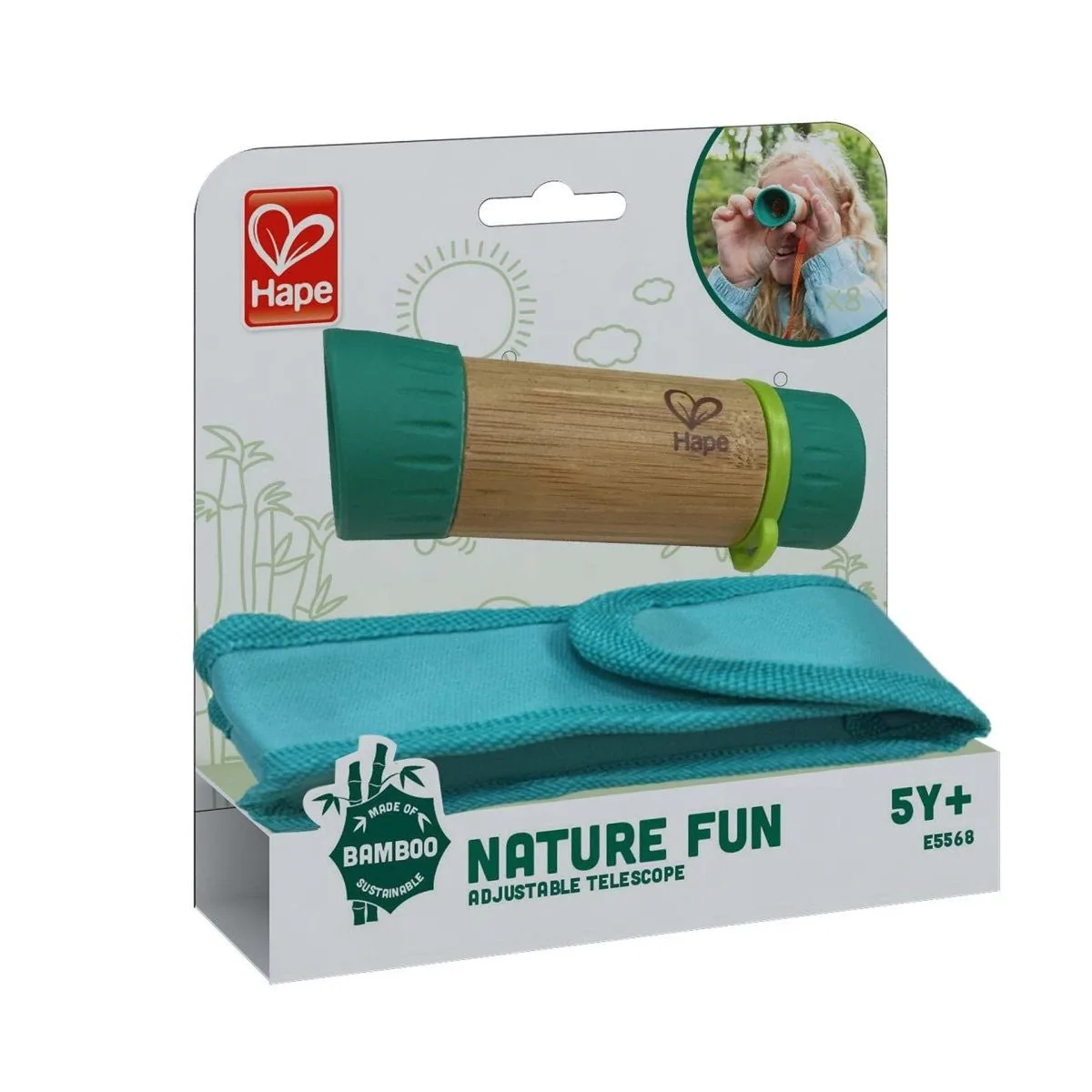
Hape Adjustable Telescope