Quick answer
Host a Waffle Topple game night by setting up a clear playing area, teaching the simple stacking rules, and letting kids practice steady hands before the real competition begins.
Why Waffle Topple works for kids
Waffle Topple is a stacking game that rewards patience and a steady hand rather than speed or reading skills, making it accessible for a wide age range. The premise is simple: roll the die, add the shown waffle or topping piece to the stack, and try not to topple it. Because each turn is short and the stakes are clear, even young children stay engaged without feeling overwhelmed.
One trade-off to keep in mind: the game can become frustrating for very young kids if they knock over the stack repeatedly. For ages 4 and up, the challenge is part of the fun, but you may want to pair younger players with an older sibling or adult to keep the mood light.
Setting up the game area
Choose a flat, stable table or floor space where the stack won't be bumped by passing feet or elbows. A hard surface works best because it doesn't shift like a soft rug or tablecloth. Good lighting helps kids see the waffle pieces clearly and avoid accidental nudges.
Before the first round, have each player take a practice turn to get a feel for how the waffle pieces balance. This simple warm-up reduces early frustration and builds confidence.
How to run a Waffle Topple game night
- Step 1: Set up the stack and explain the goal: Place the base waffle on the fork and show kids that the objective is to add pieces without knocking the stack over. Each player gets one turn per round. Common mistake: kids try to rush. Emphasize that slow and steady wins — speed is not rewarded.
- Step 2: Teach the die and piece matching: Roll the die to see which waffle or topping piece to add. Show kids how to match the die face to the correct piece from the pile. For non-readers, use the pictures on the die. Checkpoint: if a child can't find the matching piece, help them identify it by shape or color rather than by name.
- Step 3: Demonstrate the stacking technique: Place the piece gently on top of the stack, using one hand to steady the fork if needed. Show how to center the piece and let go slowly. Common mistake: dropping the piece from above. Teach kids to lower it until it touches the stack before releasing.
- Step 4: Handle topples without tears: When the stack falls, count the fallen pieces and add them to the opponents' piles as points. Then rebuild the base waffle and continue. The player who caused the topple does not score points that turn. Checkpoint: remind everyone that toppling is part of the game. Laugh it off and reset quickly to keep the energy positive.
- Step 5: End the game and declare a winner: Play continues until all waffle and topping pieces have been used. The player with the most pieces in their personal pile (from other players' topples) wins. Tally scores together so kids see the math in action. Common mistake: forgetting to count pieces after a topple. Assign one player as the scorekeeper to track points as they happen.
The game that makes it happen
-
Chronicle Books - Waffle Topple: Each player rolls the die and attempts to add the shown waffle or topping piece to the stack without toppling it. Steady hands are essential, and the more pieces you knock over, the more points your opponents earn. This scoring twist means even a toppled stack isn't the end of the game — it shifts the advantage to other players, keeping everyone involved until the final piece is placed.
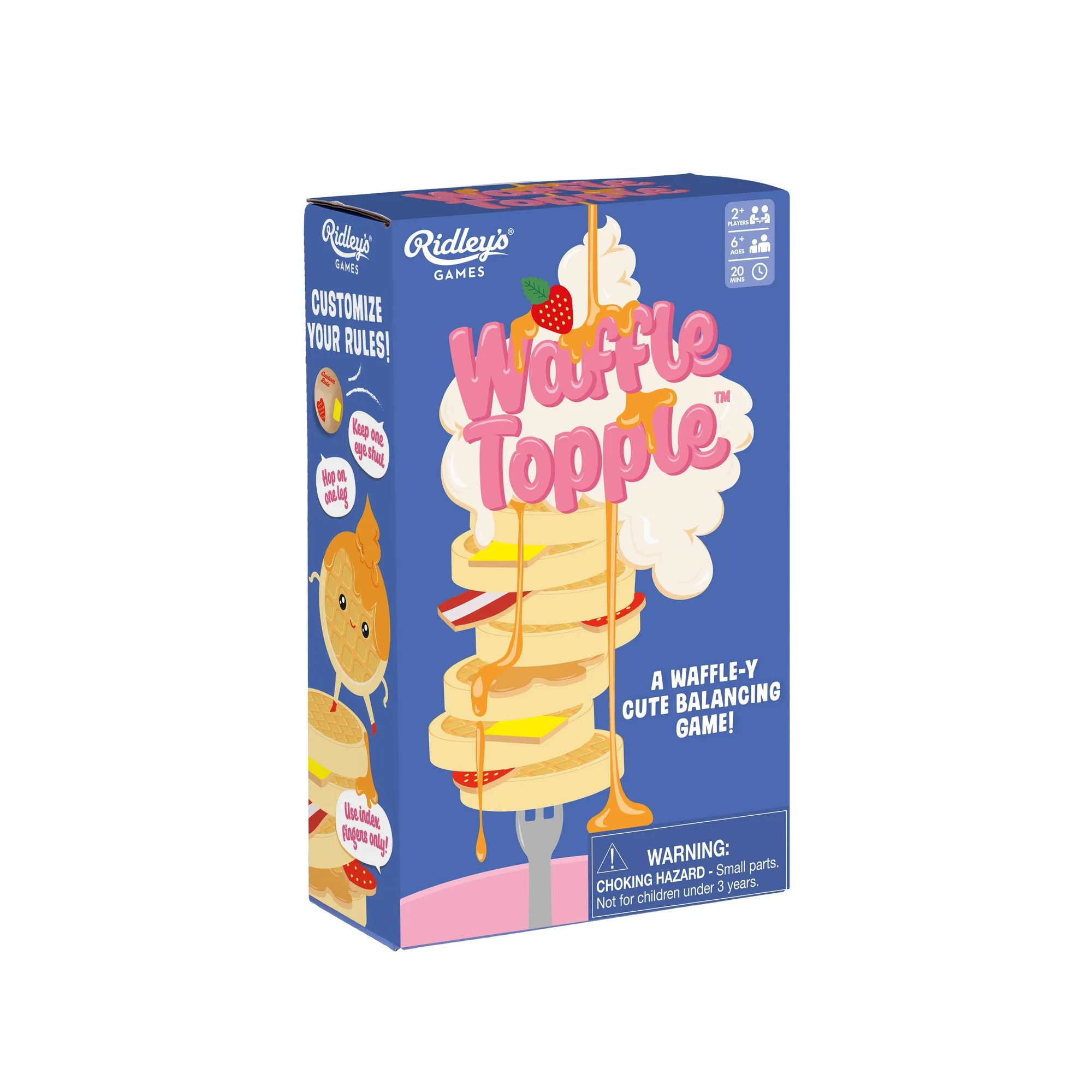
Chronicle Books - Waffle Topple