Quick answer
Use The Three Question Journal Green as a morning and evening anchor: answer the three prompts at set times, keep entries to a few honest sentences, and review weekly to spot patterns.
Why a structured daily reflection works
A daily reflection journal works best when it has a clear structure. The Three Question Journal Green gives you that structure with three prompts designed for both morning and evening use. Instead of staring at a blank page, you answer the same questions consistently, which builds a habit and makes it easier to notice changes in your thoughts and feelings over time.
The format draws on clinical insight from Dr. Rangan Chatterjee, developed over two decades. That means the questions are not random; they are intended to surface your strengths, tendencies, and blind spots in a compassionate way. Knowing that can help you trust the process even on days when your answers feel repetitive.
Trade-offs and exceptions
This journal is not a long-form diary. If you prefer to write several pages of free-flowing thoughts, the three-question format may feel limiting. The strength of the journal is in its brevity, but that also means you won't have space for extended storytelling.
The journal is also designed for daily use, so if you only write occasionally, you will not get the full benefit of spotting patterns. Consistency matters more than length, but you need to be willing to show up most days.
How to build your daily reflection practice
- Choose your two anchor times: Decide on a specific time each morning and each evening when you will open the journal. Many people pair it with brushing teeth or having coffee, so it becomes part of an existing routine. Keep the journal somewhere visible, like on your nightstand or desk. If you miss a session, do not skip the whole day. Just answer the next prompt when you remember.
- Answer the three questions honestly: Write whatever comes to mind for each prompt, even if it feels small or unfinished. There is no wrong answer. The goal is to be honest, not to sound profound. Keep each response to a few sentences so the practice stays quick and sustainable. If you find yourself repeating the same answer daily, that is a signal. Note it and move on without judging yourself.
- Review your entries weekly: Once a week, read back through your answers from the past seven days. Look for patterns in your mood, energy, or recurring thoughts. This is where the real self-awareness comes from. You might spot a tendency or blind spot that you were not aware of. If you notice a negative pattern, do not try to fix it immediately. Just acknowledge it and consider one small change for the next week.
About The Three Question Journal Green
-
The Three Question Journal - Green: The journal is designed with two decades of clinical insight by Dr. Rangan Chatterjee and uses a three-question format for morning and evening. This means you get a professionally grounded structure that helps you reflect consistently without needing to design your own prompts.
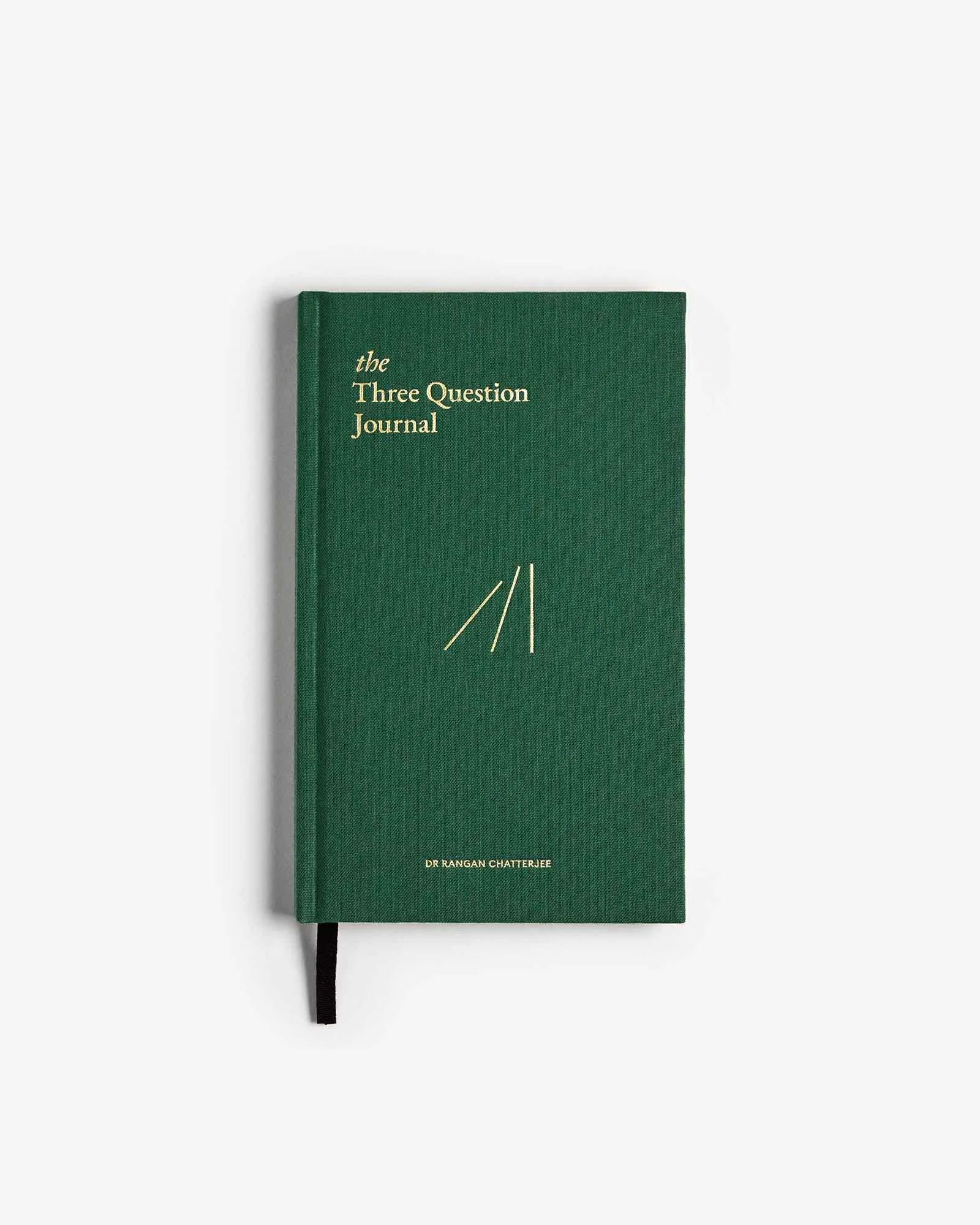
The Three Question Journal - Green