Quick answer
Use transparent page flags to mark important pages in books, planners, and documents without blocking text, making it easy to find key information later.
Why transparent page flags work for study and work
Unlike opaque sticky notes, transparent page flags let you see the text underneath while still drawing your eye to the spot. This makes them ideal for textbooks, reference manuals, and printed reports where every word matters.
They are also repositionable, so you can move them as your priorities change without damaging the page. This flexibility is especially useful when studying for exams or managing multiple work projects.
How to use transparent page flags effectively
- 1. Flag key pages while reading: As you go through a book or report, place a transparent flag on the top or side edge of pages you want to return to. Use one color for definitions, another for examples, and a third for action items. Common mistake: placing flags too close to the spine makes them hard to see. Stick them near the outer edge of the page.
- 2. Create a color-coded legend: Assign each flag color a meaning (e.g., yellow = to review, pink = important date, blue = task). Write the legend on a sticky note inside the front cover or on a planner page for quick reference. Checkpoint: limit yourself to three or four colors so the system stays easy to remember.
- 3. Use flags in your planner for time-sensitive tasks: Mark the edge of weekly or monthly spreads where deadlines or appointments fall. The flag sticks out from the page, so you can flip directly to the right week without scanning every page. Common mistake: stacking multiple flags on the same page edge. Spread them out vertically so each one is visible.
- 4. Flag reference pages in work documents: In printed reports, manuals, or meeting handouts, place a flag on the page containing a key chart, table, or policy. This lets you find it instantly during a discussion or while writing a follow-up. Checkpoint: remove flags once the reference is no longer needed to keep your document clutter-free.
- 5. Mark progress in a long-term project: Use flags to indicate where you left off in a textbook or multi-page document. Move the flag forward as you complete each section. This works especially well for self-paced study or ongoing work tasks. Common mistake: forgetting to move the flag after a session. Make it a habit to update it before closing the book or file.
Product facts
-
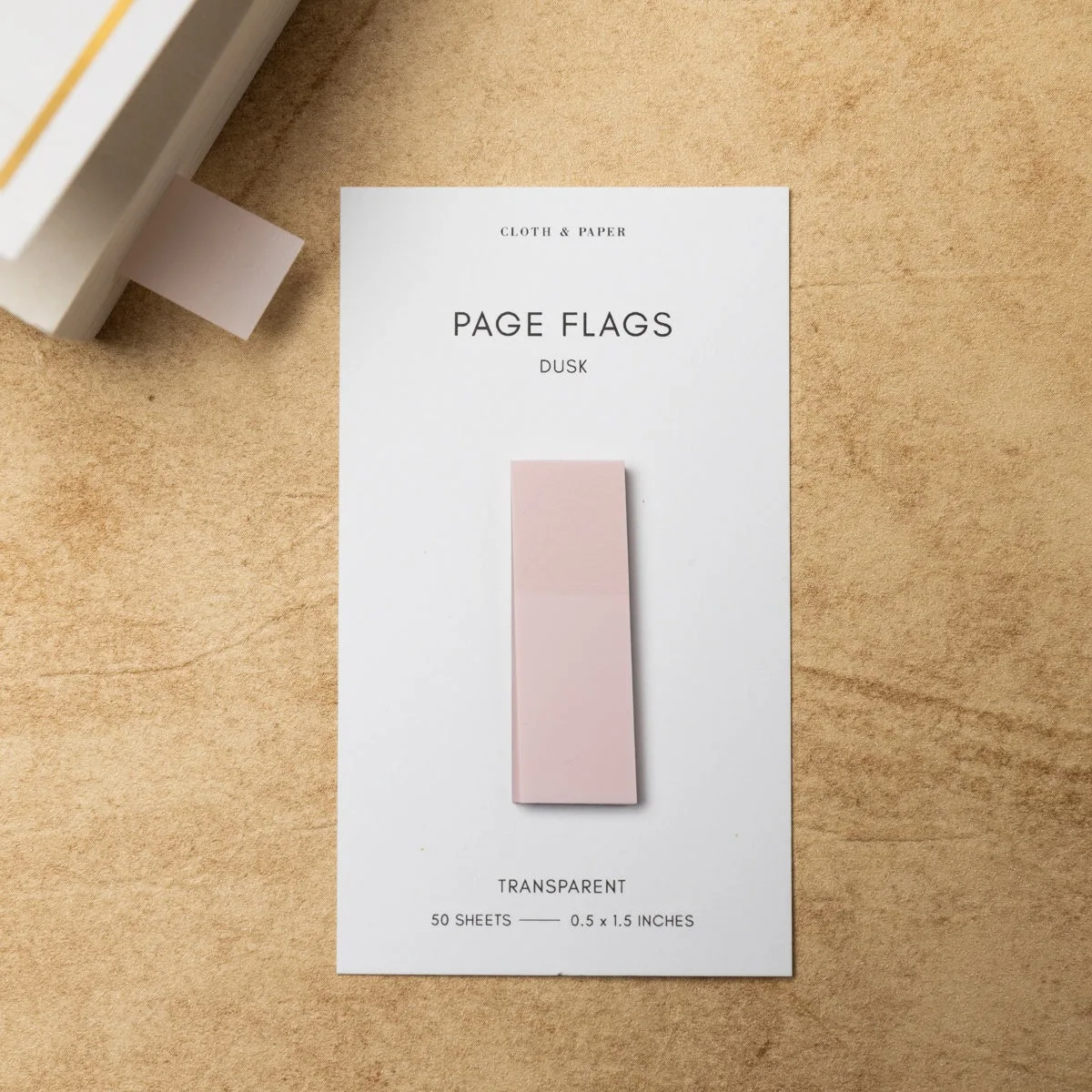
Transparent Page Flags: Transparent Page Flags from Cloth & Paper are designed to help you mark a spot in your book, planner, or magazine. Their transparency ensures you can read the text beneath the flag, making them perfect for annotating study materials or highlighting action items in a planner.
Transparent Page Flags