Quick answer
Start by drawing with dry watercolor pencils like you would with regular colored pencils, then add water with a brush to activate the pigment and watch your artwork transform into a watercolor painting.
Why Watercolor Pencils Are Great for Beginners
Watercolor pencils combine the control of colored pencils with the fluid beauty of watercolor paints. They are forgiving: you can draw first and decide later whether to add water, making them ideal for artists who want to explore watercolor without the mess of tubes or pans. Unlike traditional watercolor, you don't need to manage puddles of paint—just a brush and clean water.
What You'll Need to Get Started
To follow this guide, you'll need a set of watercolor pencils, a cup of clean water, a paintbrush (a small round brush works well), and watercolor paper or a pad designed for wet media. The Butterfly 24 Mini Watercolor Pencils Tin from eeBoo includes a high-quality brush and beautifully detailed pencils, making it a convenient all-in-one starting kit.
Step-by-Step Tutorial: Using Watercolor Pencils for the First Time
- Draw with the pencil dry: Sketch your design on watercolor paper using the watercolor pencil just like a regular colored pencil. Press lightly to create outlines, or more firmly for areas of intense color. Use light layers initially so you can build up richness gradually. Avoid pressing so hard that you create deep grooves; the water may skip over them.
- Activate the pigment with water: Dip your brush into clean water, then gently brush over the pencil lines. The pigment will dissolve and spread like watercolor. Work in small sections to keep edges from drying before you blend them. Use only a damp brush, not dripping wet, or the colors will bleed too far and become muddy.
- Layer for depth: Let the first wash dry completely. Then draw additional pencil strokes over the dried area and activate them again with water. This adds layers of tone and shadow without disturbing the earlier color. Be patient between layers; rushing can lift the bottom layer and create a messy mix.
- Blend two colors together: Draw strokes of two different colors side by side (still dry). Dampen a clean brush and swipe across the boundary where they meet. The colors will bleed into each other, creating a smooth transition. Use a clean brush for each color to avoid muddying the blend.
- Lift color for highlights: While the area is still wet, blot with a tissue or paper towel to lift pigment. This lightens the tone or creates white highlights. You can also use a barely damp brush to pull color away carefully. Work quickly before the water dries completely—once it's dry, pigment stays fixed in the paper.
Product Highlight
-
Butterfly 24 Mini Watercolor Pencils Tin: Just add water to turn your drawing into a watercolor; includes silver foil on each pencil and a high quality brush. You don't need to buy a brush separately—everything you need to try your first watercolor pencil project is in one tin.
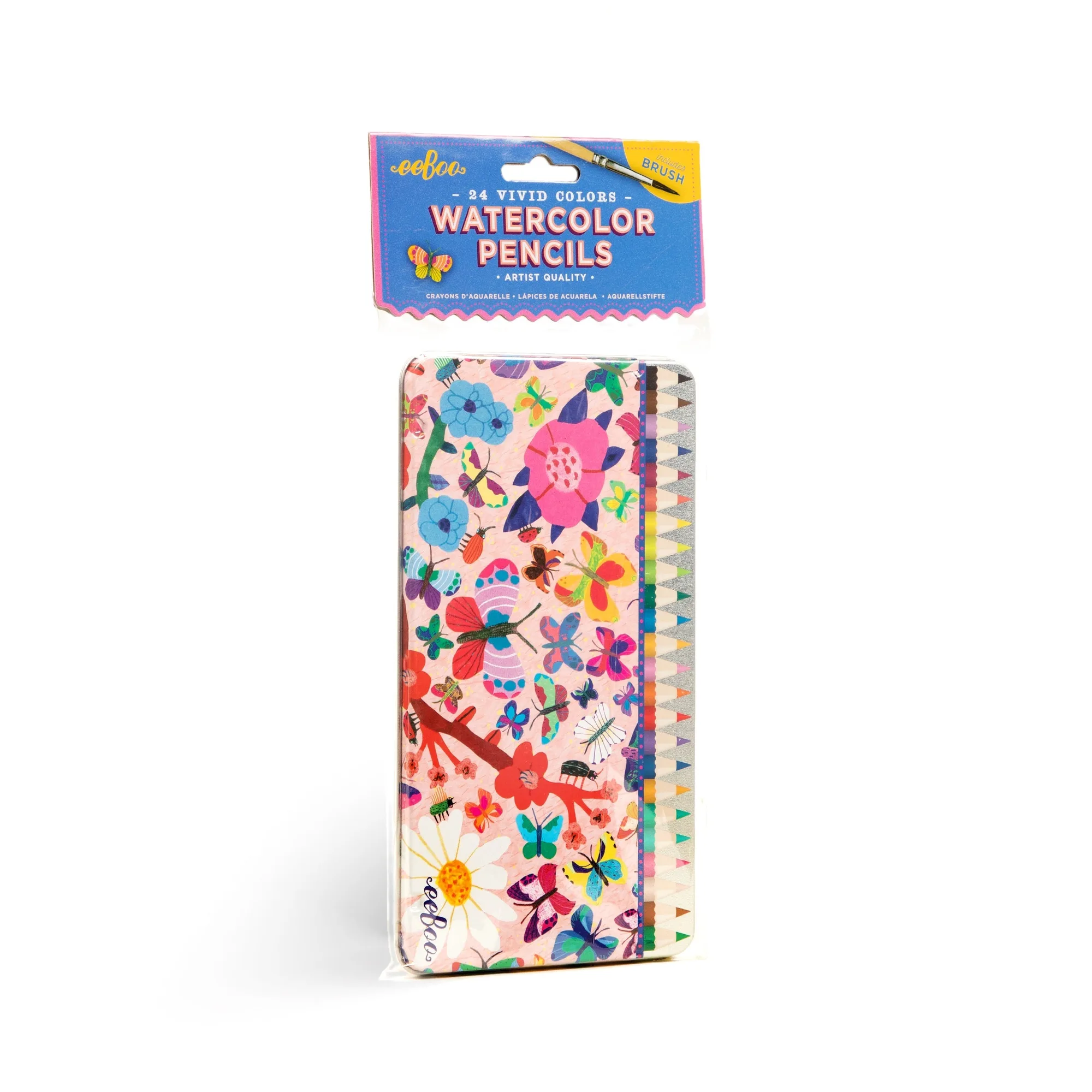
Butterfly 24 Mini Watercolor Pencils Tin