Quick answer
Use The Wavy Roller after your workout by rolling each tight muscle group slowly for 30–60 seconds, pausing on knots, and breathing deeply. Keep total rolling time under 10 minutes. The textured waves dig into tough spots, so start with light pressure and build up. This simple routine helps release tension, improve flexibility, and speed up recovery at home.
Why a textured roller changes your cool-down
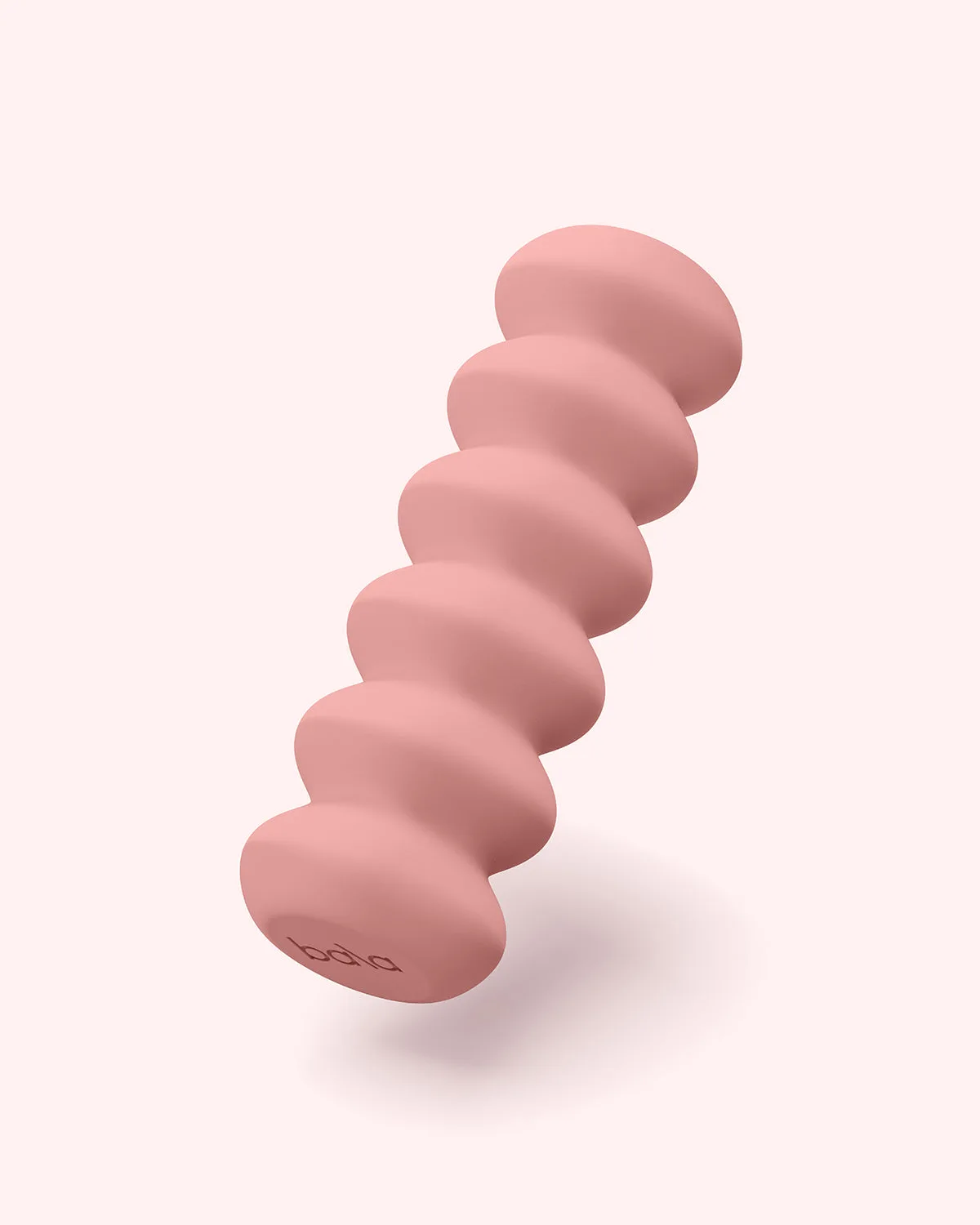
A smooth foam roller applies broad, even pressure. The Wavy Roller’s patented waves create ridges that concentrate force into specific bands of muscle, which can feel more intense and targeted. That makes it useful for working out stubborn knots and tight spots in the legs, glutes, and back. If you’re new to rolling, the texture may feel aggressive at first; you control that by adjusting how much body weight you put on the roller. The goal is never to roll through sharp pain. Aim for a ‘good pressure’ sensation that you can breathe through.
Set up your space and check the roller
The Wavy Roller is made of dense, supportive foam and comes in a take-it-anywhere size, so you can use it on a yoga mat, carpet, or rug. Before you start, check that the surface is stable and won’t slide. If you’re on a hard floor, place a mat underneath to protect your floor and give the roller a bit of grip. Because the roller is compact, you may need to reposition your body more often than with a longer roller—that’s normal. Keep water nearby and wear comfortable clothes that let you move freely.
Your 6-step Wavy Roller recovery routine
- 1. Start with your calves: Sit on the floor with the roller under one calf. Cross your other leg on top for extra pressure. Roll slowly from ankle to knee, pausing on any tight spot for 5–10 seconds. Common mistake: rolling too fast. Speed reduces the benefit—go at about one inch per second. Checkpoint: you should feel tension release, not sharp pain. If it’s sharp, reduce pressure by uncrossing your legs.
- 2. Move to your hamstrings: Place the roller under the back of your thigh. Use your hands behind you to lift your hips slightly, then roll from just below the glute to just above the knee. Turn your leg slightly inward and outward to hit different parts of the hamstring. Common mistake: letting your back arch. Keep your core engaged and hips level. Checkpoint: if your lower back starts to ache, you’re sagging. Reset your posture before continuing.
- 3. Roll your glutes and piriformis: Sit on the roller with one ankle crossed over the opposite knee. Lean slightly toward the crossed side and roll in small circles over the glute. Spend up to 60 seconds per side. Common mistake: rolling directly on the tailbone. Stay on the meaty part of the glute. Checkpoint: you’re in the right spot if you feel a deep, manageable pressure—not numbness or tingling down the leg.
- 4. Work your quads and IT band area: Lie face down with the roller under the front of one thigh. Roll from hip to knee. For the outer thigh (IT band area), turn slightly onto that side and roll slowly. The IT band itself is tough tissue; don’t force it. Common mistake: spending too long on the IT band. Keep it to 30–45 seconds per side. Checkpoint: if the area feels bruised the next day, you pressed too hard or rolled too long. Ease up next time.
- 5. Finish with your upper back: Lie on your back with the roller under your upper back, knees bent, hands supporting your head. Lift your hips and slowly roll from shoulder blades to mid-back. Do not roll your lower back or neck. Common mistake: rolling too low onto the lumbar spine. Stay above the bottom of your ribcage. Checkpoint: you can pause on a tight spot and take two deep breaths before moving on.
- 6. Cool down and hydrate: After rolling, stand up slowly and shake out your limbs. Drink water. Total rolling time should be 5–10 minutes. Common mistake: rolling immediately before a workout with heavy pressure—save deep rolling for after, or use very light pressure as a warm-up. Checkpoint: you should feel looser and more relaxed, not exhausted or sore. If you’re sore, cut the time in half next session.
Product facts
- The Wavy Roller: The Wavy Roller is made of dense, supportive foam in a take-it-anywhere size, with patented waves designed to release tension, stretch, and rehab. The dense foam holds its shape under body weight, while the compact size makes it easy to store and travel with. The waves target knots more precisely than a flat surface.