Quick answer
Use a wooden cash register like the Le Toy Van Shop Till to turn pretend play into hands-on money lessons: set up a shop, practice counting and making change, and introduce saving goals through roleplay.
Why a wooden cash register works for money lessons
Unlike screen-based apps, a wooden cash register gives kids something real to touch and count. The physical coins and notes make abstract ideas like value and exchange concrete, which is exactly how young children learn best.
Because it's a toy, there's no pressure. Kids can make mistakes without fear, which means they're more willing to try new skills like adding up totals or figuring out change.
Trade-off: keep it playful, not like school
The goal is to build positive associations with money, not to turn playtime into a math drill. If your child loses interest, step back and let them lead. The learning happens through repetition and fun, not forced practice.
Also, remember that a wooden cash register has no digital display or sound effects. That's actually a benefit: it encourages mental math and conversation rather than passive button-pushing.
Step-by-step money play activities
- Set up a simple shop: Gather a few household items (toys, books, snacks) and price them with sticky notes. Let your child be the shopkeeper and you the customer. Use the wooden cash register to ring up each item and hand over the play money. Checkpoint: Does your child know the price of each item? If not, keep prices simple (like 1, 2, or 5) to start.
- Practice counting and making change: After your child totals the purchase, give them a larger note (like a 10) and ask them to figure out the change. Start with round numbers and gradually increase difficulty. Use the wooden coins to physically count out the change together. Checkpoint: If your child struggles, reduce the numbers or use a number line. The goal is understanding, not speed.
- Introduce saving and spending goals: Create a simple reward system: each time your child 'earns' play money (e.g., for helping with chores), they can decide to save it in a jar or spend it in your pretend shop. Use the cash register to track deposits and purchases. Checkpoint: Talk about what happens if they spend all their money now versus saving for a bigger item. This builds the habit of delayed gratification.
Product spotlight
-
Le Toy Van: Shop Till - Cash Register & Money: This retro-style till includes a wooden till receipt, easy-open cash drawer, and wooden & paper play money, with a sturdy vintage design in exclusive Le Toy Van red colorways. The included receipt and realistic money let you run more authentic roleplay scenarios, which helps kids practice writing amounts and handling cash.
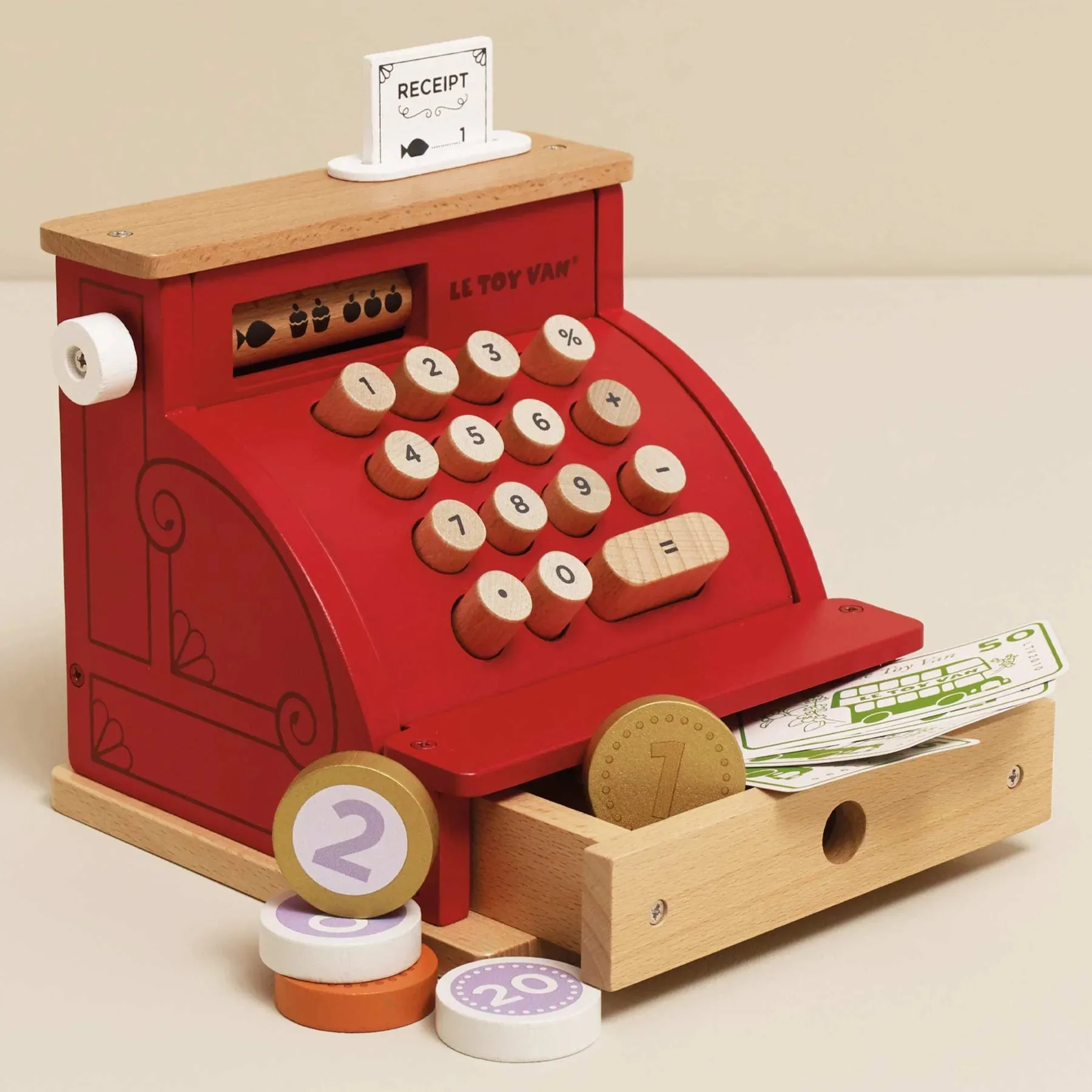
Le Toy Van: Shop Till - Cash Register & Money