Quick answer
Start with the easiest animal (the owl or oak leaf) and let your toddler lace freely without correcting mistakes. The goal is hand-eye coordination and fun, not perfect stitches.
Why lacing cards work for toddlers
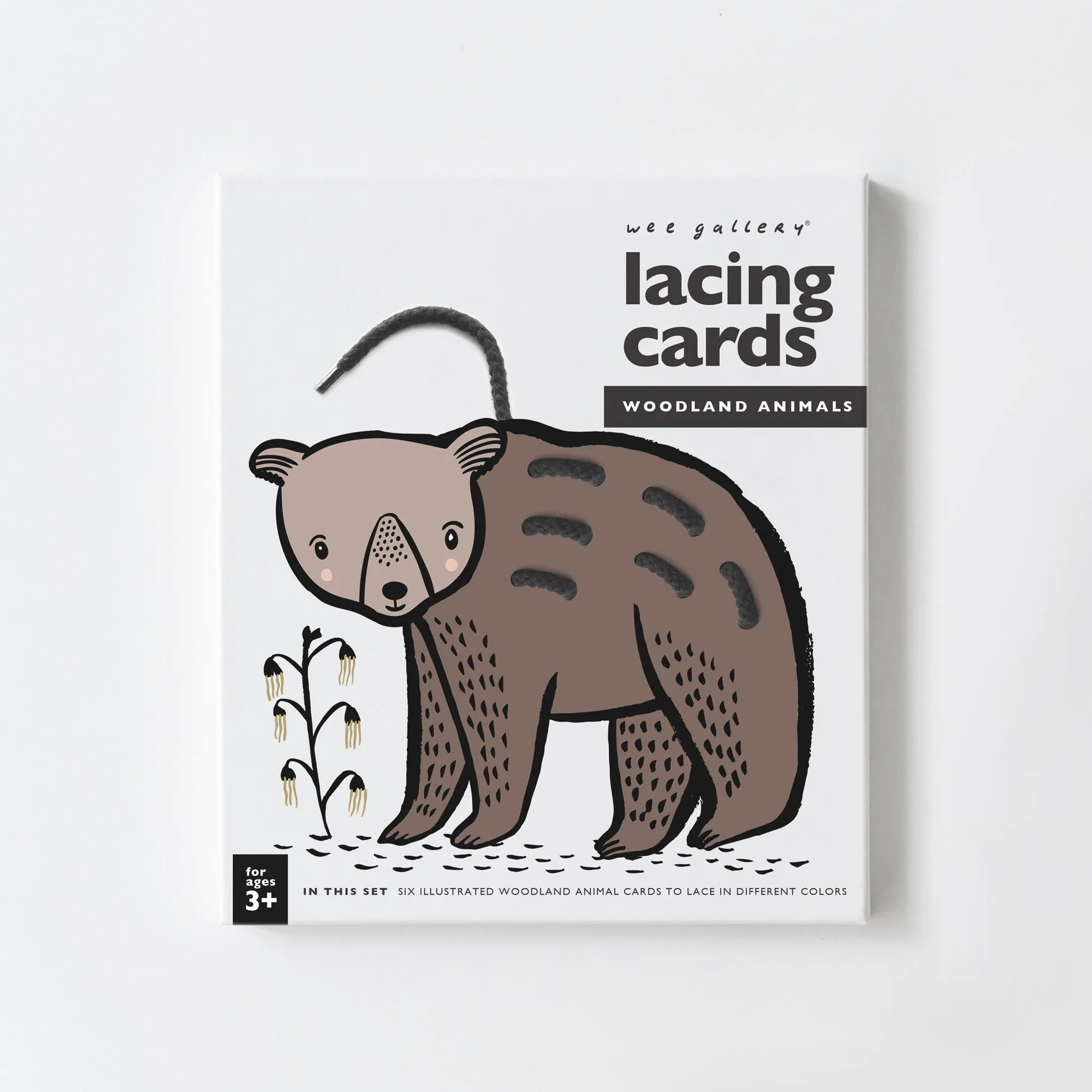
Lacing cards like the Woodland Animals set from Wee Gallery combine a familiar threading motion with playful animal faces. The thick, sturdy board holds up to repeated use, and the hand-illustrated characters—hedgehog, squirrel, bear, owl, fox, and oak leaf—give children a reason to keep lacing. The activity naturally encourages hand-eye coordination, dexterity, and color identification without feeling like a lesson.
When to introduce lacing cards
Most toddlers are ready for lacing cards around 18 to 24 months, but readiness depends more on interest than age. If your child can pick up small objects and poke a finger through a hole, they can try lacing. Start with the card that has the largest holes—the owl or oak leaf—since those are easiest for little hands.
How to use woodland animal lacing cards: step by step
- Prepare the card and lace: Choose one card—start with the owl or oak leaf because the holes are slightly larger. Tie a knot at one end of the lace so it won't pull through. Show your child how the lace goes in one hole and out the next. If the lace is too long, shorten it to about 12 inches to avoid tangles.
- Demonstrate the in-out motion: Hold the card steady and slowly push the lace tip through a hole from front to back. Let your child pull it out the other side. Repeat once or twice, then hand the card and lace to your child. Don't correct the direction. Lacing from either side works fine for skill development.
- Let your child explore freely: Allow your child to lace in any order—skipping holes, going back through the same hole, or lacing across the card. The goal is hand-eye coordination and dexterity, not a finished pattern. Resist the urge to fix mistakes. Children learn by experimenting with the motion.
- Add a simple challenge: Once your child can lace through several holes, suggest lacing around the animal's outline or matching the lace color to a color on the card. This adds a layer of color identification and planning. Keep challenges short. If frustration appears, return to free lacing.
- Store cards together for next time: After play, stack the cards and tie the lace loosely around the set. Store in a drawer or basket where your child can reach them independently. Repeated practice builds confidence and motor control. Avoid storing with the lace pulled tight through the cards—it can bend the board over time.
Product used in this guide
-
Lacing Cards - Woodland Animals: The Woodland Animals Lacing Cards feature hand-illustrated pals: hedgehog, squirrel, bear, owl, fox, and oak leaf, printed on thick, sturdy board. The sturdy board withstands toddler handling and the familiar animal faces keep children engaged, making repeated practice feel like play.
Lacing Cards - Woodland Animals