Quick answer
Use a Zippy Swaddle by laying your baby on the open swaddle, tucking their arms inside the wing flaps, and zipping up the front from bottom to top. Always place baby on their back in a safe sleep environment and stop swaddling once they show signs of rolling over.
Why the Zippy Swaddle design matters
The Zippy Swaddle is designed to mimic the snug feeling of the womb, which can help calm a fussy newborn. The zipper closure makes it easier to use than traditional blanket swaddles, reducing the chance of loose fabric that could pose a safety risk. The built-in arm flaps prevent the Moro reflex from startling your baby awake, which is a common reason for short naps.
When to stop using a swaddle
Swaddling is only safe until your baby shows signs of attempting to roll over. Once they can roll from back to tummy or tummy to back, the swaddle can restrict movement and increase the risk of suffocation. At that point, transition to a sleep sack like the Zipadee-Zip. Most babies outgrow the swaddle between 2 and 4 months, but every baby develops at their own pace.
Step-by-step swaddle instructions
- Prepare the sleep environment: Place your baby on their back on a firm, flat mattress in a crib or bassinet. Remove all pillows, blankets, bumpers, and stuffed animals from the sleep area. Dress your baby in a lightweight onesie under the swaddle if the room is cool. A safe sleep space is non-negotiable. Never use a Zippy Swaddle on a soft surface like a couch or adult bed.
- Lay the swaddle flat and position your baby: Open the Zippy Swaddle and lay it flat on the sleep surface. Place your baby on their back in the center of the swaddle, with their shoulders aligned with the top edge of the fabric. The zipper should be facing upward. Positioning your baby too high or low can make the arm flaps ineffective.
- Tuck the arms into the wing flaps: Bring one side of the swaddle across your baby's chest, tucking their arm snugly into the built-in wing flap. Repeat with the other side. The flaps should hold the arms against the body without being so tight that you cannot slip a finger between the fabric and your baby's chest. A common mistake is wrapping too loosely, which allows the arms to escape and defeats the purpose of preventing the startle reflex.
- Zip up from bottom to top: Starting at the bottom of the swaddle, pull the zipper up to the top. Ensure the zipper pull is fully closed and the fabric is smooth across your baby's chest. The swaddle should feel snug but not restrictive – your baby should be able to move their hips and legs freely. Always zip from bottom to top to avoid catching your baby's skin. Check that the zipper guard is in place if your model has one.
- Check the fit and monitor your baby: After zipping, check that the swaddle is not too tight around the chest or too loose around the arms. Your baby's face should be uncovered, and the swaddle should not ride up over their nose or mouth. Stay nearby during naps and check periodically. If your baby can break free from the swaddle or the fabric shifts near their face, stop using it immediately and try a different size or style.
Product features at a glance
-
Sleeping Baby Modern Animals Zippy Swaddle: Designed based on safe sleep recommendations from the American Academy of Pediatrics (AAP). Intended for use during naps and bedtime in a safe sleep environment. You can feel confident that the swaddle follows pediatric safety guidelines, but you still need to place your baby on their back on a firm mattress with no loose bedding.
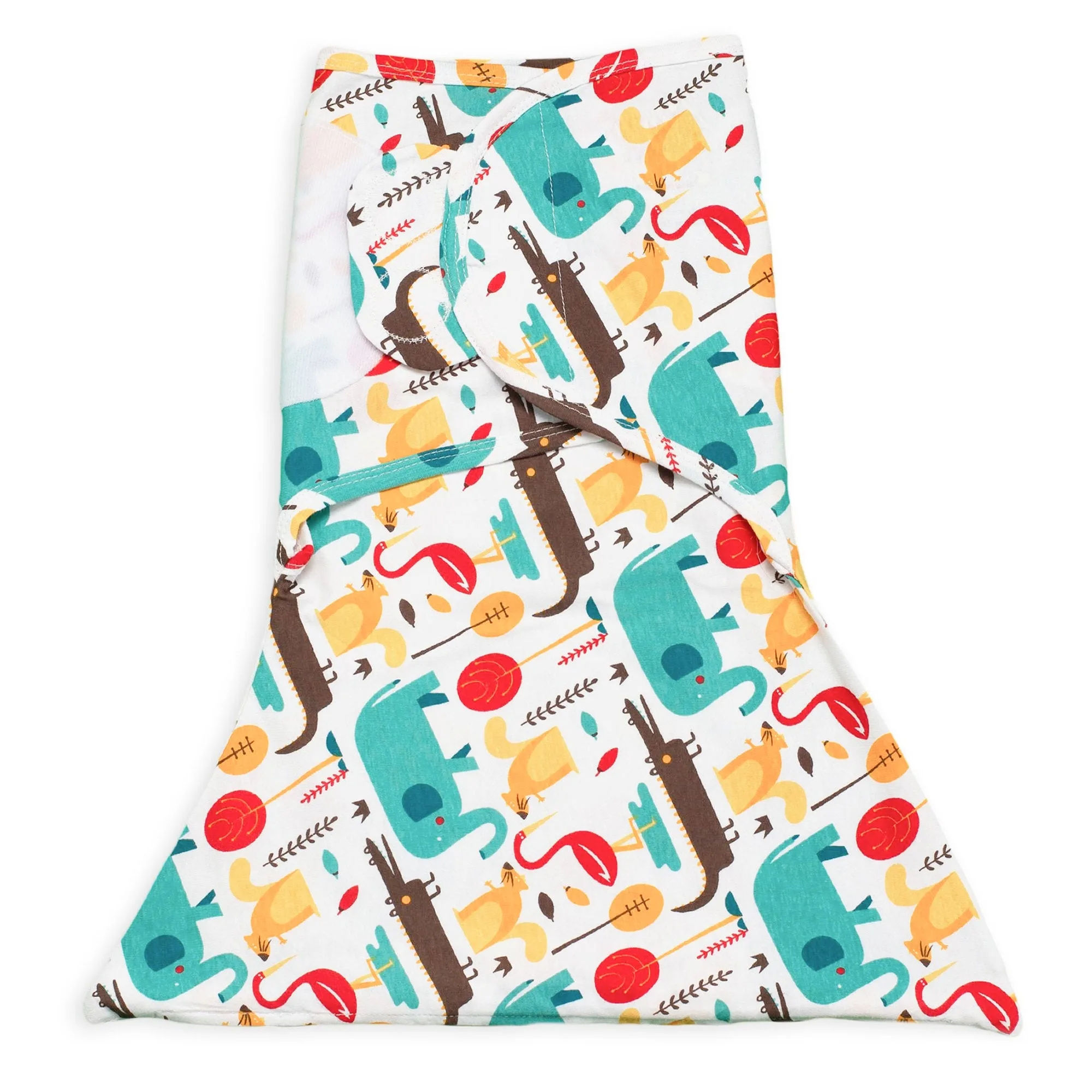
Sleeping Baby Modern Animals Zippy Swaddle
-
Sleeping Baby ABC Zippy Swaddle: Made from 100% cotton with a 0.5 TOG rating, suitable for warmer room temperatures. The lightweight cotton fabric helps prevent overheating, which is a known SIDS risk factor. Pair with a onesie in a room kept between 68-72°F.
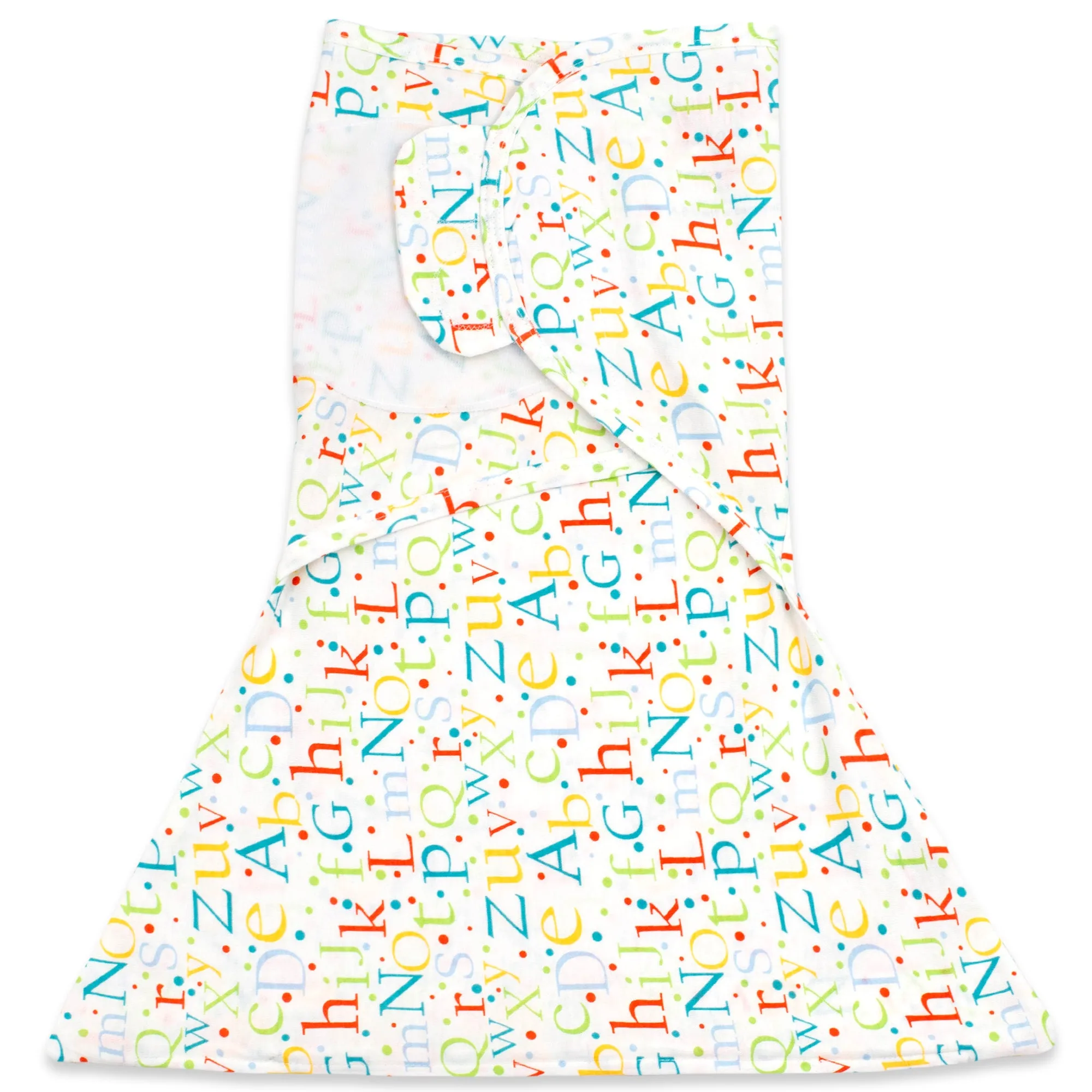
Sleeping Baby ABC Zippy Swaddle