Quick answer
Hand wash your merino wool knitted gloves in cold water with a gentle wool detergent, then dry them flat away from heat to prevent shrinking and maintain their softness.
Why merino wool needs special care
Merino wool is naturally soft and breathable, but its fine fibers are more delicate than regular wool. The Bobo Choses merino wool knitted gloves are made from 100% recycled wool, which means the fibers have already been through a reprocessing cycle. That makes gentle handling even more important to preserve their cozy feel and shape.
Machine washing and high heat are the main culprits behind shrinking and felting. Even a warm dryer can permanently tighten the knit, turning a comfortable glove into a stiff, smaller version of itself. That's why the care routine below focuses on cold water, mild detergent, and air drying.
What to avoid with wool gloves
Skip fabric softeners and bleach. They coat the fibers and reduce wool's natural moisture-wicking ability. Also avoid wringing or twisting wet gloves—this stretches the knit and can distort the shape.
If your gloves get wet from snow or rain, let them dry naturally at room temperature. Never place them on a radiator or near a heater, as sudden heat can cause shrinkage.
Step-by-step washing and care routine
- Check the care label: Before anything, read the care tag on your gloves. It will tell you if they are safe for machine washing or if they require hand washing only. If the label is missing, treat them as hand-wash only to be safe. When in doubt, hand wash—it's the gentlest option.
- Fill a basin with cold water: Use lukewarm or cold water (below 30°C / 86°F). Add a small amount of wool-specific detergent, like those labeled for delicates. Avoid regular laundry detergent, which is too harsh for wool fibers. Hot water is the number one cause of wool shrinkage.
- Submerge and gently squeeze: Place the gloves in the water and press them down gently. Let them soak for 5–10 minutes. Do not rub, scrub, or wring—this causes felting and pilling. Treat the gloves like a delicate garment, not a pair of work gloves.
- Rinse with clean cold water: Drain the soapy water and refill the basin with fresh cold water. Gently squeeze the gloves to release soap, then repeat until the water runs clear. Avoid twisting or bunching the fabric. Residual detergent can irritate skin, so rinse thoroughly.
- Remove excess water without wringing: Lay the gloves on a clean, dry towel. Roll the towel up with the gloves inside and press gently to absorb moisture. Unroll and reshape the gloves to their original form. Rolling, not wringing, prevents stretching and distortion.
- Dry flat away from heat: Place the gloves on a dry towel or drying rack in a well-ventilated area, away from direct sunlight, radiators, and heaters. Leave them to air dry completely before wearing or storing. Never tumble dry—even a low-heat cycle can shrink wool.
- Store folded, not hung: Once dry, fold the gloves and keep them in a drawer or storage box. Hanging them can stretch the cuffs. Add a cedar block or lavender sachet to deter moths naturally. Proper storage extends the life of your wool accessories.
About the product
-
Merino wool knitted gloves: Made from 100% recycled wool and responsibly produced in China. Recycled wool fibers can be slightly more fragile, so following a gentle hand-wash routine helps maintain the gloves' softness and durability over time.
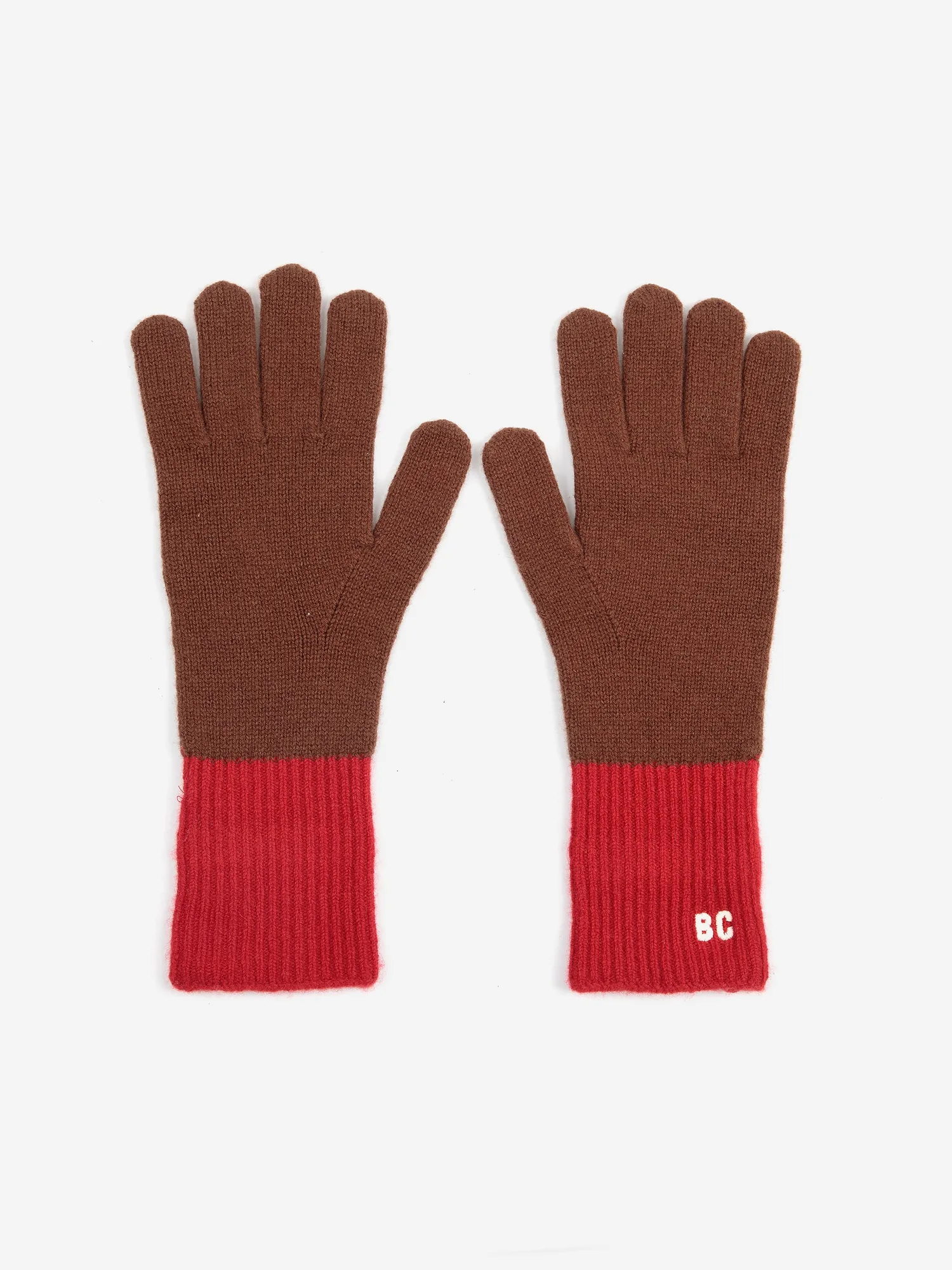
Merino wool knitted gloves