Quick answer
Wash baby bibs, burp cloths, and drool bibs after every one to two uses in warm water with a gentle, fragrance-free detergent. Skip fabric softener and dryer sheets, which coat fibers and reduce absorbency. For organic cotton bib care, pre-treat stains promptly and tumble dry low or air dry to keep bibs soft.
Sort by fabric and soil level before washing
Not all bibs and burp cloths are the same fabric. Muslin, terry, and interlock cotton behave differently in the wash. Sort items into two groups: heavily soiled (milk, spit-up, food) and lightly soiled (drool only). Wash heavily soiled items separately or as a pre-wash cycle to avoid spreading residue. Check care tags first—if a tag says cold wash only, follow it. For items without tags, use warm water and a gentle cycle as a safe default.
Pre-treat stains before they set
Milk and formula stains can yellow over time if washed in hot water before pre-treating. Rinse the bib under cool running water from the back of the stain to push particles out. Apply a small amount of gentle detergent or a drop of dish soap directly to the stain and let it sit for 10–15 minutes. For dried stains, soak in cool water with oxygen-based bleach (not chlorine) for 30 minutes. Avoid rubbing vigorously, which can pill the fabric.
Choose the right detergent and water temperature
Use a detergent labeled free of dyes and perfumes. Regular detergents may leave residues that irritate a baby's skin, especially on items that spend hours against the face and neck. Warm water (around 40°C / 104°F) is effective for most bibs and burp cloths. Hot water is only necessary for sanitizing after illness, but it can shrink some natural fibers and set protein stains. When in doubt, check the care tag or test one item first.
Wash with like items and avoid overloading
Wash bibs and burp cloths with other baby clothes or small towels, not with heavy items like jeans or blankets that can trap soil. Fill the drum about two-thirds full so items move freely. Overloading prevents proper rinsing and leaves detergent residue that makes fabrics stiff. If your machine has a pre-rinse or extra rinse option, use it for heavily soiled loads.
Skip fabric softener and dryer sheets
Fabric softener and dryer sheets coat fibers with a waxy film. That film reduces absorbency, which is the main job of a burp cloth or drool bib. It can also trap odors and irritate sensitive skin. If you want softer bibs, add a half-cup of white vinegar to the rinse cycle instead. Vinegar helps strip detergent residue without leaving a scent.
Dry carefully to keep bibs soft and shaped
Tumble dry on low heat and remove items while still slightly damp. High heat can shrink cotton and break down elastic or snap closures over time. Hang or lay flat to finish drying. If a bib feels stiff after drying, a quick tumble on low with a clean, dry towel can soften it without adding softener. Never iron a bib that has plastic snaps or waterproof backing.
Step-by-step bib and burp cloth wash routine
- Shake off solids and pre-rinse: Hold the bib or burp cloth over a trash can and shake off any food crumbs. Rinse under cool running water to remove milk or formula before it dries. Mistake to avoid: skipping this step lets stains set and requires more scrubbing later.
- Pre-treat stains with gentle detergent: Apply a small amount of fragrance-free detergent directly to the stain. Rub gently with your fingers or a soft brush. Let sit for 10–15 minutes. Checkpoint: if the stain is old or dried, soak in oxygen-based bleach solution for 30 minutes before washing.
- Wash in warm water on a gentle cycle: Use a free-and-clear detergent. Set the machine to a gentle or delicate cycle with warm water (around 40°C / 104°F). Add an extra rinse if available. Mistake to avoid: using hot water on protein stains (milk, formula) can set them permanently.
- Skip softener and dryer sheets: Do not add fabric softener or dryer sheets. If you want extra softness, add half a cup of white vinegar to the rinse cycle. Checkpoint: softener residue reduces absorbency, which defeats the purpose of a burp cloth.
- Dry on low and remove slightly damp: Tumble dry on low heat. Take items out when they are still a bit damp and hang or lay flat to finish drying. Mistake to avoid: high heat can shrink cotton and damage snaps or elastic.
- Store clean bibs where they can breathe: Once fully dry, fold or stack bibs in a dry drawer or basket. Avoid storing them in damp bathrooms or airtight bins. Checkpoint: musty smells mean items were stored damp—re-wash with a cup of vinegar.
Product facts that affect washing
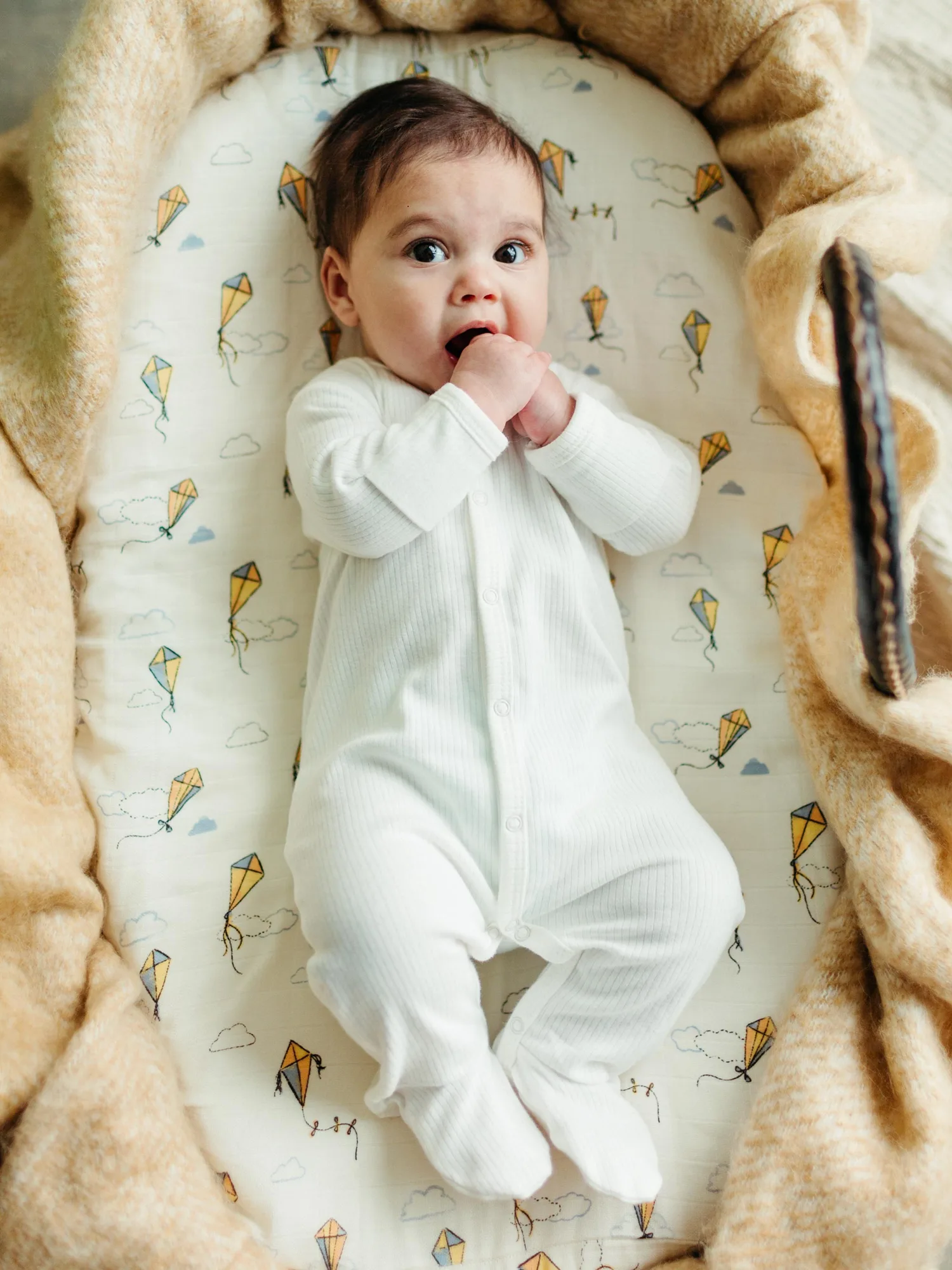
- Onesie/Bodysuit - Short Sleeve - Dino Screenprint: Made of butter soft organic Egyptian cotton with a lap shoulder design and bottom snap opening. The snap opening makes it easy to remove without pulling over the head, but snaps can snag on other items—close them before washing to protect the fabric.
- Muslin Side Snap Kimono - Lavender Stars: Long sleeve romper featuring snaps all along the side front from the neck down, made of breathable organic Egyptian muslin. Muslin is lightweight and dries quickly, but it can shrink if exposed to high heat. Use low dryer settings and remove promptly.