Quick answer
Wash bras and swimwear by hand in cool water with a small amount of gentle detergent, squeeze rather than wring, and dry flat away from direct heat. For D+ cups and lined swimwear, this routine protects the underwires, elastic and foam padding that machine washing and hot drying destroy fastest.
Why D+ bras and swimwear need a gentler wash
D+ bras carry more tension in the band, straps and underwire channels than smaller sizes, so the elastic is doing heavier work every time you wear one. Swimwear adds chlorine, salt and sunscreen to the mix, all of which break down elastane over time. Gentle hand washing is not fussiness — it is the cheapest way to keep a well-fitting bra or bikini fitting the way it did on day one.
What you need before you start
You do not need special equipment. A clean sink or basin, cool water, a gentle detergent (or a dedicated lingerie wash), and a towel for drying flat will do. Skip fabric softener and bleach entirely — both damage elastic and can leave residue on lining. If you are washing a bra with a clasp, fasten it before washing so the hooks do not snag other items.
How often should you actually wash them?
Bras can usually go three to four wears between washes if you rotate them and let them air out overnight. Swimwear is different: rinse it in cool water after every swim, and wash it properly after every few wears or whenever it has been in chlorinated water or heavy sunscreen. Waiting until a bra or bikini looks dirty is too late — oils and sweat have already been sitting in the fibres.
The hand-wash routine, step by step
- 1. Fasten and empty pockets: Close every bra clasp and hook, remove removable pads if the style has them, and check for tissues or sand. Common mistake: leaving the bra unfastened so hooks snag the cups or other items in the water. Checkpoint: nothing sharp or hooked is exposed before the garment touches water.
- 2. Fill with cool water and a small amount of gentle detergent: Use cool or lukewarm water — never hot — and about a teaspoon of gentle or lingerie detergent. Swish to dissolve. Common mistake: pouring detergent directly onto the fabric, which can leave a residue on lining and elastic. Checkpoint: the water feels cool to the touch and the detergent is fully dissolved.
- 3. Soak for 10–15 minutes, then gently agitate: Let bras and swimwear soak, then press and squeeze the suds through the fabric with your hands. Do not scrub, twist or wring. Common mistake: treating swimwear like a T-shirt and rubbing stains hard, which stretches the knit and distorts cups. Checkpoint: you are pressing, not wringing — if the fabric is twisted, you have gone too far.
- 4. Rinse in cool water until it runs clear: Refill with cool water and press the garment through it until no suds remain. For swimwear, this is also the step that lifts out chlorine and salt. Common mistake: stopping while the water still feels slippery, which leaves detergent in the padding and lining. Checkpoint: the rinse water is completely clear, with no foam.
- 5. Squeeze out water inside a towel: Lay the garment flat on a clean towel, roll the towel up, and press down to absorb excess water. Never wring or twist. Common mistake: hanging a wet D+ bra by one strap, which puts the full weight of the wet cups on a single strap and stretches it. Checkpoint: the garment is damp, not dripping, and no strap has been used as a handle.
- 6. Dry flat, reshape, and keep away from heat: Lay bras and swimwear flat — cup side up for padded or underwired styles — and reshape the cups and straps while damp. Keep them out of direct sun and away from radiators or dryers. Common mistake: tumble drying padded bras, which is the fastest way to crumple foam and shrink elastic. Checkpoint: the garment is fully dry before it goes back in the drawer, and the cups hold their shape.
Product care notes
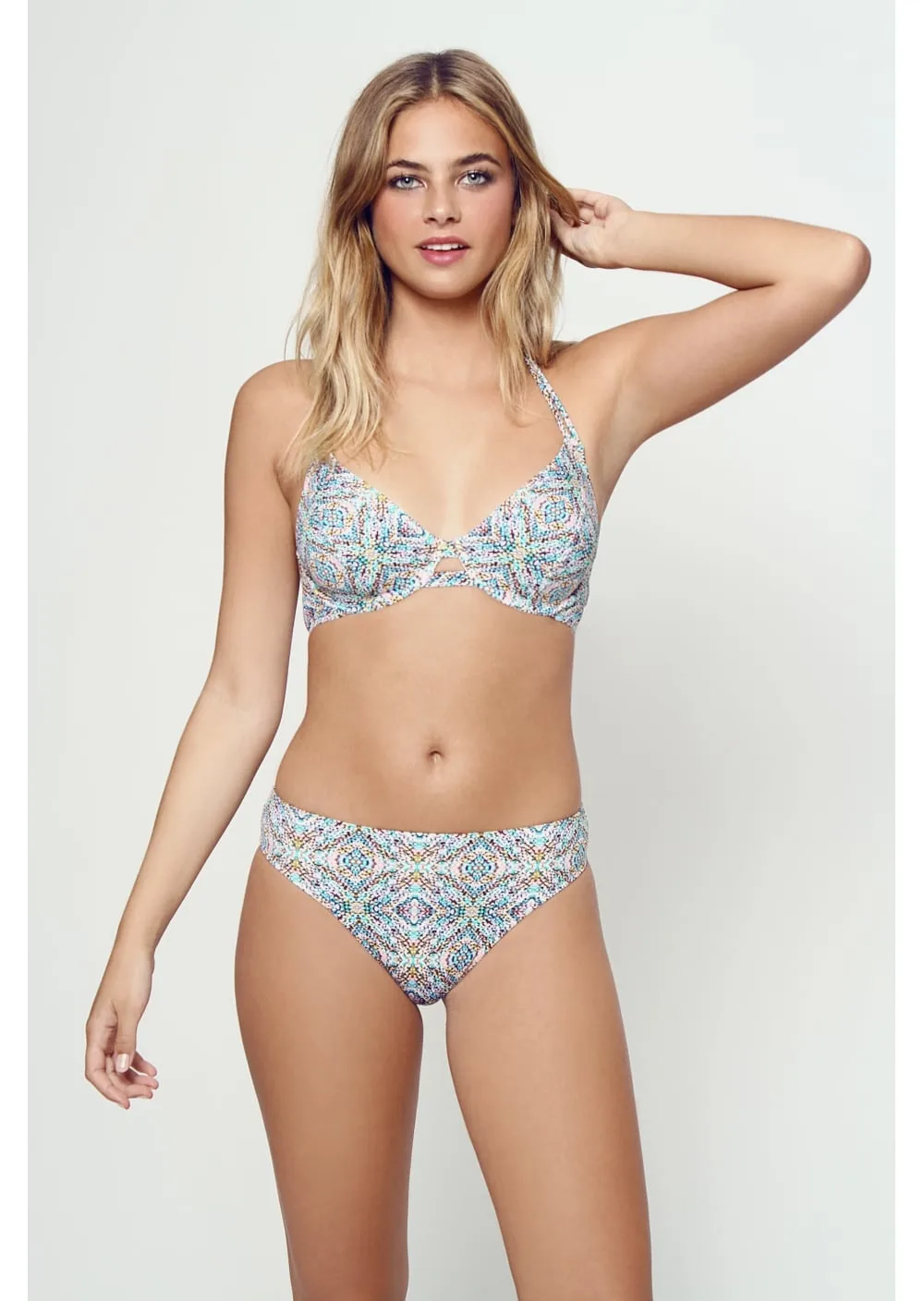
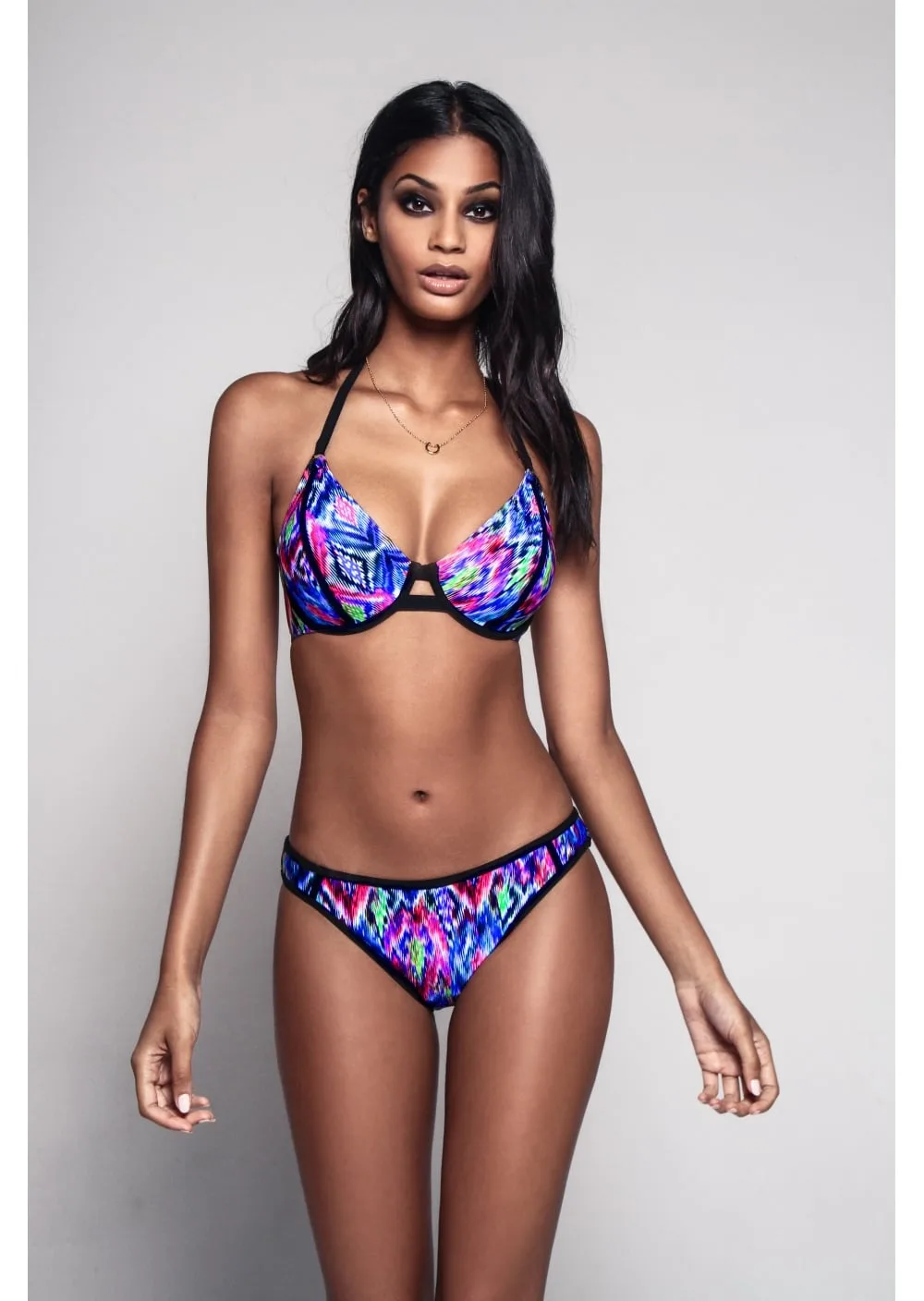
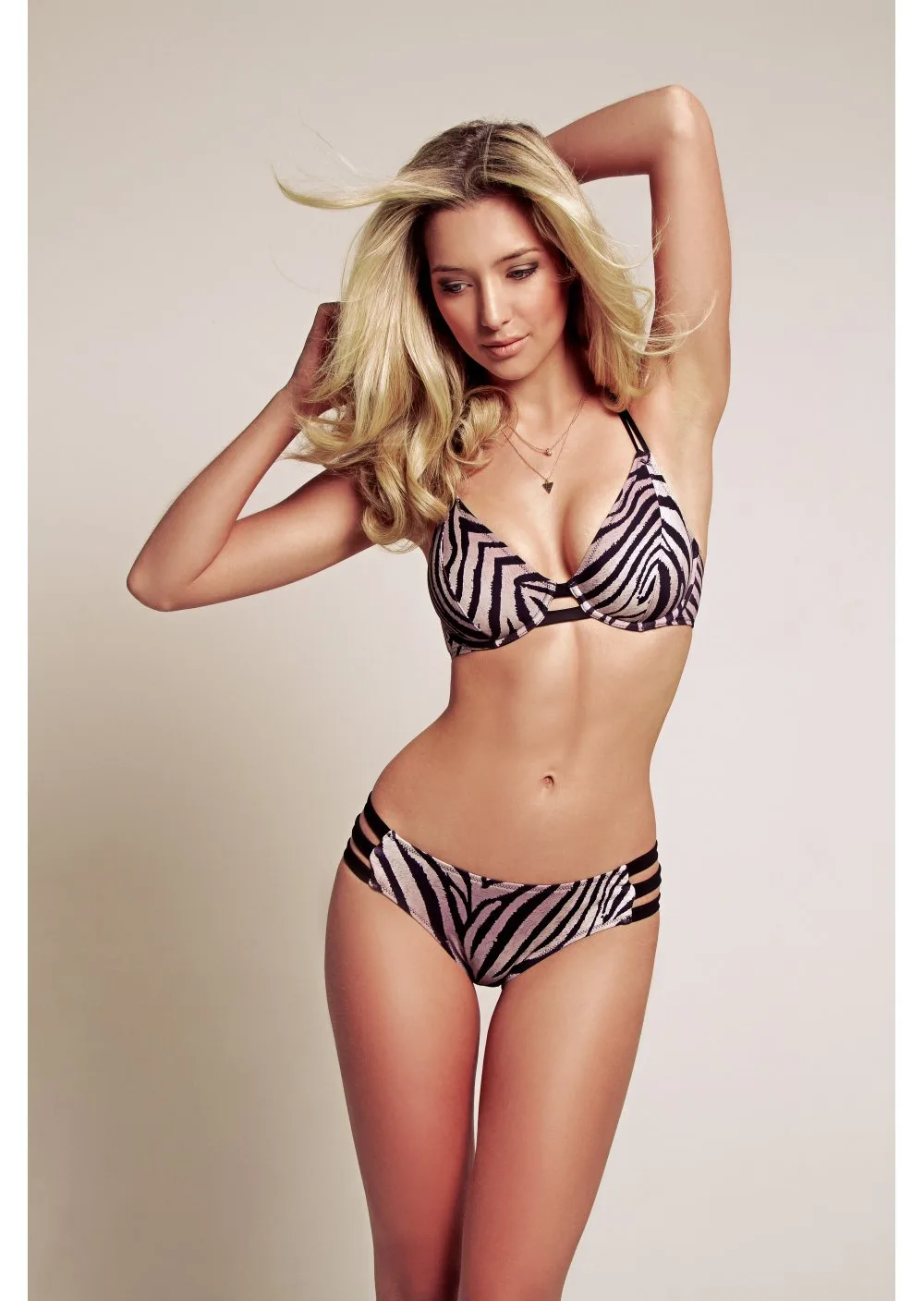
- Fuller Bust Firefly Underwired Halter Bikini Top, D-GG Cup Sizes: The Fuller Bust Firefly Underwired Halter Bikini Top is fully lined, has a clasp closure at the back and comes in D–GG cup sizes. Fasten the clasp before washing so the hooks do not catch the lining or other garments, and support the underwire channels when you squeeze out water.
- Zambia Zebra Deep Bikini Brief: The Zambia Zebra Deep Bikini Brief has three side straps in a cut-out design and is fully lined with good front and back coverage. The strap detail and cut-outs are the first places to snag, so wash this brief inside a mesh bag or alone rather than with zips and hooks.
- Gypsy Deep Brief: The Gypsy Deep Brief is a classic brief shape made from 90% nylon (polyamide) and 10% elastane, fully lined with good coverage. Nylon and elastane respond badly to heat, so keep water cool and dry flat — hot water or a hot dryer is what turns a good fit into a stretched one.