Quick answer
Rinse leakproof underwear in cold water right after you take it off, wash it on a gentle cold cycle with a small amount of mild detergent, and skip fabric softener and dryer heat entirely. Air-drying flat is the single habit that protects the absorbent gusset, so if you only change one thing, make it that.
Why the gusset, not the fabric, sets the rules
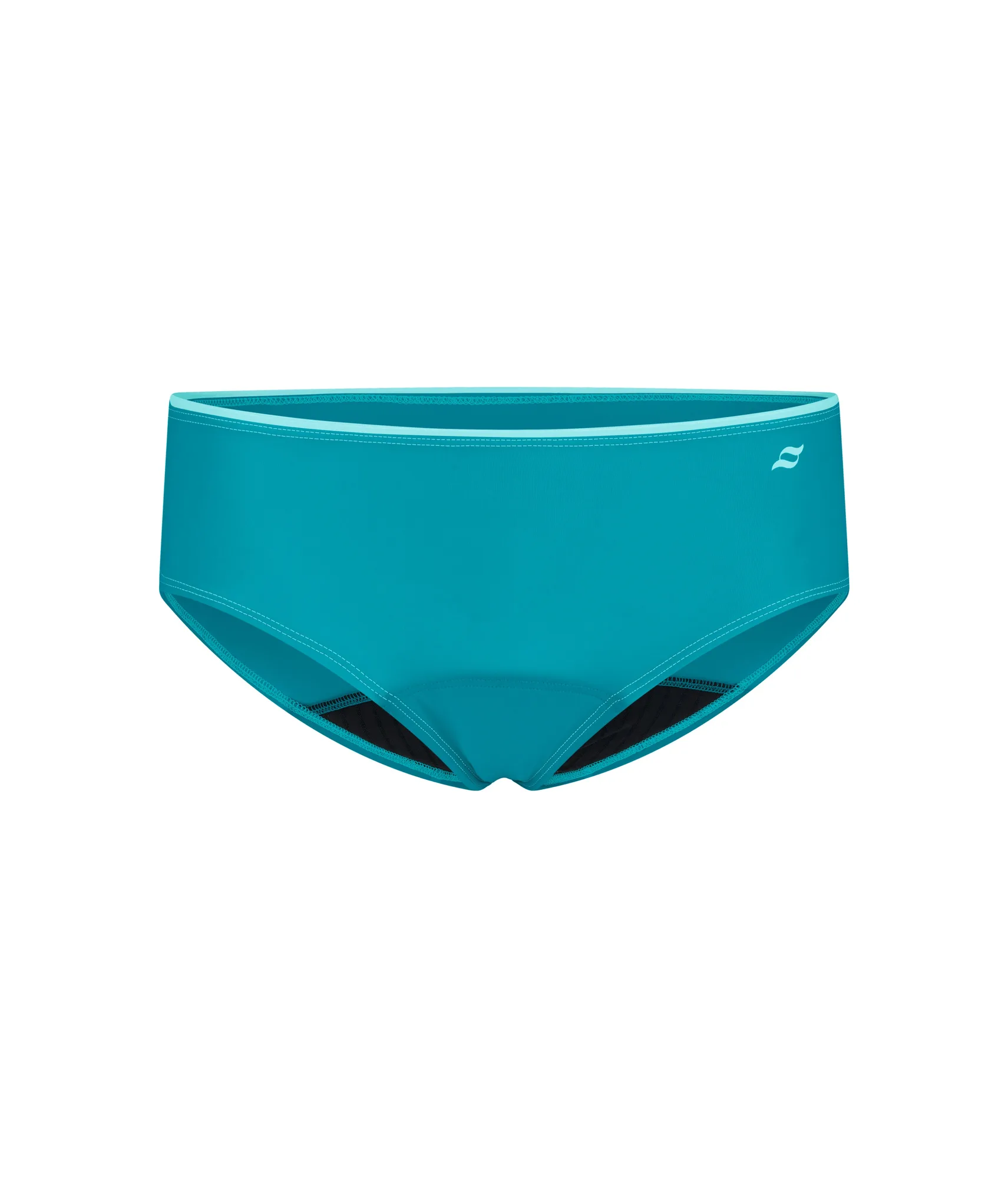
Leakproof underwear has two jobs handled by two different materials. The outer fabric is built to stretch and feel smooth, while the absorbent gusset is engineered to pull liquid in and hold it. Heat, softener residue, and harsh chemicals attack the gusset first, which is why underwear can look perfectly fine but start leaking after a few months of rough washing.
What to keep out of your laundry routine
Fabric softener and dryer sheets coat fibers with a waxy film that blocks absorption, so they work directly against leakproof tech. Bleach and hot water can degrade the bonded layers that keep the gusset sealed. If you use a stain spray, test it on a hidden area first and check the label for bleach or softener ingredients before committing.
Making washes last longer between cycles
You do not need to wash leakproof underwear after every single wear if there was no flow contact, but anything that touched fluid should be rinsed the same day. A quick cold rinse keeps odor from setting and stops stains from bonding to the fabric, which means less scrubbing later and less wear on the gusset.
Your step-by-step leakproof underwear wash routine
- Rinse in cold water as soon as you take it off: Hold the gusset under cold running water until the water runs mostly clear, then squeeze gently. Cold water keeps protein-based stains from setting. Mistake to avoid: letting underwear sit in a hamper for days, which locks in odor and stains.
- Wash on a gentle cold cycle with mild detergent: Use a small amount of mild, softener-free detergent on a delicate or gentle cycle. If hand-washing, swirl for a minute or two rather than scrubbing the gusset. Checkpoint: if your detergent lists fabric softener or optical brighteners, save it for towels instead.
- Skip fabric softener and dryer sheets completely: Both leave a residue that blocks the absorbent gusset from taking in liquid. If you want softness, that comes from the fabric itself, not from a softener. Mistake to avoid: adding a softener 'just this once' — the coating builds up over repeated washes.
- Air-dry flat or hang, away from direct heat: Lay the underwear flat or hang it to dry. If you must use a dryer, choose the lowest heat setting, but air-drying is what keeps the gusset layers intact long-term. Checkpoint: if the gusset feels stiff or crunchy after drying, heat or residue is the likely cause.
- Do a quick absorbency check every few months: Pour a small amount of water on the gusset and watch how quickly it absorbs. If it beads up or pools, the gusset is likely coated with softener or heat-damaged. Next step: if absorbency has dropped, rewash without softener and air-dry before assuming the underwear needs replacing.
Products that follow this care routine well
- Heavy Day Workout 3-Pack: The Heavy Day Workout 3-Pack uses a heavy- or super-absorbency gusset with bonded seams and four-way stretch fabric. Bonded seams and stretch fabric are exactly the parts that heat and softener damage first, so cold washing and air-drying protect both the fit and the leakproof seal.
- Leakproof Cotton Sleep Short 2-Pack: The Leakproof Cotton Sleep Short 2-Pack is made from natural cotton with a fully wrapped super-absorbency gusset that extends from the front waistband to the back. A gusset that large has more absorbent surface to protect, so rinsing promptly and avoiding dryer heat matters even more than it does on a standard brief.
- Leakproof Teen Brief: The Leakproof Teen Brief comes in absorbency, size, and color options and is designed for school, sleep, and sport. If a teen is washing their own underwear, the simple cold-rinse, cold-wash, air-dry routine is easy to remember and hard to get wrong.