Quick answer
Wash your linen duvet cover in cold water (30°C or below) on a gentle cycle with a mild liquid detergent, then air-dry it flat or line-dry away from direct sun. Heat is what shrinks linen, so skip hot water, skip the dryer, and never iron it damp on a high setting. Washed linen is meant to soften with every wash, so a slightly relaxed fit after the first wash is normal, not a defect.
duvet cover
Why linen shrinks, and what you can actually control
Linen is a natural fiber that relaxes and contracts when it meets heat and agitation. Most shrinkage happens in the first wash, and it is usually mechanical rather than chemical: hot water opens the fibers, and tumbling finishes the job. You cannot reverse shrinkage once it happens, but you can keep it minimal by controlling three things: water temperature, cycle agitation, and drying method. Washed linen is pre-softened, so the fabric you receive has already been through part of this process, which is why it feels broken-in from day one and continues to soften rather than stiffen.
What you need before you start
Use a mild liquid detergent without bleach or optical brighteners, and avoid fabric softener, which coats linen fibers and reduces their natural breathability. Wash linen separately from heavy items like jeans or towels, and from anything with zippers, hooks, or rough trims that can abrade the surface. If your machine has a delicate or hand-wash cycle, that is the one to choose. Check the care label on your specific duvet cover first, since it may list a temperature or method that is stricter than these general guidelines.
How often to wash linen bedding
Once every one to two weeks is typical for a duvet cover used nightly, and more often if you sleep warm or have pets. Linen handles frequent washing well because it is strong when wet, but every wash is still mechanical wear, so there is no benefit to washing more often than needed. Between washes, air the cover over a chair or drying rack for a few hours to refresh it. Spot-clean small marks with cold water and a drop of mild detergent rather than running a full cycle.
Step-by-step: washing a linen duvet cover
- 1. Read the care label and check the seams: Confirm the recommended temperature and method, then close any buttons or zips and turn the cover inside out. Repair loose seams before washing, since agitation can widen a small tear. Checkpoint: if the label says dry clean only, stop here and follow it.
- 2. Wash cold on a gentle cycle: Use cold water at 30°C or below with a mild liquid detergent. Choose a delicate or hand-wash cycle and keep the load loose so the cover can move without twisting. Common mistake: hot water or a heavy-duty cycle, which is the fastest route to shrinkage.
- 3. Skip fabric softener and bleach: Add nothing beyond detergent. Softener leaves a film that reduces linen's breathability, and bleach weakens the fibers over time. Checkpoint: if you want extra softness, a half cup of white vinegar in the rinse is enough.
- 4. Air-dry flat or on a line, out of direct sun: Lay the cover flat on a drying rack or hang it, smoothing wrinkles by hand while damp. Keep it out of harsh direct sunlight, which can fade the color. Common mistake: the dryer. Even a low tumble adds heat and friction that cause most shrinkage.
- 5. Finish with a warm iron only if you want a crisper look: If you prefer a smoother surface, iron while the linen is still slightly damp on a medium setting, or steam it lightly. Otherwise, put it straight back on the duvet. Checkpoint: a relaxed, slightly rumpled texture is normal for washed linen, not a sign of damage.
One cover built for this routine
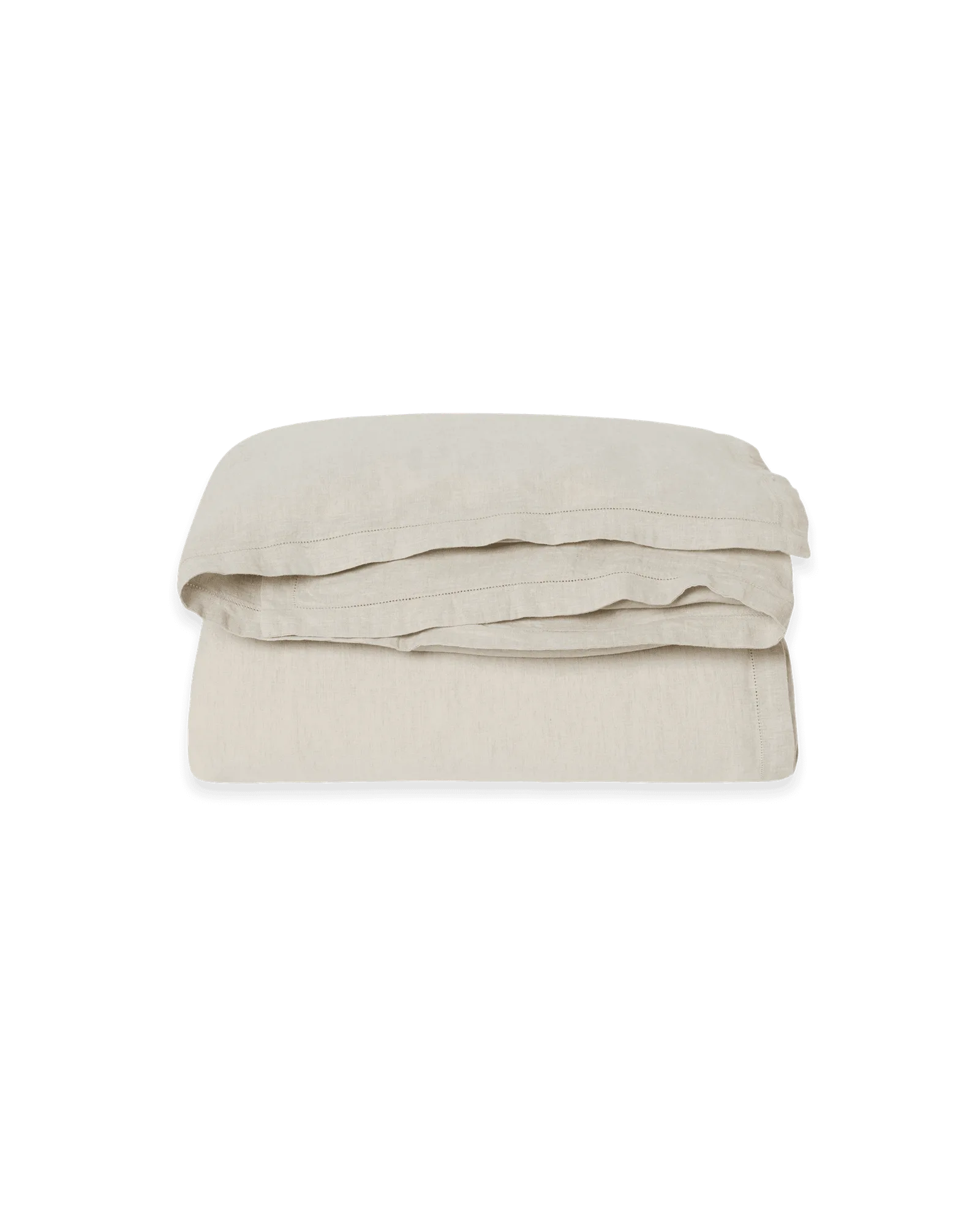
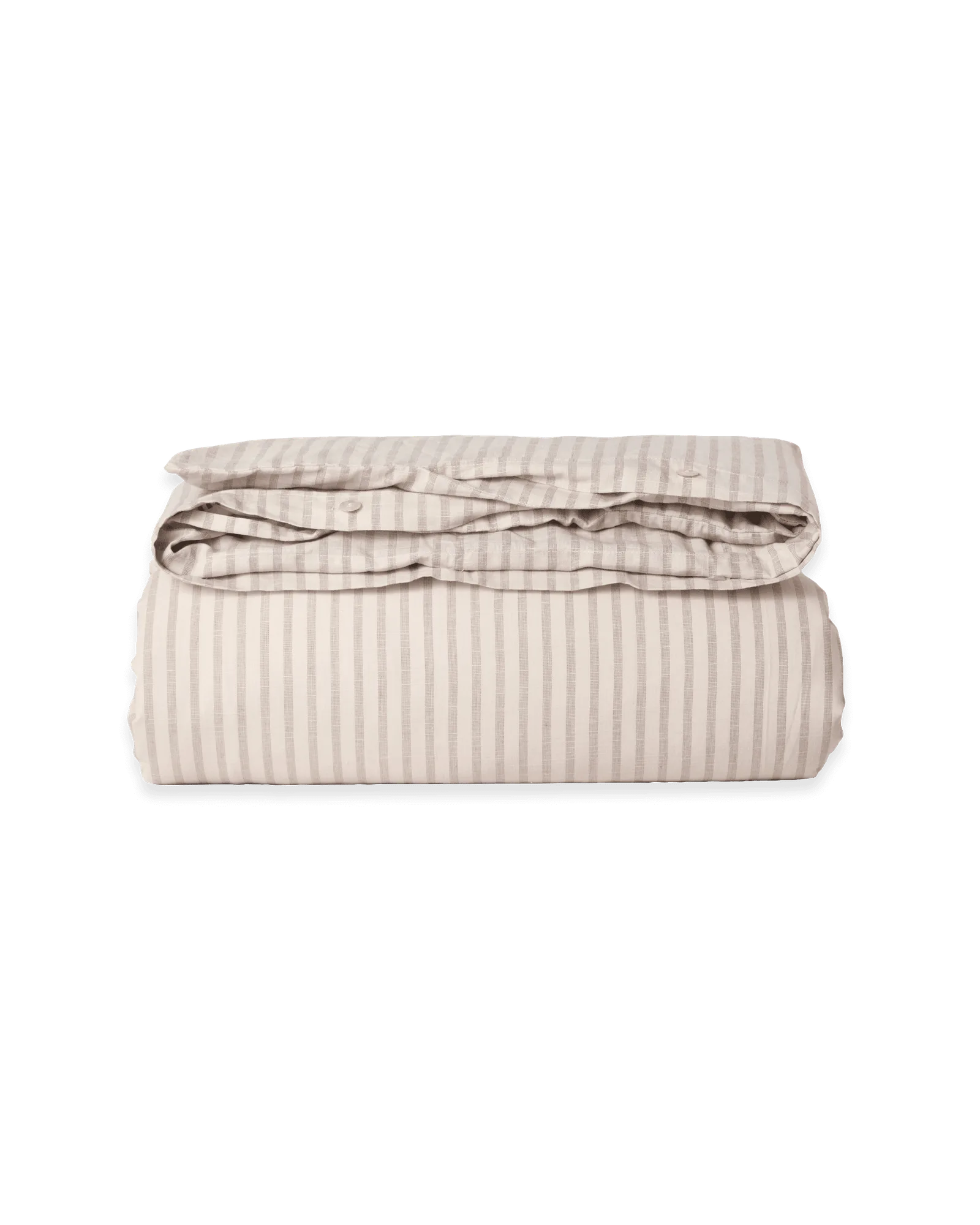
- Linen Duvet Cover: Linen duvet cover in 100% washed linen, naturally textured, breathable and soft, designed in Scandinavia to mix and match with the full range of linen bedding. Because the linen is already washed, it arrives soft and is less likely to surprise you with dramatic first-wash shrinkage than raw, unwashed linen.
- Linen Duvet Cover: Linen regulates temperature exceptionally well, keeping you cool in summer and warm in winter, and gets softer with every wash. The softening is the point, so follow the cold-water, air-dry routine and let the fabric improve rather than trying to keep it crisp.