Quick answer
Wash muslin in cold water on a gentle cycle with mild detergent, then air-dry flat or line-dry away from direct heat. Skip the tumble dryer and hot water; those are the two fastest ways to shrink cotton muslin. Treat every wash as a reset for the fabric's natural crinkle, not a deep clean that needs heat.
Why muslin shrinks and what you can control
Cotton muslin is woven loosely, which is exactly why it feels breathable and soft. That open weave also means the yarns can contract when they meet heat, friction or a long soak. You cannot reverse shrinkage once it happens, but you can control the three triggers: water temperature, mechanical agitation and drying heat. A cold, short, gentle wash keeps the fibres relaxed. A hot, long cycle with a heavy spin pulls them tight. If your muslin has already shrunk slightly, a cool rinse and stretch while damp can relax it a little, but prevention is far easier than correction.
Sort by fabric type, not just colour
Muslin squares, frill blankets and fitted cot sheets all behave differently in the wash. Frill trims and double-layer blankets hold more water and take longer to dry, so they need a slower spin. Fitted sheets have elasticated hems that can lose stretch if they are tossed in with heavy towels. Wash muslin items together or with other lightweight cottons. Keep them away from denim, towels and anything with zips, which abrade the surface and cause pilling. If you are washing a frill muslin blanket, turn it inside out and place it in a mesh laundry bag to protect the trim.
Detergent, dose and what to avoid
Use a mild liquid detergent free from bleach, optical brighteners and enzymes. These additives can weaken cotton fibres over time and leave a residue that makes muslin feel stiff. Dose according to your machine and water hardness, not the cap's maximum line. Too much detergent is a common mistake: it traps soil in the weave and leaves a crunchy finish. Skip fabric softener entirely. It coats the fibres and reduces the breathability that makes muslin comfortable. If your baby has sensitive skin, a second rinse cycle helps remove any leftover detergent.
Drying without heat damage
Air-drying is the safest option. Lay muslin flat on a drying rack or hang it in the shade. Direct sunlight can fade prints over time, and a hot radiator or tumble dryer will shrink the fabric. If you must use a dryer on a low-heat setting, remove the item while it is still slightly damp and stretch it gently back into shape. For fitted cot sheets, pull the elasticated hem back into position before drying flat. Never wring muslin by twisting it; press the water out between two towels instead.
How often to wash different muslin items
Fitted cot sheets need washing at least once a week, and more often if your baby dribbles, spills or has a nappy leak. Muslin squares used for burping or swaddling should be washed after every use or two. A frill muslin blanket used as a pram cover or comfort object can go longer, but wash it before it starts to smell or feel stiff. Over-washing is less of a problem than under-washing, as long as you stick to the cold, gentle routine. Two sets of cot sheets let you rotate while one is drying.
Step-by-step muslin wash routine
- Pre-treat stains while dry: Shake off crumbs and apply a small amount of mild liquid detergent directly to stains. Rub gently with your fingers. Do not soak the whole item in hot water first. Checkpoint: stains should be damp but not dripping before they go in the machine.
- Load loosely and protect frills: Put frill blankets and muslin squares in a mesh bag. Fill the drum no more than two-thirds full so items can move freely without heavy friction. Mistake to avoid: stuffing the machine tight. That increases agitation and pilling.
- Wash cold on a gentle cycle: Select 30°C or cold water and a delicate or hand-wash cycle. Use the shortest spin available, ideally 400–600 rpm. Checkpoint: if your machine has no delicate cycle, use a short cold cycle and reduce the spin speed manually.
- Skip softener, add an extra rinse if needed: Do not use fabric softener or bleach. If anyone in the household has sensitive skin, run an additional rinse cycle to remove detergent residue. Mistake to avoid: assuming more detergent means cleaner. It usually means stiffer.
- Air-dry flat or line-dry in shade: Reshape the item while damp. Lay fitted sheets flat so the elasticated hem is not twisted. Hang blankets over a wide rail rather than a thin line to avoid crease marks. Checkpoint: if you must use a dryer, choose low heat and remove while slightly damp.
- Store folded, not compressed: Once fully dry, fold muslin loosely and store in a dry cupboard. Avoid vacuum bags or heavy stacks that press the weave flat. Next step: rotate two cot sheets so one is always ready while the other is drying.
Cot sheet options built for this wash routine
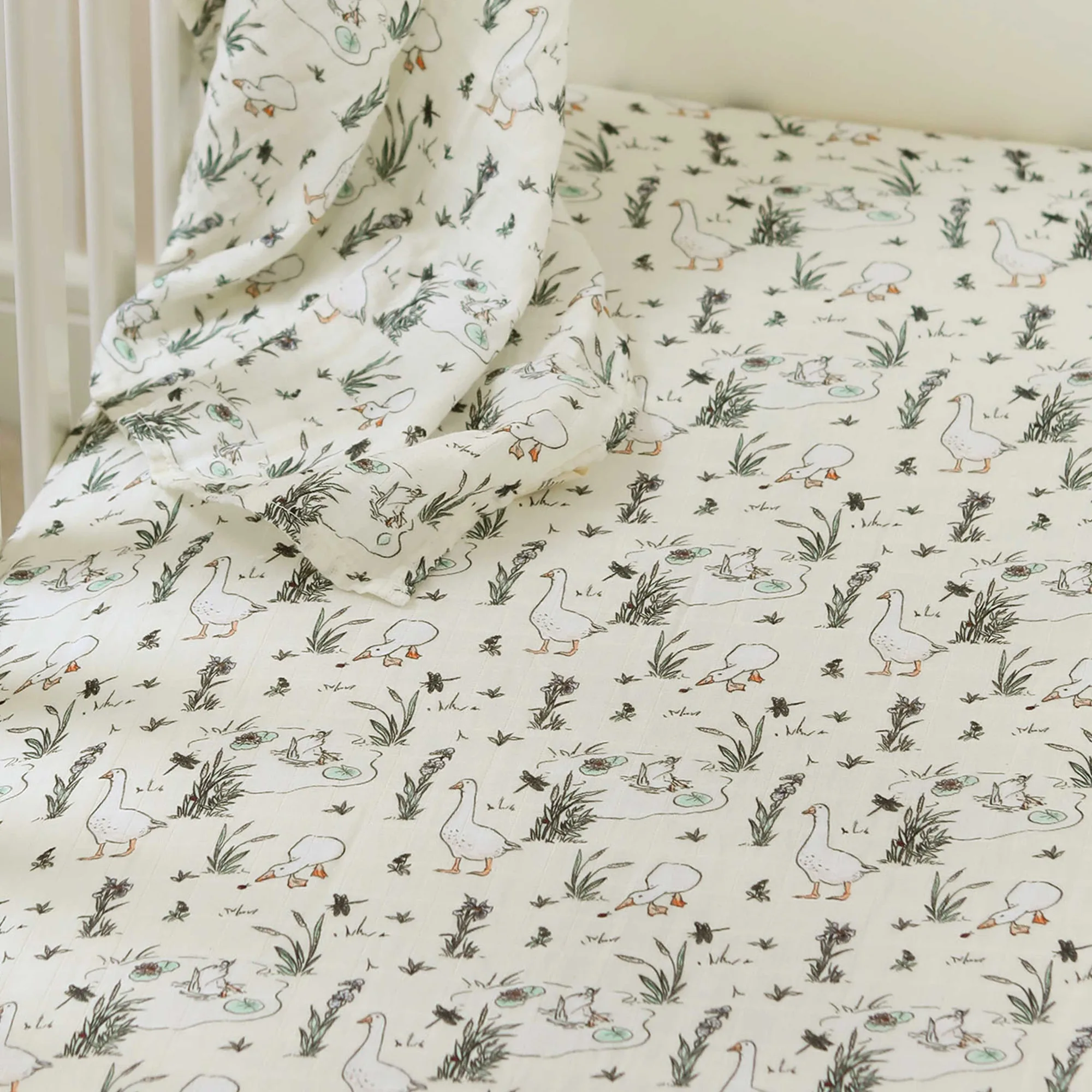
- Cotton Muslin Fitted Cot Bed Sheet 140 x 70cm - Goose & the Ladybird: 100% cotton muslin fitted cot sheet, 140 x 70cm, with a stretchy elasticated hem for a secure fit and quick bed changes. The elasticated hem makes the sheet easy to pull on and off, which means less tugging that can distort the fabric before washing.
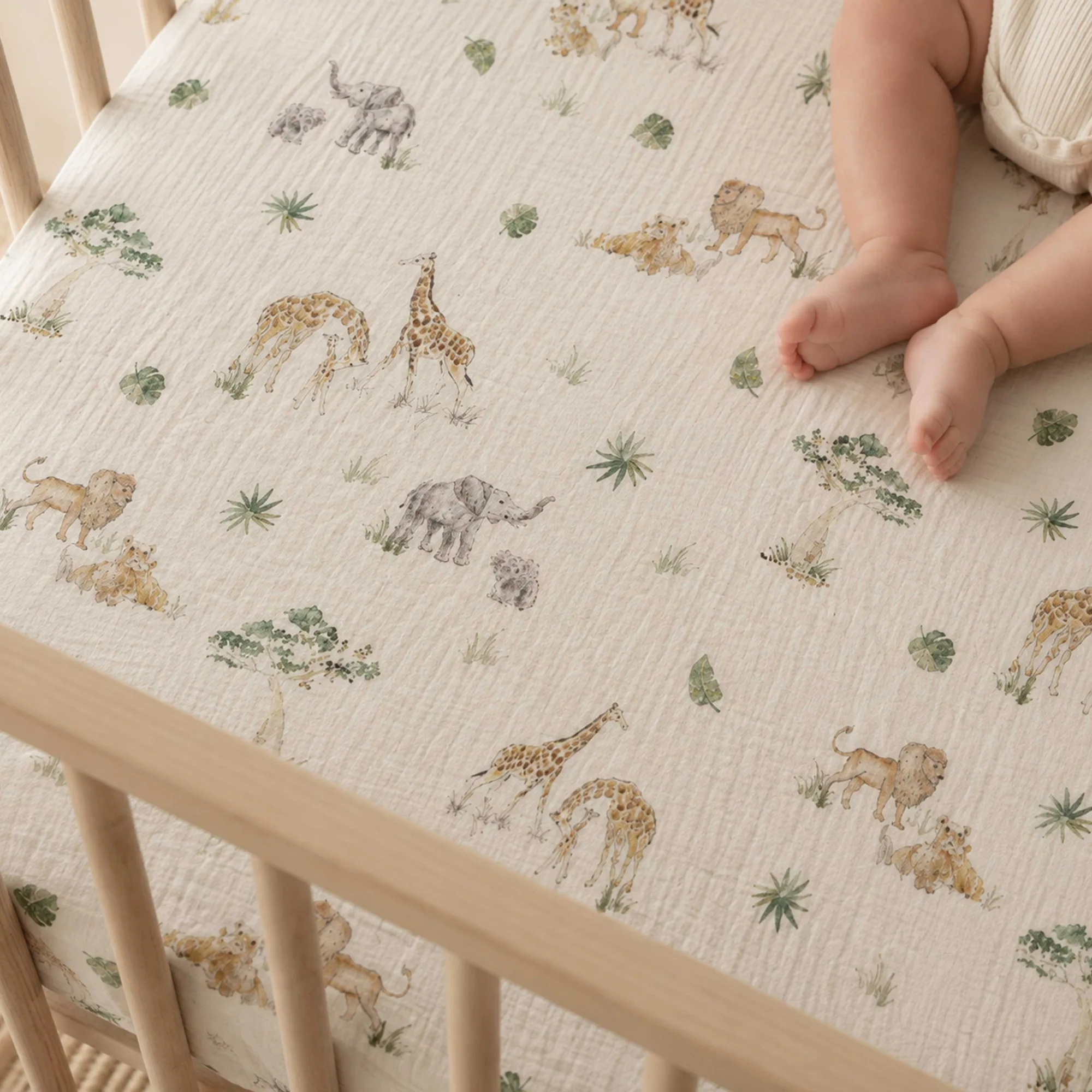
- Cotton Muslin Fitted Cot Bed Sheet 140 x 70cm - Sweet Safari: Breathable cotton muslin helps regulate body temperature while feeling soft against delicate skin. Breathability is why muslin is a good choice for sleep, but it also means you should avoid fabric softener that clogs the weave.
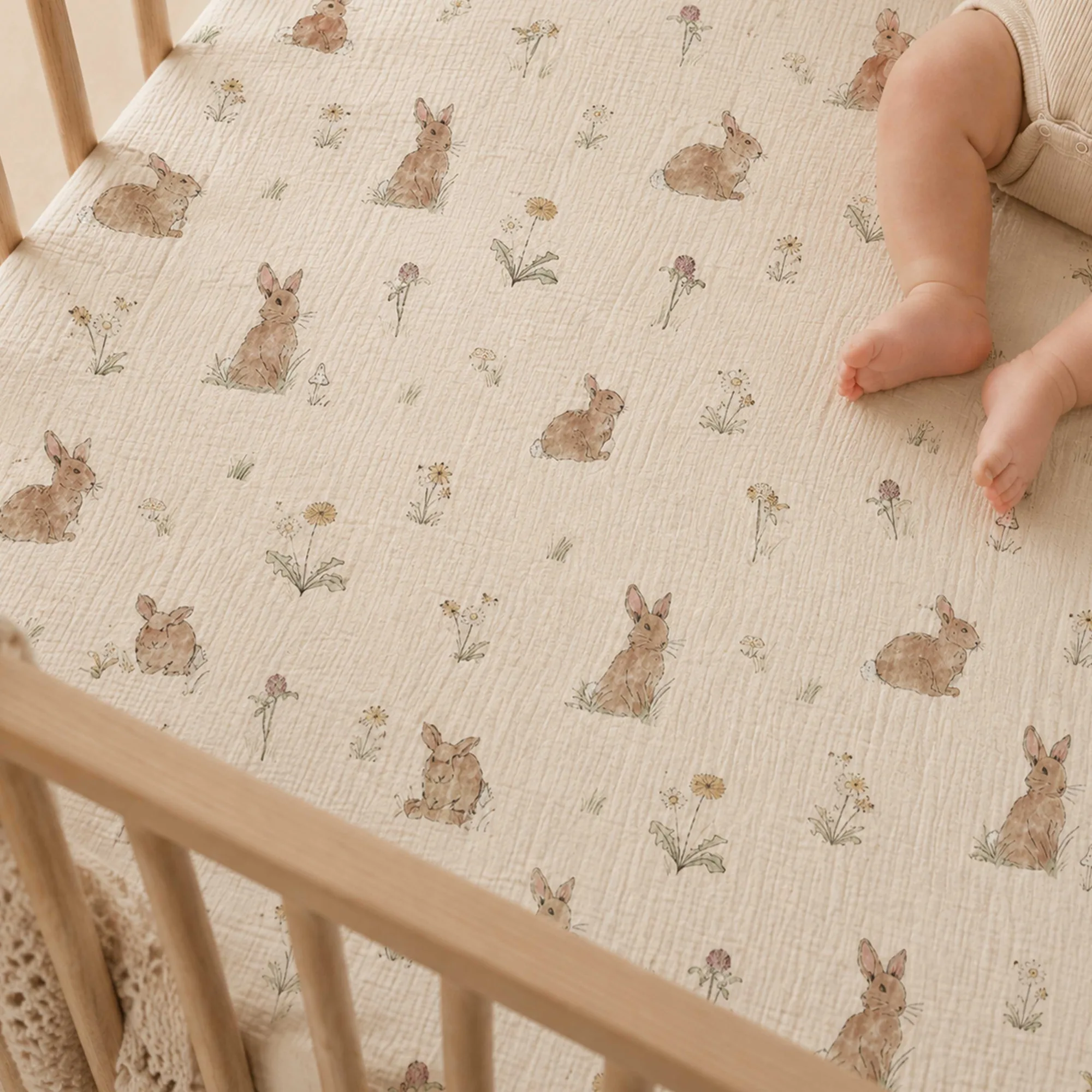
- Cotton Muslin Fitted Cot Bed Sheet 140 x 70cm - Bunnies: Lightweight cotton muslin construction designed for comfort during sleep. Lightweight muslin dries quickly when air-dried flat, so you can rotate between washes without needing a tumble dryer.