Quick answer
Rinse your period swimwear in cold water as soon as you get out of the pool or ocean, then wash it gently with a small amount of mild detergent and air dry it flat or hanging away from direct sun. Skip hot water, fabric softener, bleach, and the dryer. Those four habits do the most damage to absorbency and stretch.
Why a fast cold rinse is the single most important step
Period swimwear holds fluid inside a layered gusset, so the sooner you rinse, the less time blood, sunscreen, and chlorine have to settle into those layers. A 30-second cold rinse in a sink or shower is enough to move most of it out before it binds to the fabric. If you can't rinse immediately, keep the swimsuit damp in a sealed bag and rinse within a few hours rather than letting it dry with residue inside.
Cold water matters because heat sets protein-based stains and can weaken the elastic and bonded seams that give period swimwear its snug fit. Warm or hot water won't sanitize the gusset any better, and it shortens the life of the absorbent layers.
Chlorine, salt, and sunscreen: what pool and beach days add
Chlorine is designed to break down organic matter, which is exactly what period fluid is, so a long soak in a chlorinated suit lets the pool keep working on the gusset after you leave. Salt water and mineral sunscreen leave their own residue that can make the absorbent layers feel stiff or less effective over time.
A cold rinse handles all three. If your suit was in a chlorinated pool, rinse until the water runs clear and squeeze gently. Don't wring it hard, because twisting stretches the gusset and distorts the waistband. For heavy sunscreen days, a drop of mild soap in the rinse water helps lift the residue without stripping the fabric.
How to wash without wrecking absorbency
After the rinse, wash by hand with a small amount of mild, fragrance-free detergent, or use a mesh laundry bag on a cold, gentle cycle if the care label allows it. The goal is to clean the fabric, not to scrub the absorbent core. Fabric softener and dryer sheets coat the fibers and reduce how much fluid the gusset can take in, so leave them out entirely.
If you're washing several suits, keep period swimwear separate from towels and anything with zippers or hooks that can snag the knit. A mesh bag solves this on machine-wash days.
Drying and storing so the suit is ready next cycle
Air dry period swimwear flat on a towel or hanging in the shade. Direct sun and high heat break down elastane, which is what keeps the suit fitted, and a hot dryer can shrink or warp the absorbent layers. Most swimwear dries overnight indoors, so plan around your next swim rather than rushing it.
Once it's completely dry, store it flat or loosely folded in a drawer, not compressed in a plastic bag. Trapped moisture is the main cause of that musty smell people blame on the absorbent layers. If you rotate between two suits, each one gets a full dry day and the fabric lasts longer.
Your step-by-step period swimwear care routine
- Rinse in cold water immediately after swimming: Hold the gusset under cold running water and squeeze gently until the water runs clear. Common mistake: tossing the suit in a swim bag to deal with later, which lets chlorine and fluid set into the absorbent layers. Checkpoint: if the rinse water still looks pink or cloudy, keep rinsing before you wash.
- Wash with mild detergent, never softener: Hand wash with a small amount of mild, fragrance-free detergent, or machine wash cold on gentle in a mesh bag if the label allows. Common mistake: adding fabric softener, which coats the absorbent fibers and reduces capacity. Checkpoint: no bleach, no softener, no hot water.
- Squeeze, don't wring: Press the water out between your palms or roll the suit in a clean towel. Common mistake: twisting the gusset to speed drying, which stretches the absorbent panel and the waistband. Checkpoint: the suit should feel damp, not dripping.
- Air dry flat or in the shade: Lay the suit flat on a towel or hang it out of direct sun. Common mistake: using a hot dryer or leaving it on a sunny line, both of which degrade elastane and can shrink the fit. Checkpoint: fully dry before it goes back in the drawer, especially at the gusset.
- Store loose, not sealed: Fold loosely in a drawer or hang the suit, and rotate between at least two pairs if you swim often. Common mistake: sealing a still-damp suit in a plastic bag, which traps odor and can encourage mildew. Next step: if odor lingers after washing, repeat the cold rinse and air dry before wearing again.
Products this routine applies to
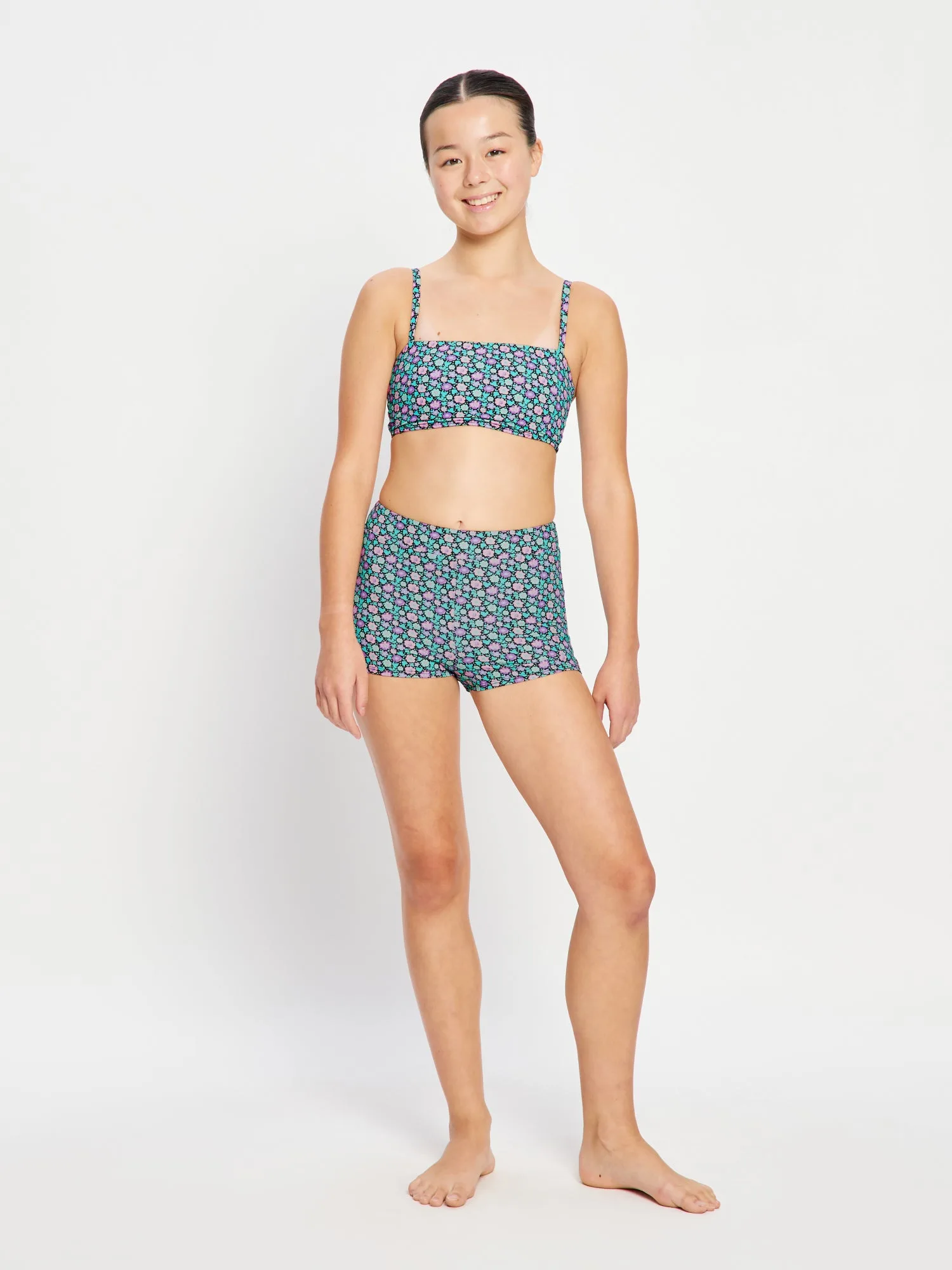
- Teen Swimwear Hi Waist Short Super: Teen Swimwear Hi Waist Short Super has a Super absorbency rating of 50 mls, described as up to 10 tampons and suited to the heaviest days and overnight. A higher-capacity gusset holds more fluid, so rinsing promptly matters more, not less. The longer fluid sits in a Super layer, the harder it is to rinse out fully.
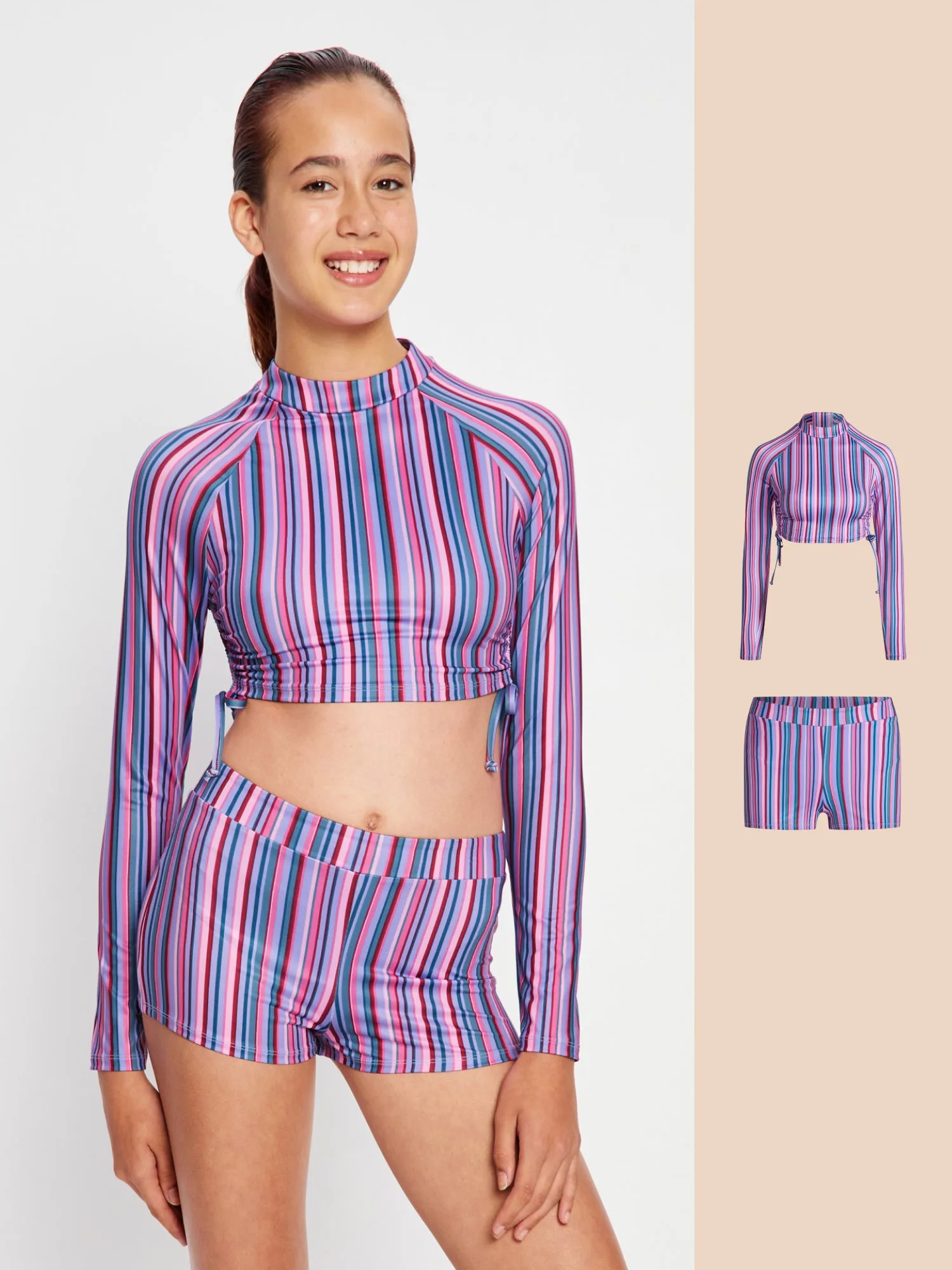
- Teen Swimwear Crop Rash Top Violet Rose Stripe: Teen Swimwear Crop Rash Top Violet Rose Stripe is made from recycled swimwear fabric with long raglan sleeves, a back zipper, and adjustable-tie side seams. The zipper and side ties are the parts most likely to snag or stretch, so close the zipper and secure the ties before washing, and dry the top flat so the sleeves keep their shape.
- Violet Vibes Teen Period Swim Set: Violet Vibes Teen Period Swim Set pairs the Crop Rash Top with the Teen Swimwear Boyshort Super in Violet Rose Stripe. Washing the set together in one mesh bag keeps both pieces on the same care schedule, so the absorbent short never gets washed hotter than the top can handle.