Quick answer
Wear your postpartum support band over a thin layer of clothing, positioning it snugly around your lower abdomen and hips. Adjust the dual straps for a custom fit that supports your core without restricting movement or breathing.
Why fit and placement matter
A postpartum support band works best when it sits correctly on your body. Placing it too high can push on your ribs, while wearing it too low may not provide the core and lower back support you need after delivery. The goal is gentle compression that stabilises your midsection without digging into your skin or causing discomfort.
Your body changes quickly in the weeks after birth, so the fit you set on day one may need adjustment by week two. Checking the band's position and tension regularly helps you get consistent support as swelling subsides and your core gradually strengthens.
When to start wearing it
Most postpartum bands can be used immediately after both vaginal and C-section deliveries, but always check with your healthcare provider before starting. For C-section recovery, the band should sit above your incision site, not directly on it. If you experience any pain, numbness, or increased discomfort, remove the band and consult your midwife or doctor.
How to wear and adjust your postpartum support band
- Choose the right base layer: Put on a thin, snug cotton top or tank before placing the band. Direct contact with bare skin can cause irritation, and a thick fabric underneath reduces the band's effectiveness. A breathable base layer prevents chafing and keeps the band in place.
- Position the band correctly: Stand up straight and wrap the band around your lower abdomen so the bottom edge sits just above your pubic bone and the top edge reaches below your ribcage. For C-section recovery, ensure the band sits above the incision line, not over it. If the band rides up or slides down during movement, reposition it higher or lower by an inch.
- Adjust the tension gradually: Pull the straps or fasteners until you feel firm, even compression — not tightness. You should be able to breathe deeply and sit comfortably. A common mistake is over-tightening in the first few days, which can restrict blood flow and cause discomfort. The band should feel supportive, not constrictive. Loosen it if you see deep red marks or feel numbness.
- Check the fit after sitting and moving: Sit down, bend forward, and walk a few steps. The band should stay in place without rolling at the edges or shifting upward. If it bunches or slips, re-adjust the straps and try a slightly different position. A well-fitted band stays put during everyday movements like picking up your baby or getting out of a chair.
- Wear it for short periods at first: Start with 1–2 hours and gradually increase wear time as your body adjusts. Remove the band during sleep and take breaks every few hours to let your skin breathe. Wearing it all day from the start can lead to muscle dependency and skin irritation. Listen to your body — if the band feels uncomfortable, take it off and try again later.
Product facts
-
Lola & Lykke | Core Restore Postpartum Support Band: The Lola & Lykke Core Restore Support Band is designed with Finnish physios and offers gentle compression to stabilise your core, ease back pain, and support posture. Its dual-strap system lets you adjust the fit independently on each side, so you can customise compression as your body changes during recovery.
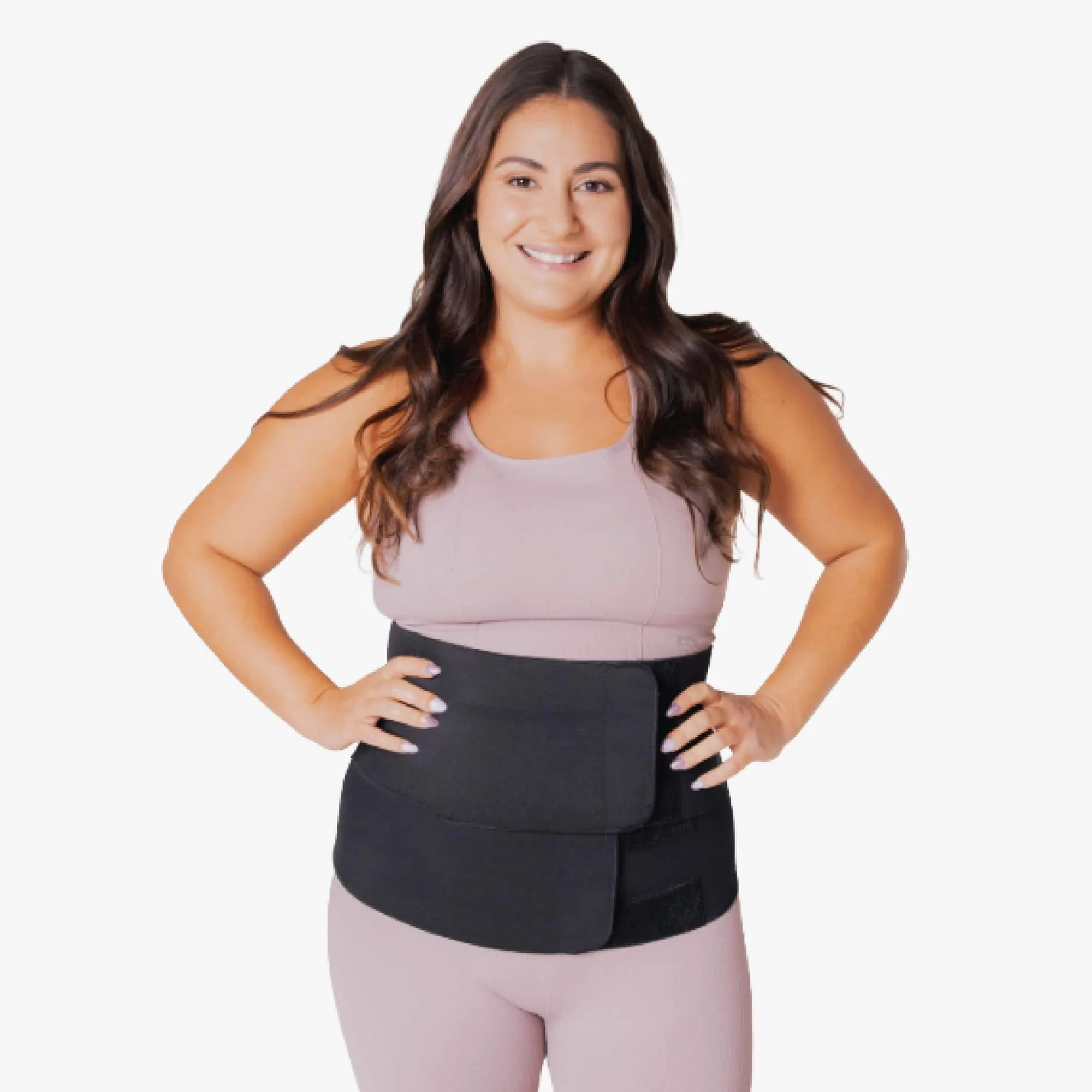
Lola & Lykke | Core Restore Postpartum Support Band