Quick Answer
To wear a baby carrier wrap safely for a newborn, start with the wrap centered on your chest, cross the tails behind your back, bring them to the front, and tie a secure knot at your waist. Then place your baby high on your chest, ensure their face is visible and their chin is off their chest, and check that their hips are in a spread-squat position.
Why a Wrap Can Be a Great Choice for Newborns
A baby carrier wrap can feel like a cozy, secure nest for a newborn. Unlike structured carriers, a wrap distributes your baby's weight across your shoulders and back, which can be more comfortable for long stretches. It also allows you to keep your baby close while your hands stay free for other tasks.
However, wraps have a learning curve. The key is to practice with a doll or a stuffed animal before trying it with your baby. This helps you master the wrapping sequence without the pressure of a wiggly newborn. Once you're confident, you'll find it becomes second nature.
Before You Start: Safety Checks
Before you begin, make sure you're using a wrap that's appropriate for your baby's weight. Most wraps have a minimum weight requirement, often around 7 pounds, so check the manufacturer's guidelines. Also, ensure the fabric is breathable, especially for warm weather, to prevent overheating.
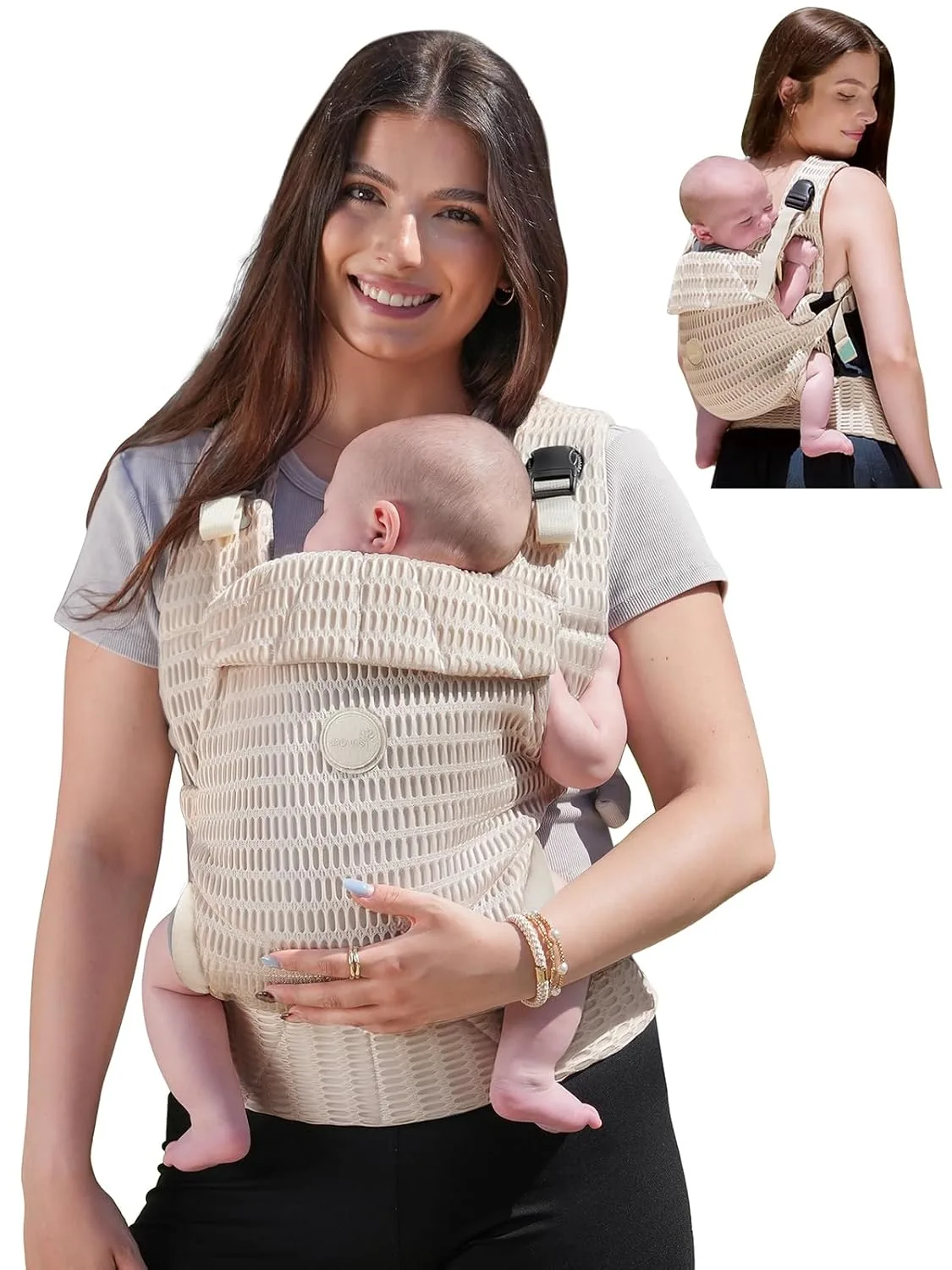
Always check that your baby's face is visible and not covered by fabric. Their chin should be off their chest, and their nose should be clear. You should be able to see their face easily and kiss the top of their head. This is the 'visible and kissable' rule that every caregiver should follow.
Step-by-Step: How to Put on a Baby Carrier Wrap
- Step 1: Center the wrap on your chest: Hold the wrap horizontally behind your back, with the label or seam at your spine. Bring the two ends forward over your shoulders, crossing them over your chest. The fabric should be spread wide across your back to distribute weight evenly. Checkpoint: The wrap should feel snug but not tight. You should be able to breathe deeply and move your arms freely.
- Step 2: Cross the tails behind your back: Take the two ends that are now in front of you and cross them behind your back, just below your shoulder blades. This creates an X across your back that will support your baby's weight. Common mistake: Don't cross the tails too high or too low. The X should sit in the middle of your back, not near your neck or waist.
- Step 3: Bring the tails to the front and tie at your waist: Bring the tails around to the front and tie a secure double knot at your waist, just above your hips. This creates a 'pocket' between the two layers of fabric across your chest. Checkpoint: The knot should be tight enough that the pocket feels firm, but not so tight that it digs into your waist.
- Step 4: Place your baby in the pocket: Hold your baby facing you, with their legs in a spread-squat position (knees higher than their bottom). Slide them into the pocket, ensuring the fabric goes from knee to knee. Their head should be close enough to kiss. Common mistake: Don't let your baby's legs dangle straight down. This can stress their developing hips. The spread-squat position is essential.
- Step 5: Adjust and tighten: Use your hands to spread the fabric over your baby's back and bottom. Tighten the top pass of fabric over their shoulders and the bottom pass under their bottom. The wrap should be snug, with no loose fabric that could cause your baby to slump. Checkpoint: Your baby should be high on your chest, and you should be able to tilt your head down and kiss their forehead. If you can't, tighten the wrap.
- Step 6: Final safety check: Look in a mirror to check that your baby's face is visible, their chin is off their chest, and their nose is clear. Ensure their back is supported in a natural curve, and that the fabric doesn't cover their face. Always do this check every time you put the wrap on, even if you've done it a hundred times before. Safety is non-negotiable.
Product Facts
- Breathable Baby Carrier Wrap for 7–44 lb: Dual-layer mesh design keeps both baby and parent cool and dry. Enhanced airflow prevents sweat buildup, making it perfect for warm-weather snuggles. When you're wearing a wrap, heat can build up quickly between your bodies. A breathable mesh wrap like this one helps regulate temperature, so both you and your baby stay comfortable during longer carries.