Quick answer
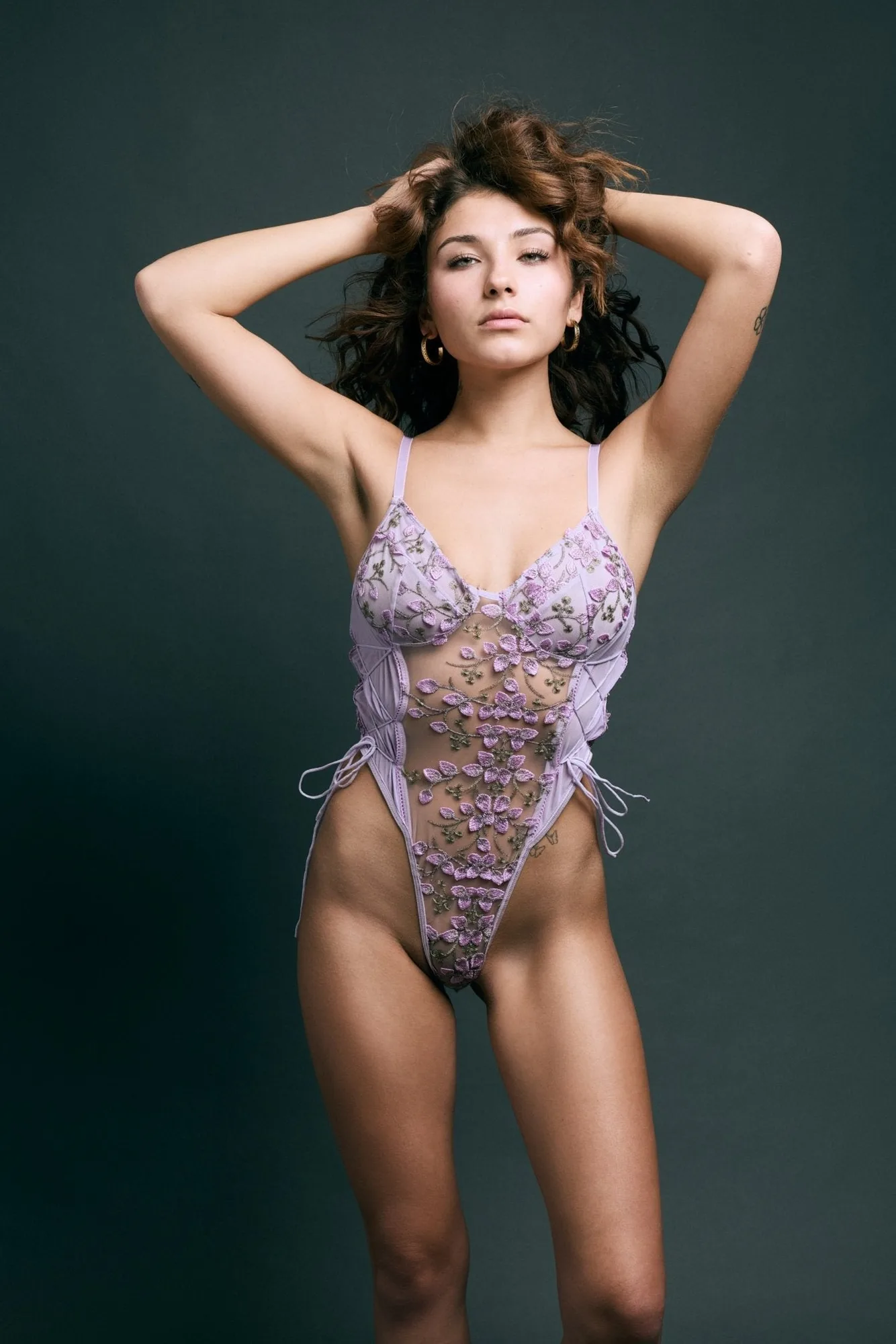
Start with a bodysuit whose fabric is thinner and smoother than your bottom layer, then check the leg openings and side seams before you add jeans or a skirt. A high-cut, adjustable style such as the Lavender Vine Bodysuit sits flatter under waistbands because the side ties let you fine-tune tension instead of pulling. If lines still show, the problem is usually thickness or a folded edge, not the bodysuit itself.
Why bodysuits show lines under jeans and skirts
Lines come from three places: a thick seam, a rolled leg opening, or fabric that is heavier than the denim or skirt over it. A bodysuit with embroidered mesh, like the Lavender Vine Bodysuit, is not automatically a problem; the issue is whether the embroidery sits exactly under a tight waistband. Move the embellished area higher or lower so it rests on a softer part of the garment. If the denim is rigid with no stretch, even a smooth bodysuit can telegraph its edge, so pair it with a skirt or a softer jean instead of forcing the combination.
Match the bodysuit to the bottom, not the other way around
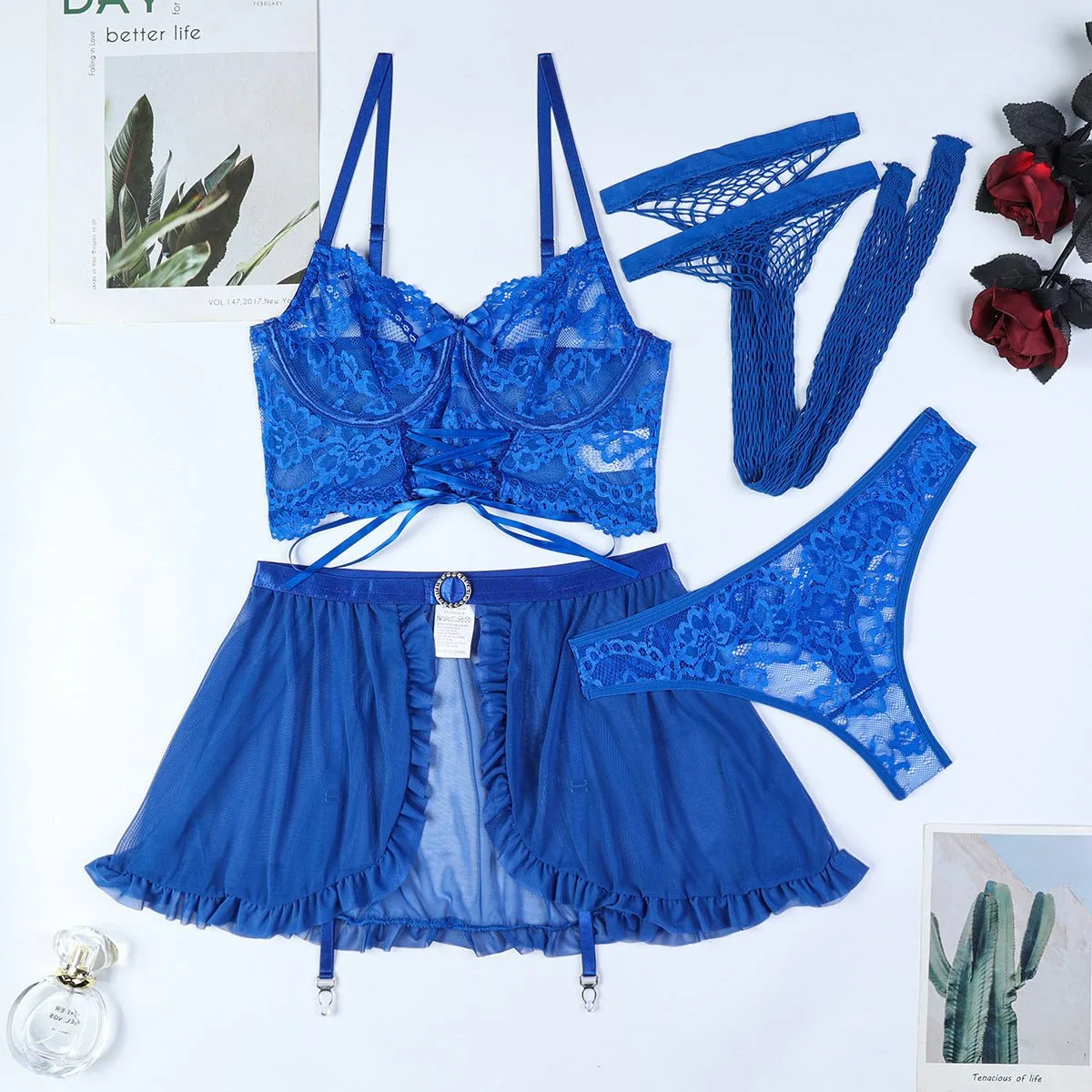
A bodysuit under a skirt behaves differently than under jeans. Skirts usually have a smoother waistband, so a lace or mesh edge is less likely to show, but a bias-cut skirt can cling to every seam. Jeans with a high, structured waistband need a bodysuit that stays put without extra bulk. The Blue Muse Lingerie Set includes a bustier and a ruffled mini skirt, which is a different styling job: the skirt is the outer layer, so the bodysuit or bustier becomes the top rather than a hidden base. Decide first whether the bodysuit is underwear or the outfit, because that changes every step below.
When a bodysuit works as outerwear
A bodysuit can be the visible layer when the fabric is opaque enough and the cut is designed to be seen. The Lavender Vine Bodysuit is described as feeling as beautiful under clothes as it does on its own, which makes it a reasonable candidate for a high-waisted skirt or wide-leg trouser. The tradeoff is support: a bodysuit meant as a base layer may not have the structure of a bustier, so if you want a defined silhouette, the Blue Muse Lingerie Set is the more deliberate choice. If you are unsure which piece suits your taste, the Mystery Piece option lets the store choose based on your cart, but you give up control over the exact style.
Step-by-step: styling a bodysuit under jeans and skirts
- 1. Put the bodysuit on first and adjust the side ties: Fasten the bodysuit before anything else, then tighten or loosen the hip ties until the fabric lies flat against your skin with no ridge. Common mistake: adjusting after you are already dressed, which usually means the bodysuit is twisted at the back. Checkpoint: run a finger along each leg opening. If you feel a rolled edge, fix it now.
- 2. Smooth the leg openings downward, not upward: High-cut styles can creep up when you pull them toward the waist. Press the edge down and outward so it sits on the flattest part of your hip. Common mistake: tugging the front up to flatten the stomach, which lifts the back and creates a visible line under the seat. Checkpoint: turn sideways in a mirror. The back edge should be level, not riding higher than the front.
- 3. Choose a bottom with a waistband that overlaps the bodysuit edge: The waistband should cover the top edge of the bodysuit completely, with at least a finger's width of overlap. If the bodysuit edge sits exactly on the waistband line, it will show through. Common mistake: wearing low-rise jeans with a high-cut bodysuit, which leaves the edge exposed. Checkpoint: bend forward once. If the bodysuit edge appears above the waistband, switch to a higher-rise bottom.
- 4. Match fabric weight to the outer layer: Thin mesh under thick denim is the easiest combination. Embroidered or textured bodysuits work better under skirts with lining or under a looser trouser. Common mistake: assuming all bodysuits are seamless; embroidery and mesh edges can print through a tight, stretch-free fabric. Checkpoint: press your palm flat against the front of the outfit. If you can feel a raised pattern, it may show in certain light.
- 5. Decide if the bodysuit is the outfit or the base layer: If it is the outfit, tuck it into a high-waisted skirt or trouser and treat the bodysuit as a top. If it is a base layer, keep the neckline and straps hidden under the outer garment. Common mistake: wearing a bodysuit as outerwear when the fabric is sheer by design, which is a different look than intended. Checkpoint: step into daylight. Indoor lighting hides sheer fabric that becomes obvious outside.
- 6. Do a seated test before you leave: Sit down, cross your legs, and stand back up. This is when most bodysuits shift, roll, or bunch at the hip. Common mistake: only checking the outfit while standing still. If it moves when you sit, adjust the side ties or choose a different bottom. Checkpoint: if you have to readjust more than once, the fit is wrong, not the styling.
Pieces that make line-free styling easier
- Lavender Vine Bodysuit: Soft lavender mesh embroidered with delicate purple florals, adjustable side ties at each hip, and a high-cut silhouette. The adjustable side ties let you change tension at the hip, which is the main way to stop a bodysuit from pulling or rolling under a waistband.
- Blue Muse Lingerie Set: A bustier with romantic floral accents, a ruffled mini skirt, and coordinating fishnet stockings in one set. Because the skirt is part of the set, this is a ready-made outerwear combination rather than a hidden base layer, so you skip the line-hiding problem entirely.
- Mystery Piece (Secret Set for Less than Half the Price!): A discounted mystery piece chosen by the store with your taste and cart taken into consideration. Useful if you want to test bodysuit styling without picking a specific cut, but you cannot request a particular silhouette or fabric.