Quick answer
To wear a bridal separates skirt with a lace top, choose a skirt with a defined waistband and a top that ends at or just below it. Tuck the top in fully, add a structured underlayer if the skirt needs volume, and finish with a cover-up that frames rather than hides the lace. Always test the full outfit sitting, walking, and raising your arms before the wedding day.
A bridal two-piece lets you mix sizes, fabrics, and silhouettes that a single gown cannot. But the magic only happens when the skirt and top read as one outfit, not two separates that happen to share a hanger. The trick is getting the waistline, volume, and coverage to work together.
This guide walks you through seven practical steps, from choosing the right skirt shape to styling a lace top so it stays put all day. You will also find honest tradeoffs, common mistakes to avoid, and specific product examples from our collection that solve real problems.
Start with the waistline, not the skirt
Before you fall for a tulle skirt, decide where you want your waist to be defined. A high waistband elongates the legs and works well with a cropped lace top. A natural waistband feels more traditional and gives you more room to tuck a longer top. Measure your natural waist and your preferred waist position, then look for skirts that match that measurement.
A common mistake is buying a skirt with a thin, unstructured waistband. It will roll or dig when you move. Look for a skirt with a wide, stable waistband or a hidden inner corset. If the skirt has no built-in structure, plan to add a waist stay or have a tailor add one.
- Checkpoint: The skirt should stay in place when you twist side to side without pulling the top out.
Choose a lace top length that flatters the skirt
The length of your lace top determines whether the outfit looks intentional. A cropped top that ends exactly at the waistband creates a clean line and shows off the skirt. A longer top that ends at the hip can work if it is fitted and tucked in, but it may bunch under a full skirt. Avoid tops that end mid-hip with a full skirt; they cut your body in half visually.
If you want the look of a longer top without tucking, consider a lace bodysuit. It stays smooth and eliminates the need for constant readjustment. For a softer effect, a lace camisole tucked into a high-waisted skirt gives a similar line with less structure.
- Common mistake: Wearing a loose, untucked top over a full skirt. It adds bulk at the widest point.
Balance volume with the right underlayers
A tulle skirt with lace top works best when the volume is controlled. If your skirt has multiple layers of tulle, you may only need a simple slip. If it is a single layer, add a petticoat or crinoline to give it shape. The goal is a smooth, gradual flare from the waist, not a sudden puff.
Test the skirt with the exact undergarments you plan to wear. Seamless underwear and a well-fitted bra or bustier prevent lines. If your lace top is sheer, choose a bra that matches your skin tone or the lace color, or layer a silk camisole underneath. Never assume the skirt will hide what is underneath; tulle is often see-through in bright light.
- Checkpoint: Stand in direct sunlight and take a phone photo. If you can see the outline of your undergarments, adjust before the event.
Layer with a cover-up that frames the lace
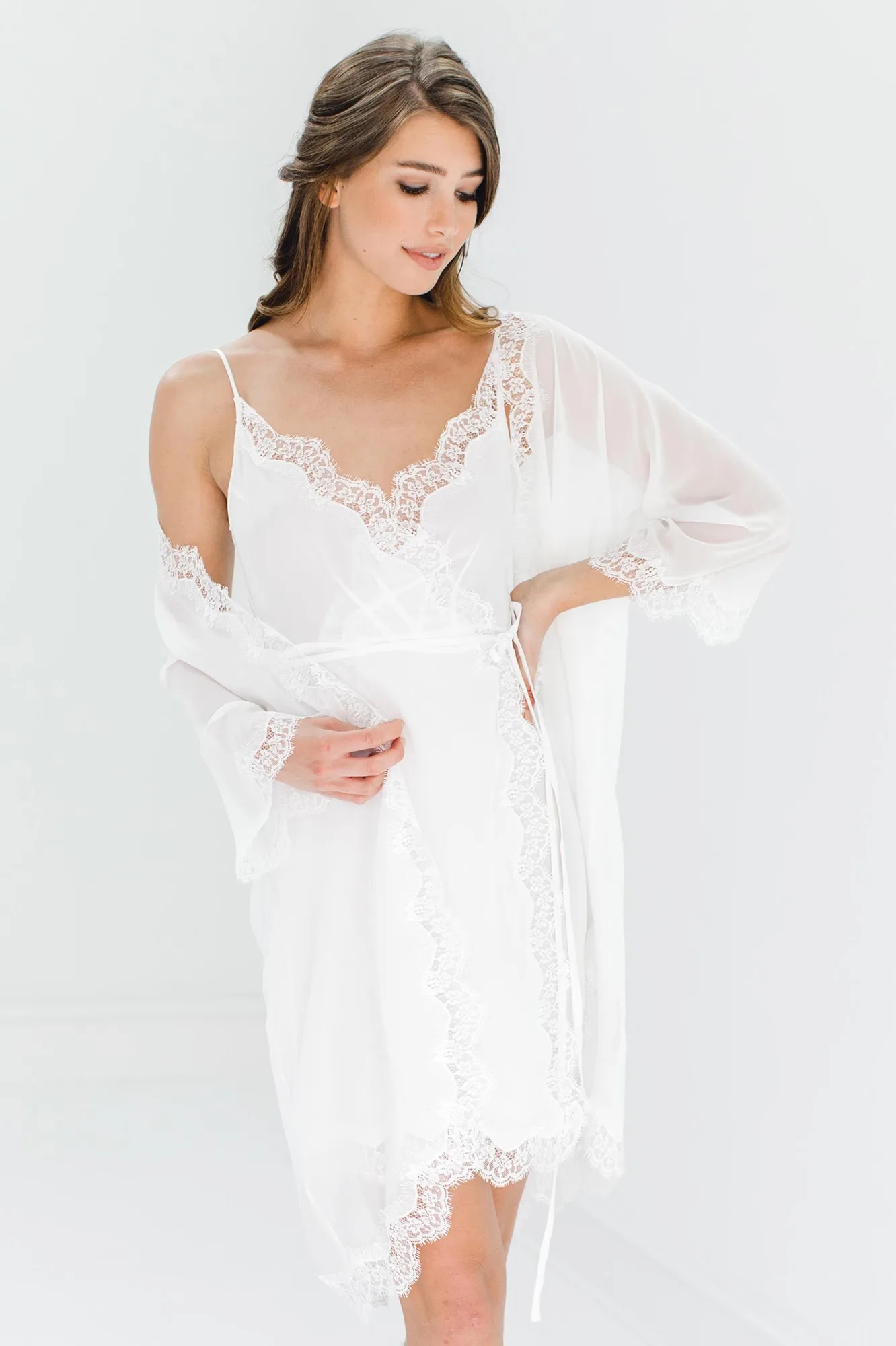
A cover-up should add warmth or coverage without hiding the lace top you chose. For a strapless or thin-strap lace top, a sheer cape or a lightweight bolero works well because it leaves the neckline and back visible. A robe-style cover-up in a matching or contrasting lace can double as getting-ready wear and then transition to the reception.
If your ceremony is in a cool space or outdoors, a lace cape offers more coverage than a bolero while still showing the skirt. The key is to choose a cover-up that ends above or below the waistline, not right at it, so it does not create a horizontal line across your middle.
- Practical tip: A cover-up with an open front creates a vertical line that slims the torso.
Test movement before you commit
A wedding separates outfit has to survive sitting, standing, dancing, and hugging. Put on the full look and do all of those things. Sit down and check that the skirt does not ride up or the top does not gap. Raise your arms overhead; the top should not pull out of the skirt. Walk a few steps and turn; the skirt should follow your body, not lag behind.
If something shifts, fix it now. A tailor can add a hidden snap or hook to connect the top to the skirt, or adjust the waistband. For lace tops with delicate fabric, ask the tailor to use a soft interfacing so the snap does not tear through.
- Common mistake: Only trying on the outfit standing still. Movement reveals fit issues that a mirror does not.
Accessorize without competing
Lace is already a statement. Keep jewelry simple: small earrings, a delicate bracelet, or a single strand necklace that sits above the neckline. If your lace top has a high neck, skip the necklace and let the lace speak. A belt or sash at the waist can tie the skirt and top together, especially if the waistband is plain.
For shoes, consider the skirt length. A floor-length tulle skirt hides most shoes, so choose comfort. A tea-length or midi skirt shows your shoes, so pick a pair that complements the lace without matching it too literally. A satin or suede pump in a neutral tone works with almost any lace color.
- Checkpoint: Take a full-length photo from the front and back. If your eye goes to one accessory instead of the whole outfit, remove it.
Plan for the reception transition
One advantage of bridal separates is that you can change one piece for the reception. Swap the tulle skirt for a fitted crepe or silk skirt, or change the lace top for a simpler camisole. If you want to keep the same skirt, add a belt or change your cover-up to shift the vibe from ceremony to party.
If you plan to dance, make sure the skirt is hemmed to the right length for your shoes. A skirt that grazes the floor in bare feet will drag when you put on heels. Bring your reception shoes to the final fitting.
- Practical tip: Pack a small sewing kit with safety pins and a needle and thread in your day-of bag for quick fixes.
Your step-by-step bridal separates checklist
- Define your waistline: Measure your natural waist and decide where you want the skirt to sit. Choose a skirt with a stable, wide waistband that matches that position. Checkpoint: The skirt stays put when you twist.
- Pick the right top length: Choose a cropped lace top that ends at the waistband, or a fitted top you can tuck in. Avoid loose tops that end mid-hip. Common mistake: Untucked loose top over a full skirt.
- Control volume with underlayers: Add a petticoat or slip only if the skirt needs shape. Test in bright light to ensure undergarments are not visible. Checkpoint: No visible lines or shadows in sunlight.
- Add a cover-up that frames: Choose a bolero, cape, or robe that ends above or below the waistline, not at it. Keep the front open for a vertical line. Practical tip: Open front slims the torso.
- Test movement thoroughly: Sit, stand, raise your arms, and walk. If the top pulls out or the skirt rides up, have a tailor add a hidden snap or adjust the fit. Common mistake: Only trying on while standing still.
- Accessorize with restraint: Let the lace be the focus. Choose simple jewelry and shoes that complement rather than compete. Take a full-length photo to check balance. Checkpoint: Your eye should see the whole outfit, not one accessory.
- Plan the reception swap: Decide if you will change the skirt, top, or cover-up for the party. Hem the skirt with your reception shoes on. Practical tip: Pack a small sewing kit for quick fixes.
Specific pieces that make bridal separates work
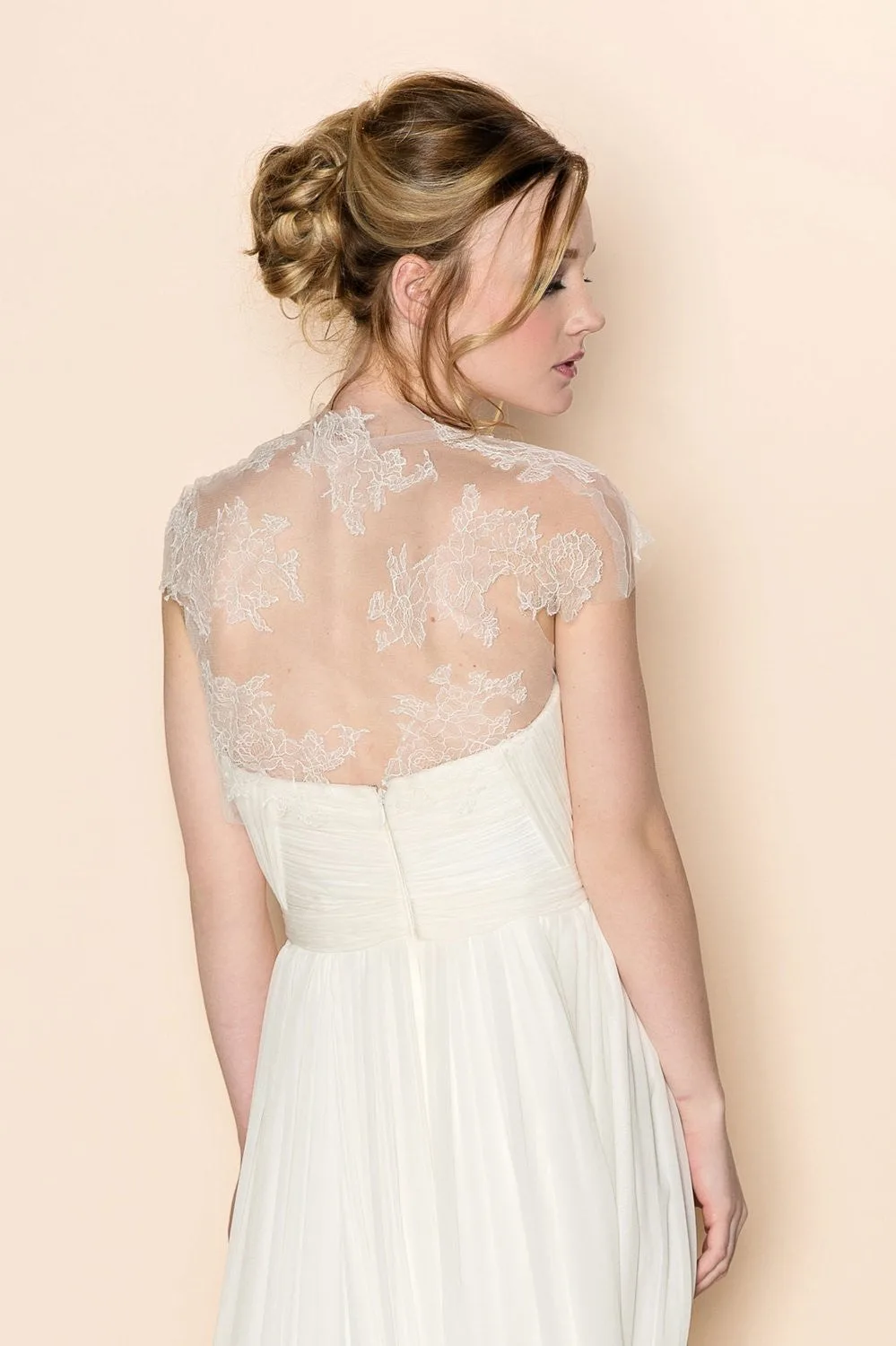
- Amber French lace and tulle cap sleeve bridal cover up bolero shrug: Delicate and light as air, with hand cut French lace applique on English tulle and cap sleeves. Slip it over a strapless gown to add an illusion floral look to an exposed back and shoulders. This shrug adds coverage and texture without hiding the lace top underneath. The cap sleeves and open front keep the outfit from feeling heavy, and the French lace applique ties in with a lace top for a cohesive bridal separates styling.
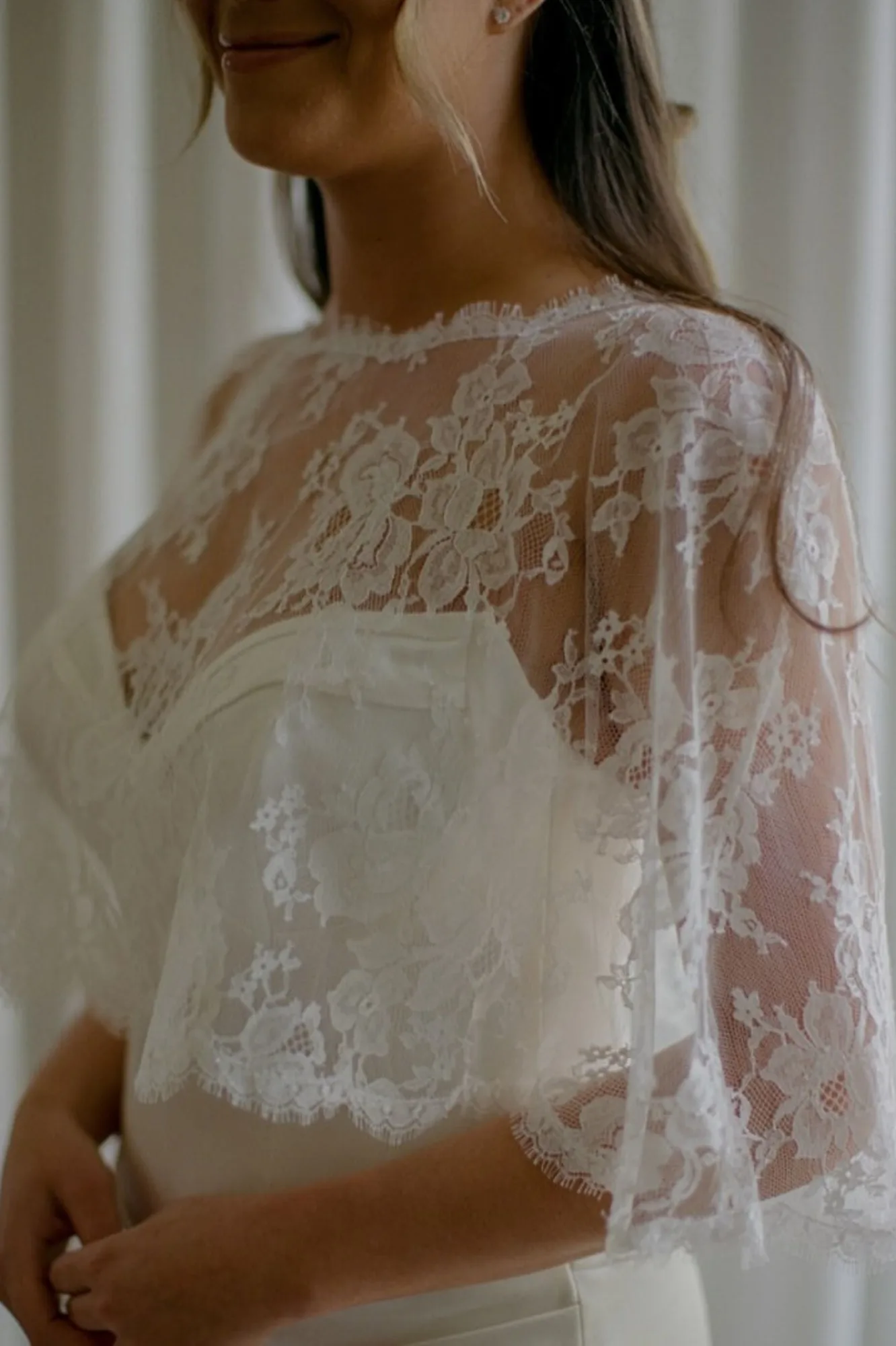
- Carly French lace Cape In Ivory: Made of soft French lace cascading around your shoulder. The perfect companion for a slip wedding gown or a strapless dress. One size. A cape offers more drama than a bolero while still showing off your skirt and top. Because it is one size, it works for many body types, but you should check the length against your waistline to avoid cutting your proportions.
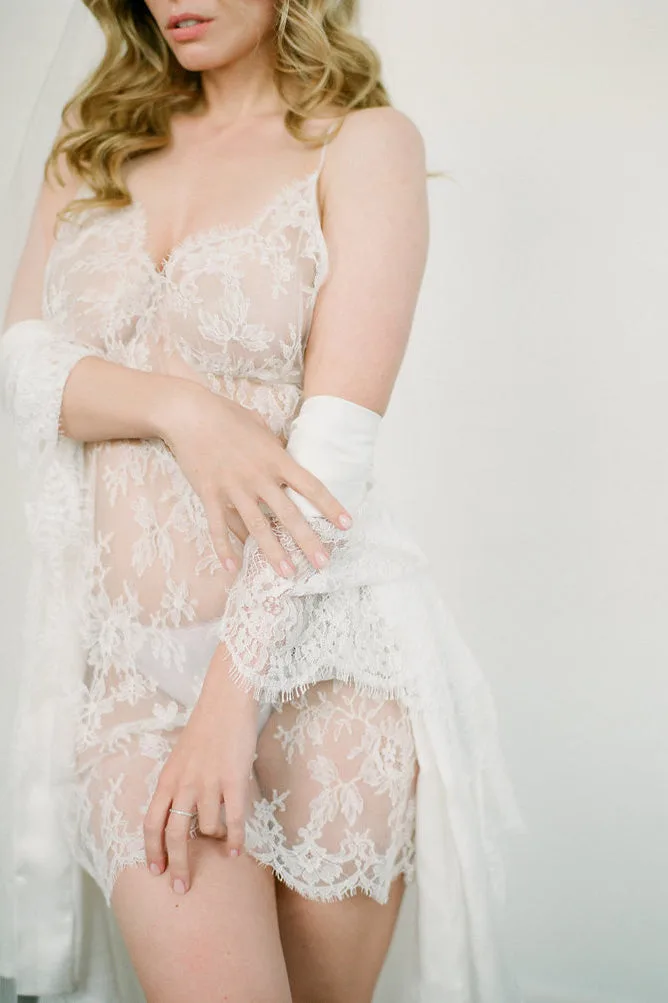
- Darling French lace slip camisole in Ivory: Delicate French Chantilly lace slip dress with a scallop neckline and hem, and fully adjustable thin straps. Made to order with a 1–2 week production time. This camisole can be tucked into a high-waisted skirt to create a smooth line, or worn over a simple skirt as a lightweight top. The adjustable straps let you fine-tune the fit, which is essential when pairing with different skirt waistbands.
A bridal separates skirt and lace top gives you flexibility and a look that is uniquely yours. Focus on the waistline, test every movement, and choose cover-ups and accessories that support the lace instead of hiding it. With these steps, your two-piece outfit will feel as good as it looks from the first look to the last dance.