Quick answer
To back carry a toddler safely, start with a snug waistband and shoulder straps, then use a supported method to swing your child onto your back. Keep the carrier high and tight so your toddler sits knee-to-knee, and always double-check the waist buckle and chest strap before you move.
Why back carrying works for toddlers
Once your child can sit independently and has good head control, a back carry frees your arms and balances the weight over your hips. It also lets your toddler see the world, which often makes errands and walks calmer for both of you. The key is to treat the carrier as a piece of safety gear, not just a convenience: every buckle, strap, and panel should be checked before you take a step.
Preparing your carrier and your child
Before you attempt a back carry, put the carrier on with the waistband snug around your hips and the shoulder straps loose enough to reach behind you. Dress your toddler in comfortable clothing that won't ride up, and remove bulky jackets that can create gaps. If you're using a carrier with a structured panel, make sure the panel reaches from the back of your child's knees to the base of their neck when they're seated.
Back carry step by step
- Set the waistband: Buckle the waistband around your hips, not your waist, and tighten it until it feels firm but comfortable. The waistband should sit level and not dig in when you sit down. Checkpoint: you can slide two fingers under the waistband, but not a whole hand.
- Position your toddler: Stand in front of a mirror or a safe surface. Lift your toddler onto your hip, then guide their legs around your waist as you rotate them to your back. Keep a hand on them at all times. Common mistake: rushing the swing and letting your toddler's legs dangle instead of tucking them into the seat.
- Bring the panel up: Pull the carrier panel up over your toddler's back, from their waist to the base of their neck. Make sure the panel supports their back fully and doesn't cover their face. Checkpoint: the panel should reach the nape of the neck, and your child's chin should be clear of the fabric.
- Tighten the shoulder straps: While keeping your toddler's weight centered, tighten the shoulder straps evenly. The carrier should feel snug against your body, and your toddler should be high enough that you can kiss the top of their head. Common mistake: over-tightening one side, which pulls the carrier crooked and puts pressure on one shoulder.
- Adjust the seat: Reach under the carrier and scoop your toddler's pelvis forward so they sit in a deep squat with knees higher than their bottom. The fabric should support them from knee to knee. Checkpoint: your toddler's knees should be at or above hip level, and their back should have a natural curve.
- Secure the chest strap: Clip the chest strap across your front and adjust it so the shoulder straps stay in place. It should be comfortable and not ride up toward your neck. Common mistake: forgetting the chest strap, which lets the shoulder straps slide outward and reduces support.
- Do a final fit check: Look in a mirror or ask someone to check that the carrier is centered, the waist buckle is secure, and your toddler's airway is clear. Gently bounce to test stability. Checkpoint: no gaps between your toddler's back and the panel, and the waist buckle is locked.
Carrier features that help a safe back carry
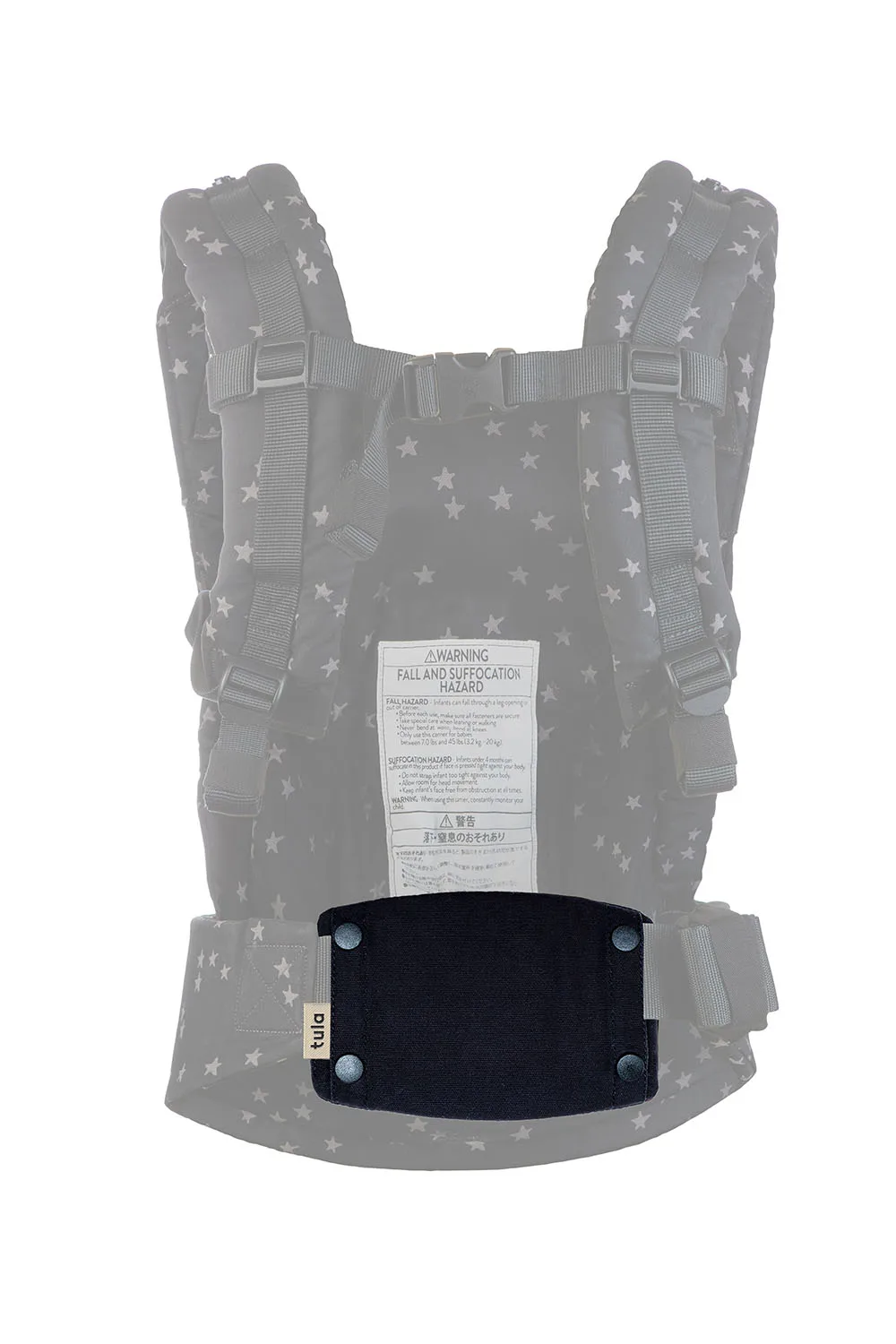
- Tula Lumbar Support for Baby Carrier: Add extra comfort to your baby carrier with lumbar support, designed to ease lower back pressure during long walks or everyday errands. A back carry shifts weight to your lower back, so added lumbar support can reduce strain on longer outings.
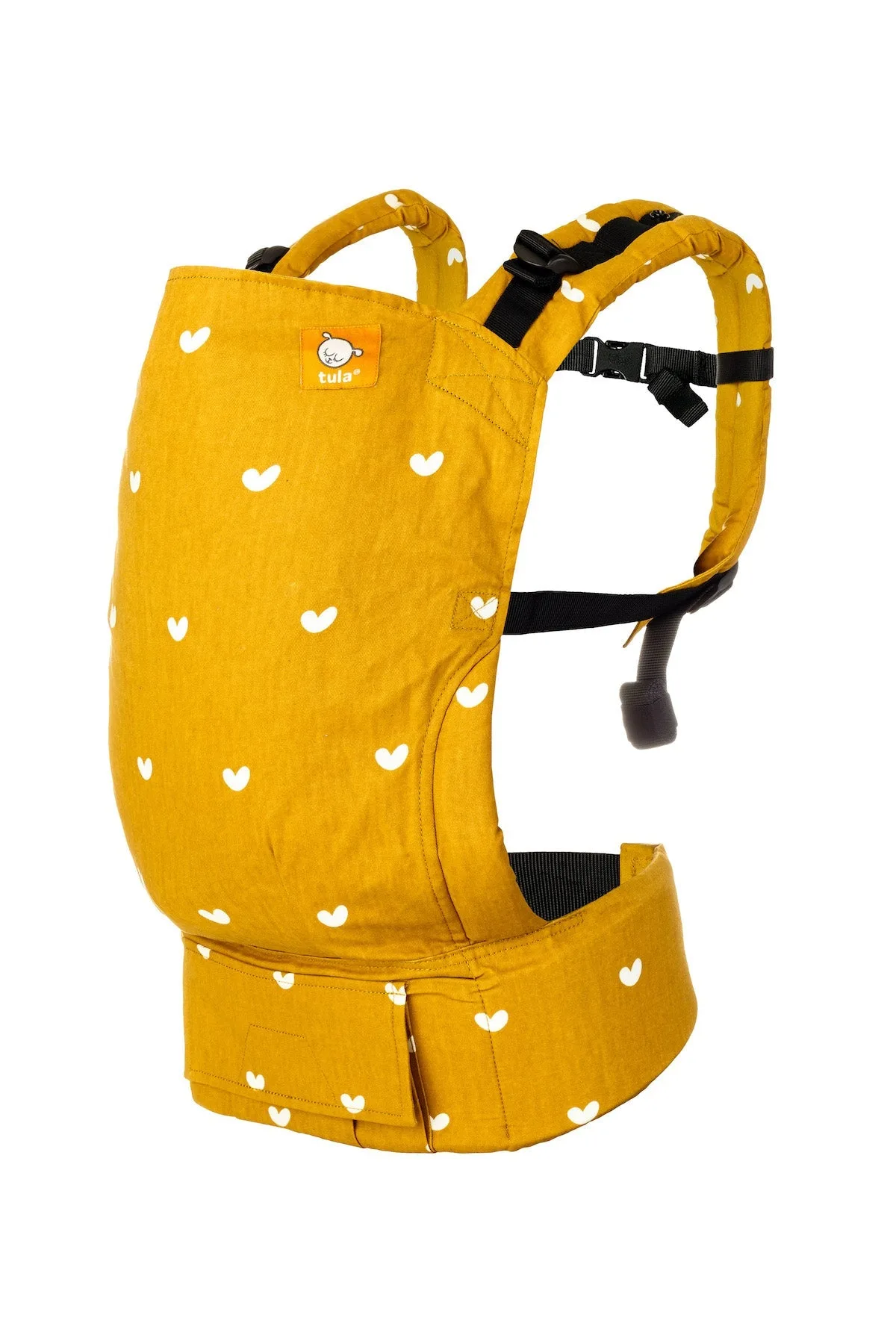
- Seedling - Cotton Toddler Carrier: Seedling has a subtle repeating pattern of little sprouting leaves, in sage, dusted across a rich forest green background. A toddler carrier with a structured panel and adjustable straps gives you the support needed for a high, tight back carry.