Quick Answer
To wrap a newborn safely, use a stretchy wrap that supports 8-25 lbs, follow a snug cross-carry pattern, and always check that the baby's face is visible and their airway is clear.
Why a Stretchy Wrap Works for Newborns
Stretchy wraps mimic the snug, supportive feel of the womb, which helps calm newborns and supports healthy hip and spine positioning. They distribute the baby's weight evenly across your shoulders and back, making them comfortable for both caregiver and baby during those early months.
The key is the fabric's stretch: it allows you to tighten the wrap precisely around your baby, but it also means you must re-tighten as the fabric relaxes. A wrap that's too loose can let the baby slump, which compromises their airway.
Know the Weight Limits and Your Baby's Readiness
Most stretchy wraps are designed for babies from about 8 pounds up to 25 pounds. Always check your specific wrap's weight range before use. For newborns, ensure they have good head control and are able to maintain an open airway when positioned upright.
If your baby was born prematurely or has any respiratory concerns, consult your pediatrician before using a stretchy wrap. The snug, upright position is generally safe, but individual health conditions matter.
Step-by-Step: Wrapping Your Newborn
- Prepare the Wrap: Lay the wrap flat and find the center. Place the center against your chest, then bring the tails around your back and cross them over your shoulders. Tie a secure knot at your lower back, creating a pocket in front. Make sure the fabric is not twisted and the knot is tight enough that the wrap won't slip.
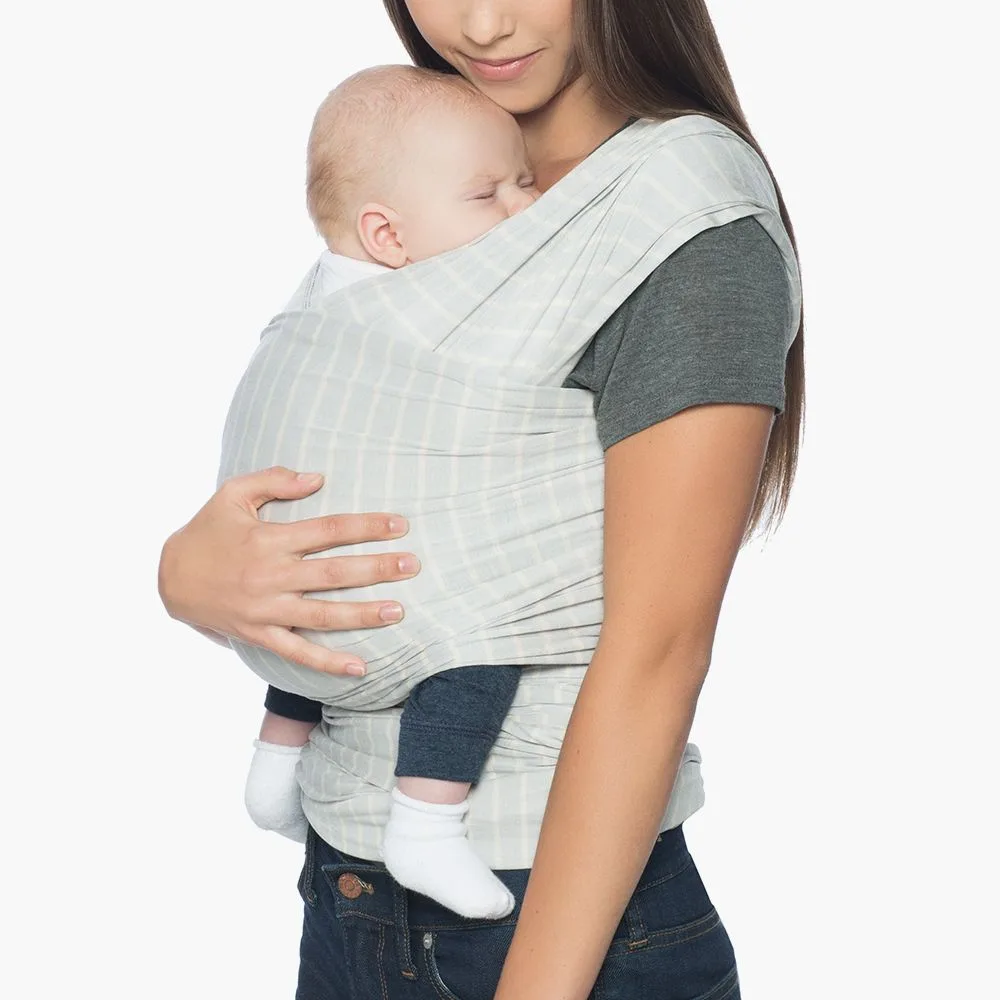
- Position Your Newborn: Hold your baby facing you, with their legs in a spread-squat position (knees higher than bottom). Slide them into the pocket, ensuring the fabric goes from knee to knee. Their head should be close enough to kiss, with their face visible and chin off their chest. A common mistake is letting the baby's chin tuck into their chest, which can restrict breathing. Always check that you can see their face and that their airway is clear.
- Tighten and Secure: Pull the top and bottom passes of the fabric over your shoulders and under your baby's bottom, crossing them at the back. Tighten each pass gently, working from the baby's bottom upward, until the wrap is snug but not too tight. Tie off at the back. The wrap should be tight enough that you can't easily pull the baby away from your body, but you should still be able to slip a finger between the wrap and your shoulder. If the baby slumps, re-tighten immediately.
- Check Positioning and Comfort: After securing, check that your baby's hips are in a 'M' position, their back is naturally rounded, and their head is upright with the chin off the chest. The fabric should cover their back and bottom, not their face. Walk around for a few minutes to ensure the wrap doesn't loosen. Always do a final check: the baby's face should be visible, and you should be able to kiss the top of their head. If you can't, the wrap is too loose.
A Stretchy Wrap That Grows With Your Baby
-
Confetti Stretchy Baby Wrap: The Confetti Stretchy Baby Wrap is designed for babies 8-25 lbs and provides a snug, supportive ergonomic fit. This weight range covers the newborn stage through several months, so you can use the same wrap as your baby grows, making it a practical investment.
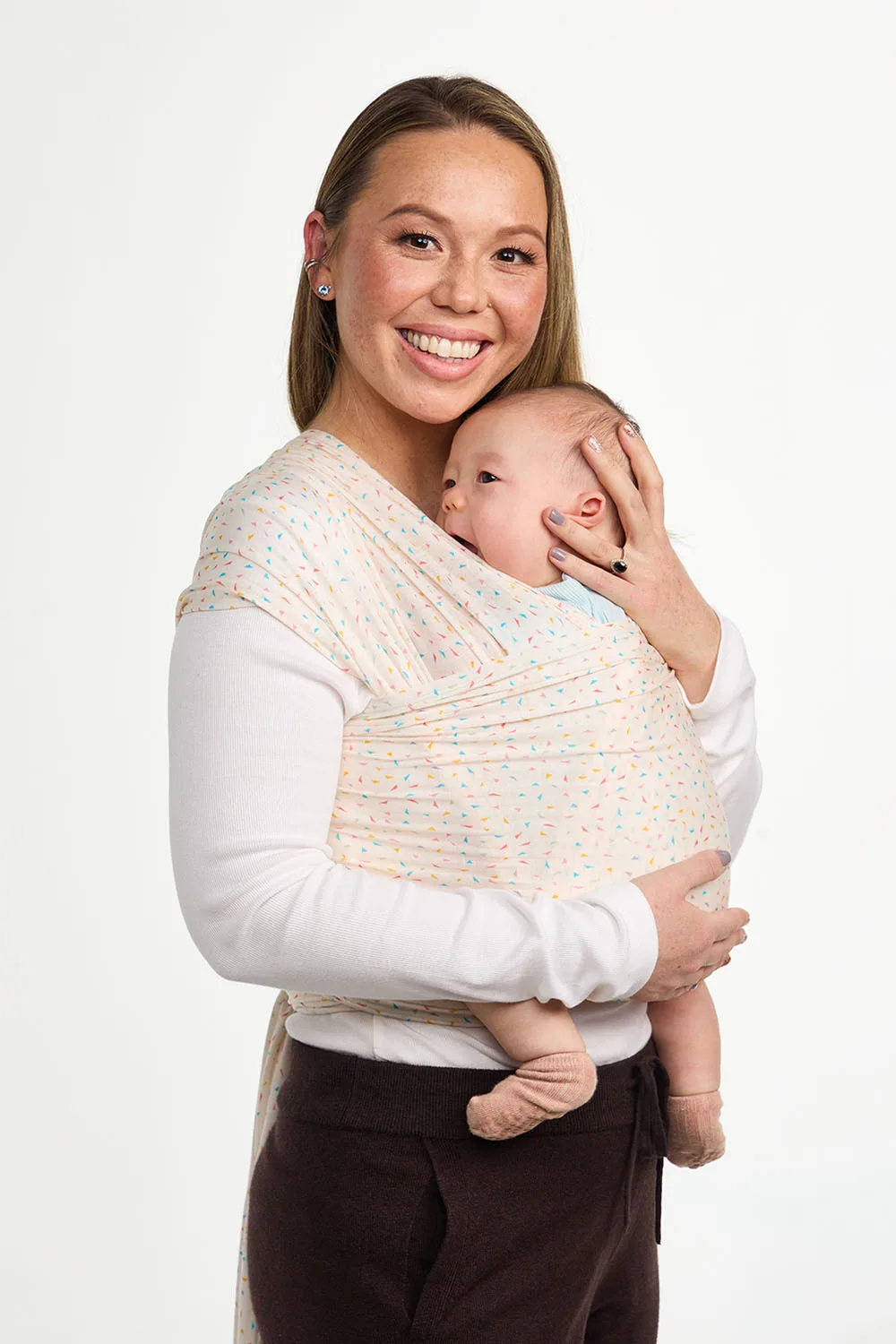
Confetti Stretchy Baby Wrap