Quick Answer
Buy the Human Abdomen Anatomy Jigsaw Puzzle if you want one focused, affordable study of the body's largest cavity. Choose the Human Feet Anatomy Jigsaw Puzzle when you need tendon and ligament detail at over 400% magnification. If you are building a full anatomy reference, the Human Anatomy Organ Puzzle Bundle gives you 3,079 pieces across five volumes, but it demands far more table space and budget.
Match the Puzzle to What You Are Studying
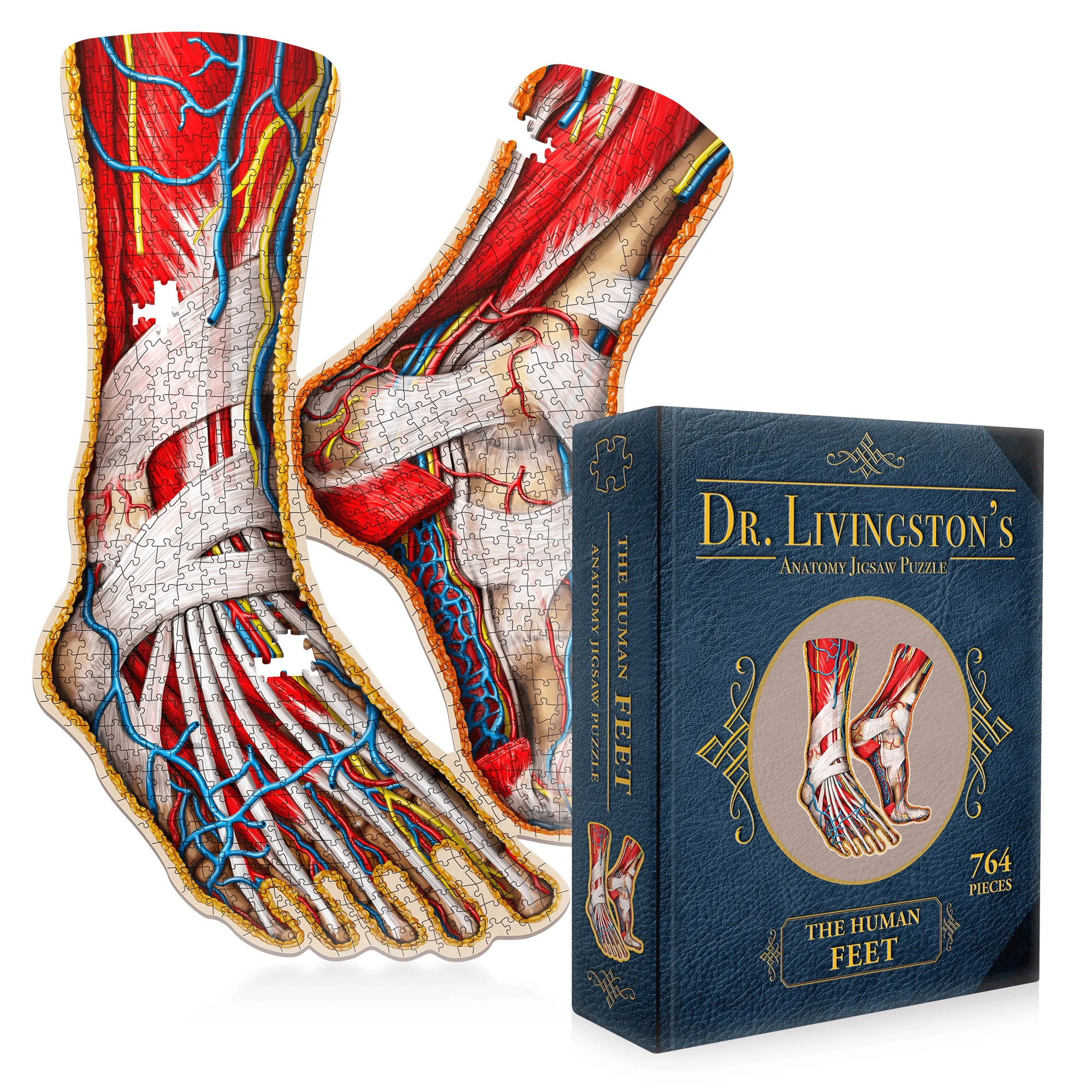
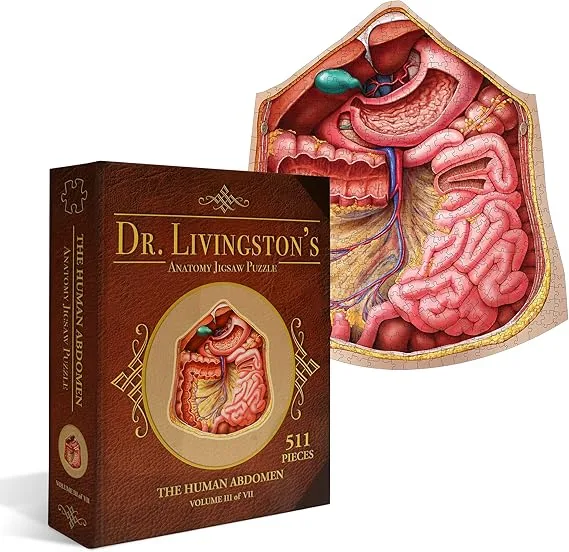
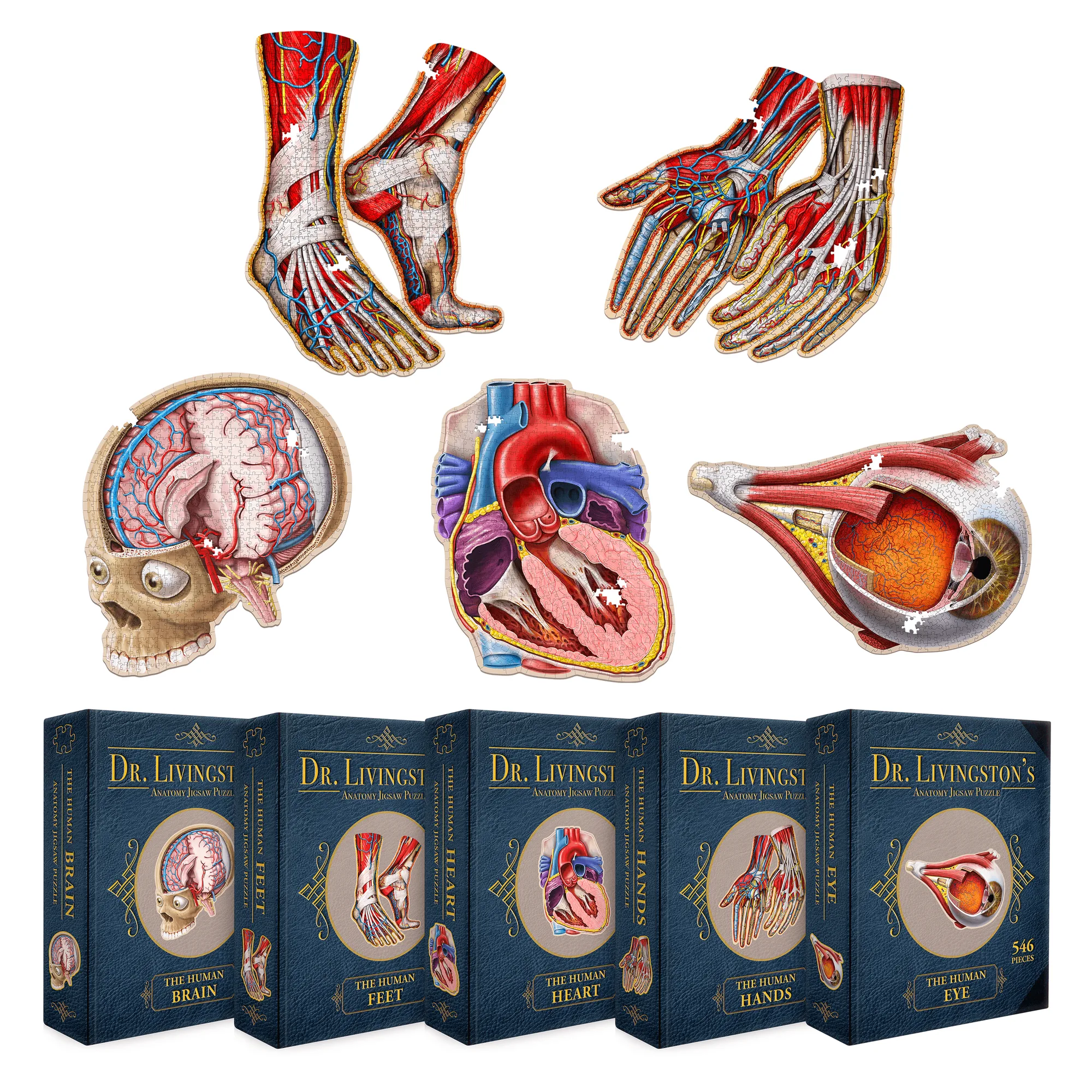
Anatomy puzzles differ most in what they ask you to assemble, not just how many pieces they contain. The Human Abdomen puzzle focuses on one cross-cut section showing the largest cavity and its major contents, so it works as a single-topic study session. The Human Feet puzzle instead magnifies the foot at over 400%, which makes it better for reviewing structures such as the Achilles tendon and ligaments. The bundle spans the heart, brain, hands, feet, and eye across five volumes, so it suits cumulative review rather than a single afternoon.
Piece Count, Magnification, and Table Space
Piece count is the clearest proxy for difficulty, but magnification tells you how much anatomical detail each piece carries. The abdomen puzzle has 511 pieces and the feet puzzle has 764, while the full bundle totals 3,079 pieces. Higher magnification means smaller structures are separated onto individual pieces, which rewards careful sorting but punishes rushed assembly. Before buying the bundle, measure your table: a five-volume set cannot be assembled all at once in most homes.
Why the Illustrator Credit Matters
All four puzzles in this comparison are illustrated by Mesa Schumacher, a certified medical illustrator from Johns Hopkins University. That credential is the main reason these puzzles can be used as study aids rather than novelty gifts: the artwork is designed to represent real anatomy accurately instead of simplifying it for decoration. If accurate medical illustration is your priority, this shared authorship is the strongest signal across the range.
How to Sequence Your Purchases
If you are new to anatomy puzzles, start with the abdomen puzzle because its 511 pieces and single region keep the project manageable. Add the feet puzzle next when you want a denser, higher-magnification challenge. Move to the bundle only after you know you enjoy the format and have the space to store or display multiple completed puzzles. Buying the bundle first is the most common mistake, because the volume of pieces can stall beginners before they finish volume one.
Decision Rules for Anatomy Puzzle Buyers
- If you are buying your first anatomy puzzle: Start with the 511-piece Human Abdomen puzzle. Its single cavity focus and lower piece count let you finish a complete build before committing to a larger set. Checkpoint: you can complete one region before buying more.
- If you need tendon and ligament detail: Choose the 764-piece Human Feet puzzle, which assembles at over 400% magnification and centers on the Achilles tendon and ligaments. Checkpoint: confirm you want small-structure detail, not a broad overview.
- If you want a full-body reference set: Buy the 3,079-piece bundle covering the heart, brain, hands, feet, and eye. Plan storage for five separate volumes and expect a multi-week project. Checkpoint: measure table and shelf space before ordering.
- If accurate medical illustration is non-negotiable: All of these puzzles share the same certified medical illustrator from Johns Hopkins University, so accuracy is consistent across the range. Choose on region and difficulty instead. Checkpoint: pick the anatomy you actually need to study.
Product Facts at a Glance
- Human Abdomen Anatomy Jigsaw Puzzle | Dr Livingston's Unique Shaped Science Puzzles, Accurate Medical Illustrations of the Body, Organs, Stomach, Liver and Intestines: Human Abdomen Anatomy Jigsaw Puzzle: 511 pieces, cardboard die-cut to match real human anatomy, illustrated by certified medical illustrator Mesa Schumacher of Johns Hopkins University. The lowest piece count here makes it the most realistic starting point, and the die-cut shapes follow real anatomy rather than a uniform grid.
- Human Feet Anatomy Jigsaw Puzzle | Dr. Livingston's Unique Shaped Science Puzzles: Human Feet Anatomy Jigsaw Puzzle: 764 pieces, set 4 of 5 in the Dr. Livingston series, assembled at over 400% magnification, with themes covering the Achilles tendon and ligaments. The higher magnification and tendon focus suit learners who need detail on small structures, but the piece count raises the time commitment.
- Human Anatomy Organ Puzzle Bundle | Unique Shaped Science Puzzles: Human Anatomy Organ Puzzle Bundle: 3,079 total pieces across volumes I-V covering the heart, brain, hands, feet, and eye, with magnification from 400% to 2000%. This is the only option here that builds a multi-region reference, but the piece total and magnification range make it a long-term project rather than a quick build.
Who Each Anatomy Puzzle Fits
Best for
- Students who want one focused, affordable anatomy build to start with
- Learners reviewing abdominal organs such as the stomach, liver, and intestines
- Anyone who needs high-magnification detail of the foot, Achilles tendon, and ligaments
- Buyers building a long-term multi-region anatomy reference across five volumes
Not for
- Shoppers wanting a quick novelty gift rather than a study tool
- Buyers with limited table or storage space who cannot spread out hundreds of pieces
- Young children, since these puzzles are not listed with an age rating and contain small pieces