Quick Answer
Apply vitamin C first on clean, dry skin, then follow with hyaluronic acid. This order lets the antioxidant vitamin C work at its optimal pH while hyaluronic acid locks in hydration. If your vitamin C serum already contains hyaluronic acid, you can skip the separate layer or adjust based on your skin's needs.
Vitamin C and hyaluronic acid are two of the most popular serum ingredients, but many people wonder which one goes on first. The order matters because these ingredients work differently: vitamin C is an active antioxidant that targets dark spots and fine lines, while hyaluronic acid is a humectant that draws water into the skin. Getting the sequence right helps you get the most from both.
In this comparison, we'll break down the benefits of each, explain the correct layering order, and help you decide which serum to prioritize based on your skin concerns. We'll also look at combination products that simplify your routine.
What Does Vitamin C Do for Your Skin?
Vitamin C is a potent antioxidant that helps brighten the complexion, fade dark spots, and protect against environmental stressors like pollution and UV damage. It also supports collagen production, which can reduce the appearance of fine lines and wrinkles over time. For best results, vitamin C is typically used in the morning to boost your skin's defense against free radicals.
When choosing a vitamin C serum, look for stabilized forms of the ingredient, as they are less likely to degrade quickly. Some serums combine vitamin C with other hydrating ingredients, which can simplify your routine and reduce the need for a separate hyaluronic acid product.
- Use vitamin C in the morning for antioxidant protection.
- Store vitamin C serums away from light and heat to preserve potency.
What Does Hyaluronic Acid Do for Your Skin?
Hyaluronic acid is a humectant that attracts and holds moisture in the skin, making it an excellent hydrator for all skin types, including oily and sensitive. It helps plump the skin, smooth fine lines caused by dehydration, and create a dewy, healthy glow. Unlike vitamin C, hyaluronic acid is not an active treatment for pigmentation, but it supports the skin barrier and enhances the effectiveness of other products.
Hyaluronic acid can be used both morning and night. It works well when applied to slightly damp skin, as it can draw that extra moisture into the epidermis. For intense hydration, look for serums that feature multiple molecular weights of hyaluronic acid to target different layers of the skin.
- Apply hyaluronic acid to damp skin for better absorption.
- Layer it under moisturizer to seal in hydration.
The Correct Order: Vitamin C First, Then Hyaluronic Acid
The general rule is to apply serums from thinnest to thickest, but pH also plays a role. Vitamin C (especially L-ascorbic acid) works best at a low pH, so it should be applied to clean, dry skin before anything else. Hyaluronic acid, on the other hand, is pH-agnostic and works well on top of other serums. Therefore, the ideal order is: cleanse, apply vitamin C, wait a few minutes for it to absorb, then apply hyaluronic acid.
If you're using a vitamin C serum that already contains hyaluronic acid, you might not need a separate hyaluronic acid step. However, if your skin is very dry, you can still layer a dedicated hyaluronic acid serum over the vitamin C for extra hydration. Always finish with a moisturizer to lock everything in.
- Wait 2-3 minutes between layers to allow absorption.
- If your vitamin C serum contains hyaluronic acid, you can skip the separate layer.
Combination Serums: Convenience vs. Customization
Many brands offer serums that combine vitamin C and hyaluronic acid in one bottle, which can save time and simplify your routine. For example, Cosmedica Skincare's Vitamin C Serum includes hyaluronic acid, making it a two-in-one option. This is great for beginners or those who prefer a streamlined regimen, but it may limit your ability to adjust the concentration of each ingredient independently.
Separate serums give you more control over your routine. You can choose a higher-strength vitamin C for stubborn dark spots and a dedicated hyaluronic acid serum for extra hydration, especially in dry climates. However, this adds steps and can be more costly. Consider your skin's needs and your willingness to maintain a multi-step routine.
- Combination serums are convenient but may not offer the same potency as standalone products.
- Separate serums allow you to tailor concentrations and adjust based on seasonal needs.
The Trade-Off: Combination vs. Separate Serums
- Convenience: Combination serums like the Cosmedica Vitamin C with Hyaluronic Acid save time and reduce the number of steps in your routine. You get both benefits in one application, which is ideal for busy mornings. Choose a combination serum if you value simplicity and want to avoid the hassle of layering.
- Customization: Using separate serums allows you to adjust the concentration of vitamin C and hyaluronic acid independently. For example, you might use a stronger vitamin C for dark spots and a richer hyaluronic acid for extra hydration in winter. Choose separate serums if you have specific skin concerns that require tailored treatment.
- Cost: Combination products often offer better value per use, as you're buying one product instead of two. However, separate serums may allow you to invest more in the ingredient that matters most to you. Consider your budget and which ingredient is your priority when deciding between a combo or two separate bottles.
Products That Combine or Complement These Ingredients
- Cosmedica Skincare Vitamin C Serum for Face with Hyaluronic Acid – Anti Aging Serum for Dark Spots, Fine Lines, Wrinkles – Hydrating Collagen Booster for Women & Men: This serum combines three stabilized forms of Vitamin C and multi-molecular Hyaluronic Acid to target fine lines, wrinkles, dark spots, and uneven skin tone. The antioxidant-rich formula helps defend against free radicals and environmental stressors. If you want to simplify your routine, this single product delivers both vitamin C and hyaluronic acid, so you don't need to worry about the layering order. It's a good choice for morning use to brighten and hydrate in one step.
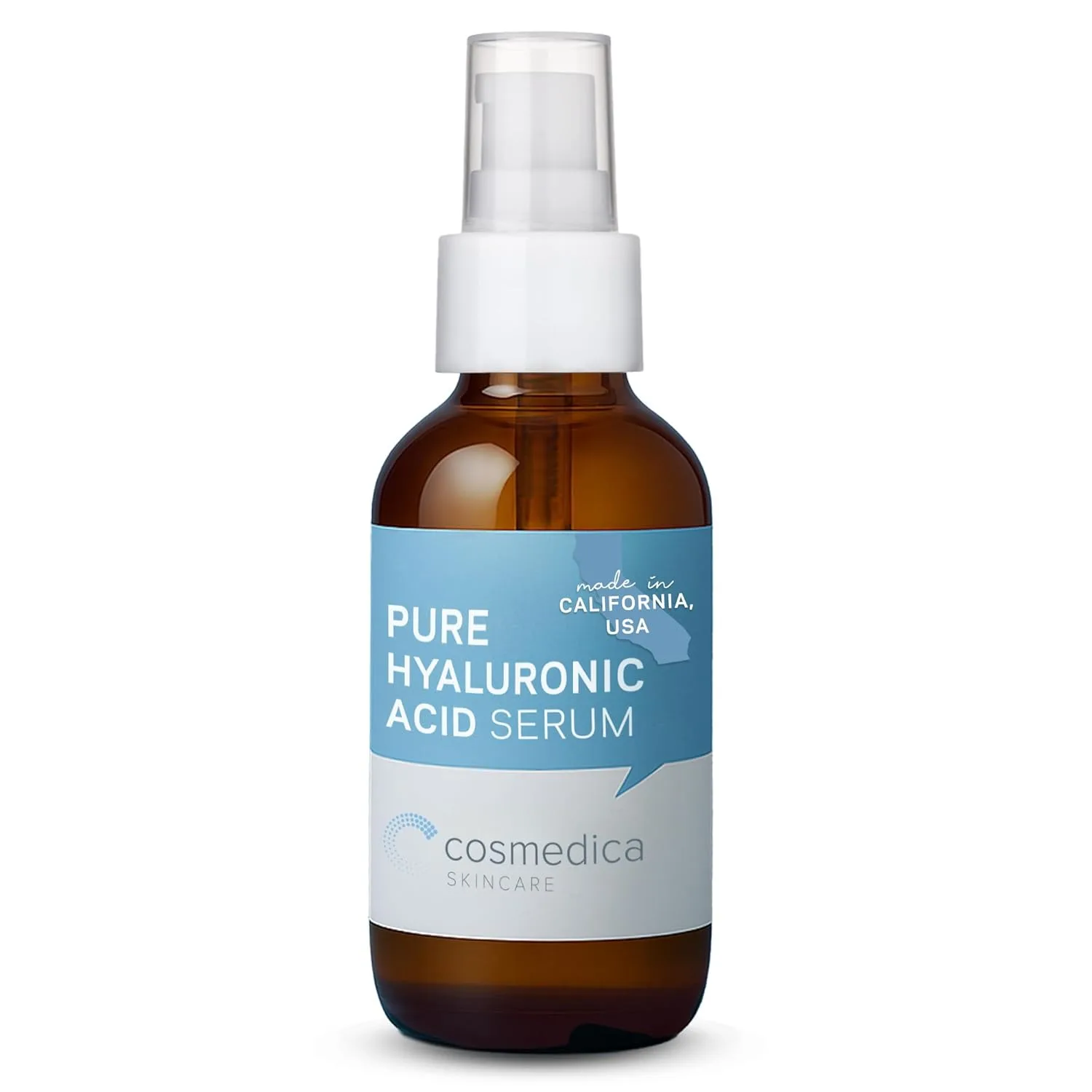
- Pure Hyaluronic Acid Serum By Cosmedica Skincare: This lightweight, non-greasy serum combines a potent blend of hyaluronic acid and vitamin B5 to deeply nourish and revitalize your skin. It absorbs quickly without leaving any heavy residue, making it an ideal addition to your AM and PM routine. If you prefer separate serums, this dedicated hyaluronic acid product can be layered after your vitamin C for an extra hydration boost. Its lightweight formula works well under makeup or moisturizer.
Which Approach Fits Your Skin?
Best for
- People new to serums who want a simple, effective morning routine.
- Those with dry or dehydrated skin who need both brightening and intense hydration.
Not for
- Advanced users who want to fine-tune concentrations of each active.
- Those with very sensitive skin who may need to introduce each ingredient separately to monitor tolerance.
Both vitamin C and hyaluronic acid are powerful allies for glowing, healthy skin. The right order—vitamin C first, then hyaluronic acid—maximizes their benefits. Whether you choose a combination serum or separate bottles, the key is consistency and protecting your skin with sunscreen during the day. Start with what fits your routine and skin goals, and adjust as you learn what works best for you.