Quick answer
A hybrid wok like the HexClad Hybrid Wok combines the high-heat conduction of tri-ply stainless steel with a nonstick surface, giving you the best of both worlds. Traditional carbon steel woks excel at extreme heat and wok hei but require seasoning and careful maintenance. If you want a versatile wok that works on any stove and cleans up easily, go hybrid. If you're chasing authentic smoky stir-fry flavor and don't mind upkeep, stick with traditional.
Heat control and cooking performance
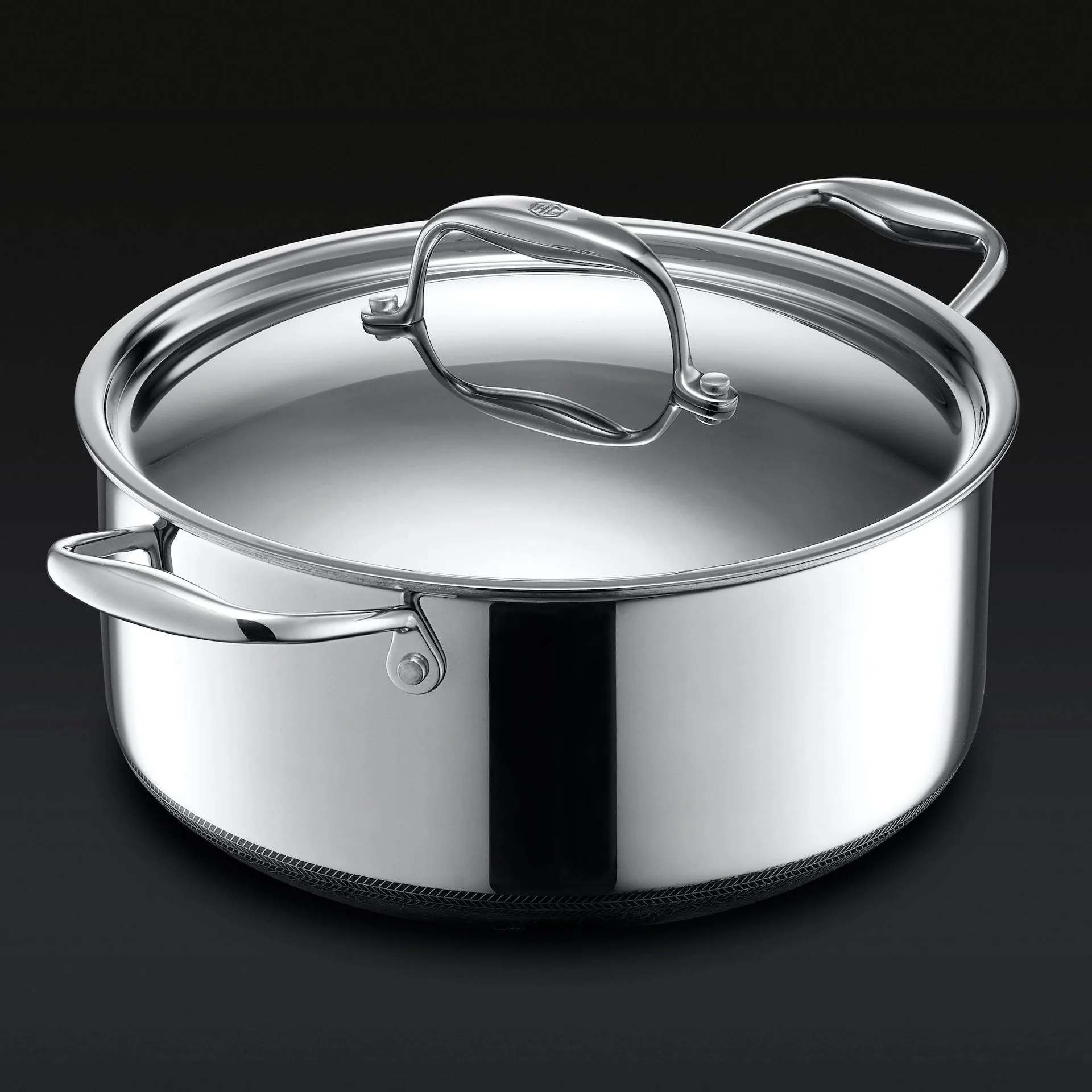
The core difference between a hybrid wok and a traditional wok is how they handle heat. Traditional carbon steel woks are thin, lightweight, and respond instantly to changes in burner output. They can reach very high temperatures quickly, which is essential for achieving wok hei — that smoky, charred flavor prized in stir-fry. However, they also cool down fast if you add too many ingredients at once. A hybrid wok like the HexClad Hybrid Wok uses tri-ply construction (stainless steel layers around an aluminum core) to distribute heat evenly across the cooking surface. This means fewer hot spots and more consistent results, especially when you're cooking saucy dishes like fried rice or poached fish. The trade-off is that the hybrid wok won't reach the same peak temperature as carbon steel, so it's slightly less ideal for ultra-high-heat stir-fry.
Versatility and ease of use
A traditional wok demands seasoning (a layer of polymerized oil) to create a natural nonstick surface. Without proper seasoning, food sticks, and the wok can rust. It also cannot be used with acidic ingredients like tomatoes or vinegar for long periods, as they strip the seasoning. A hybrid wok eliminates these restrictions. The HexClad Hybrid Wok has a nonstick surface that works with any ingredient, including acidic sauces, and it's dishwasher safe for easy cleanup. Its smaller base also helps prevent sauces from reducing too quickly, which is a practical advantage for recipes that need a little liquid to come together. If you cook a wide variety of cuisines — from stir-fry to soup to curry — the hybrid wok is more forgiving and convenient.
Durability and maintenance
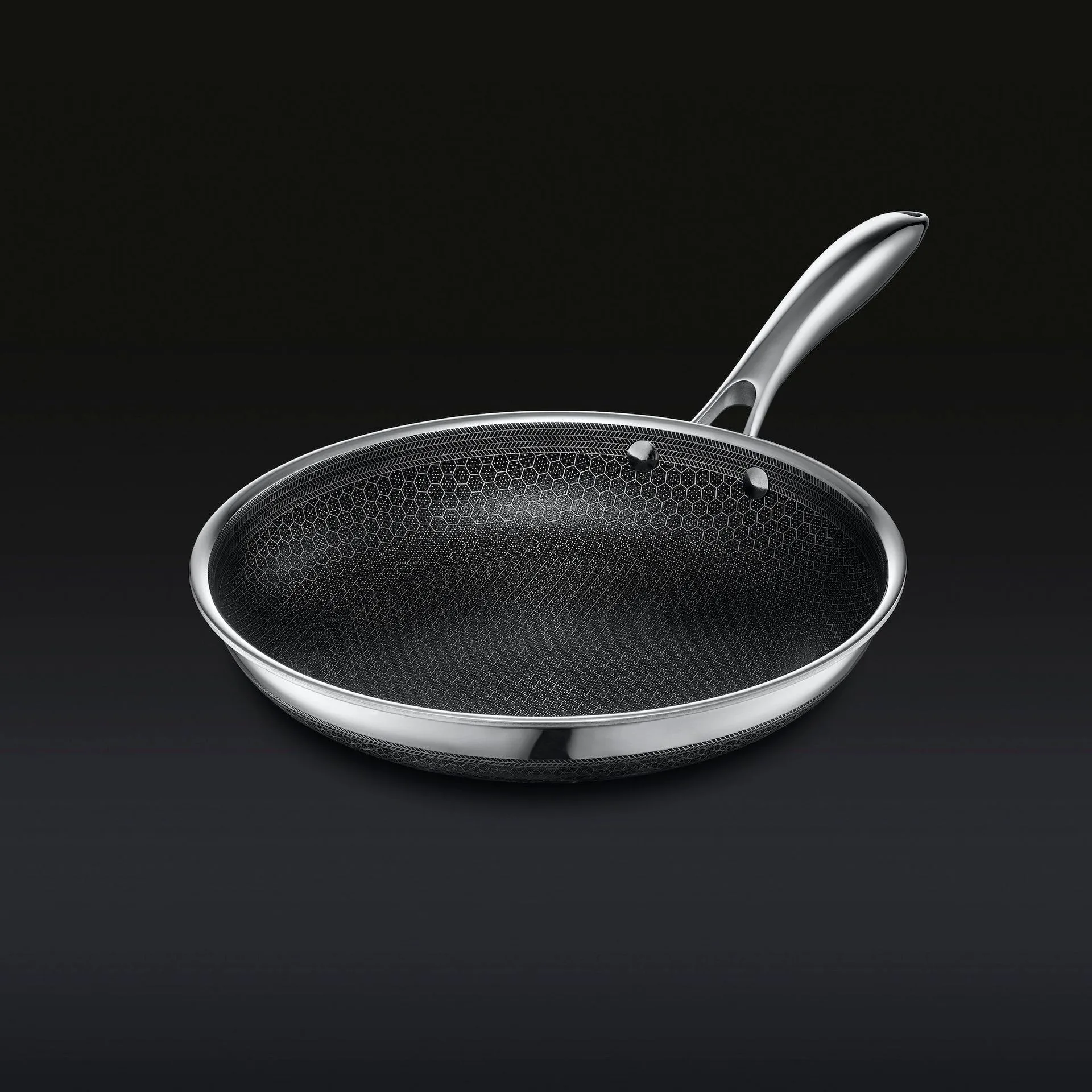
Traditional carbon steel woks are durable but require ongoing care. You must dry them immediately after washing and re-season them periodically. They can rust if neglected. Hybrid woks are built with tri-ply stainless steel that resists warping and corrosion. The nonstick coating is reinforced with a hexagon pattern that makes it more scratch-resistant than standard nonstick pans. However, no nonstick coating lasts forever — over years of heavy use, it will wear down. Traditional woks, if maintained, can last decades. So if you prefer a set-it-and-forget-it approach, hybrid wins. If you're willing to put in the work for a pan that can outlast you, traditional is the choice.
Trade-offs at a glance
- Heat peak vs. heat evenness: Traditional woks reach higher peak temperatures for wok hei, but hybrid woks distribute heat more evenly across the surface. Choose traditional for authentic smoky stir-fry; choose hybrid for consistent results with less fuss.
- Maintenance effort vs. convenience: Traditional woks need seasoning and careful drying; hybrid woks are dishwasher safe and nonstick from day one. If you want low maintenance, hybrid is the clear winner.
- Versatility vs. specialization: Hybrid woks work with acidic ingredients and any cooktop; traditional woks excel at high-heat stir-fry but limit your ingredient choices. For everyday cooking across cuisines, hybrid is more versatile.
Product facts
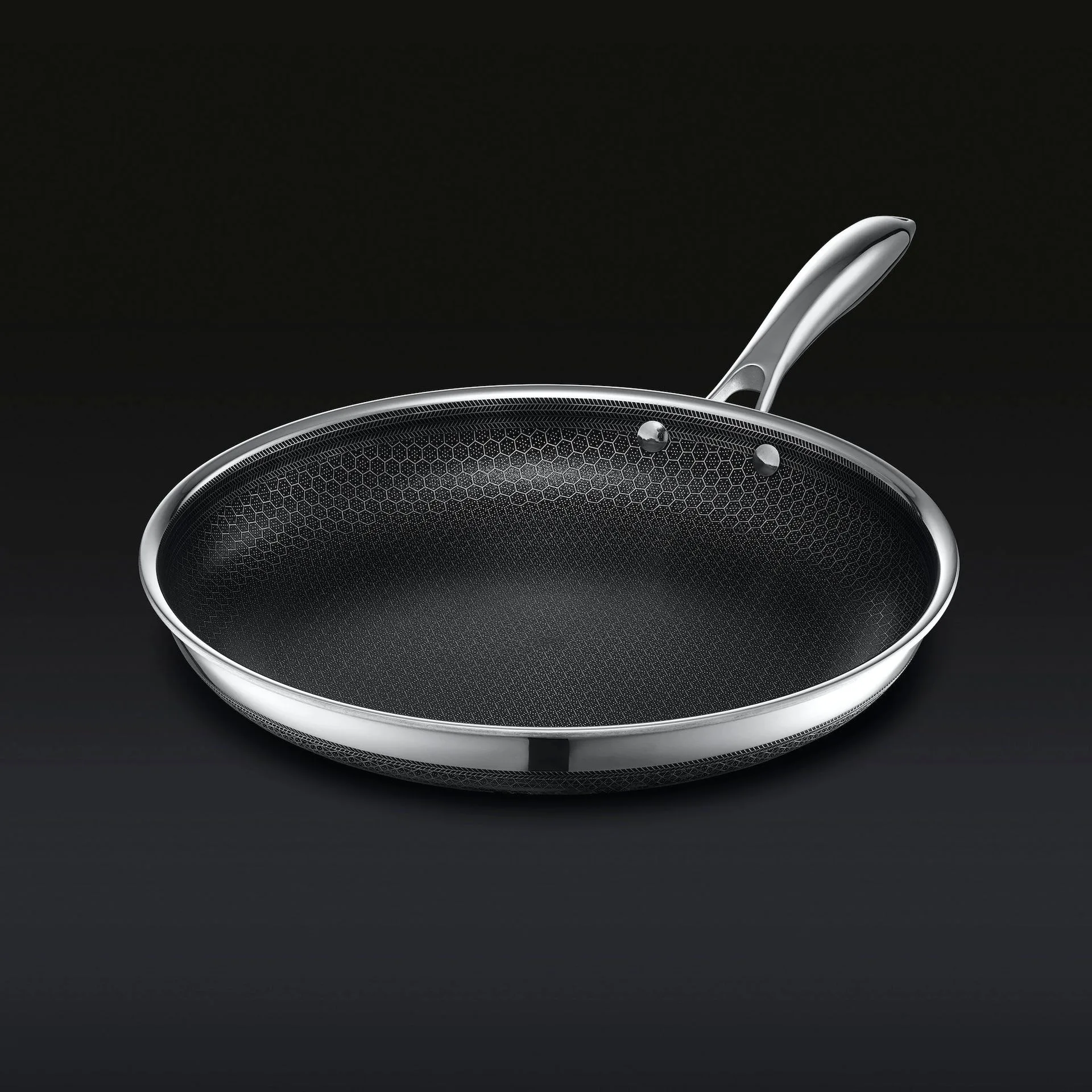
- Hybrid Wok, 10": Its tri-ply construction makes a wok a superb conductor of high heat. Use it to stir-fry tofu, coat noodles, poach fish or make fried rice. It’s an ideal pan for tossing and mixing sauces into whatever you’re cooking up–evenly. You’ll also love that the wok’s smaller base helps prevent sauces from reducing too quickly. This means the HexClad Hybrid Wok delivers even heat for consistent cooking, and the smaller base gives you more control over sauce consistency — a real advantage for saucy stir-fries and curries.
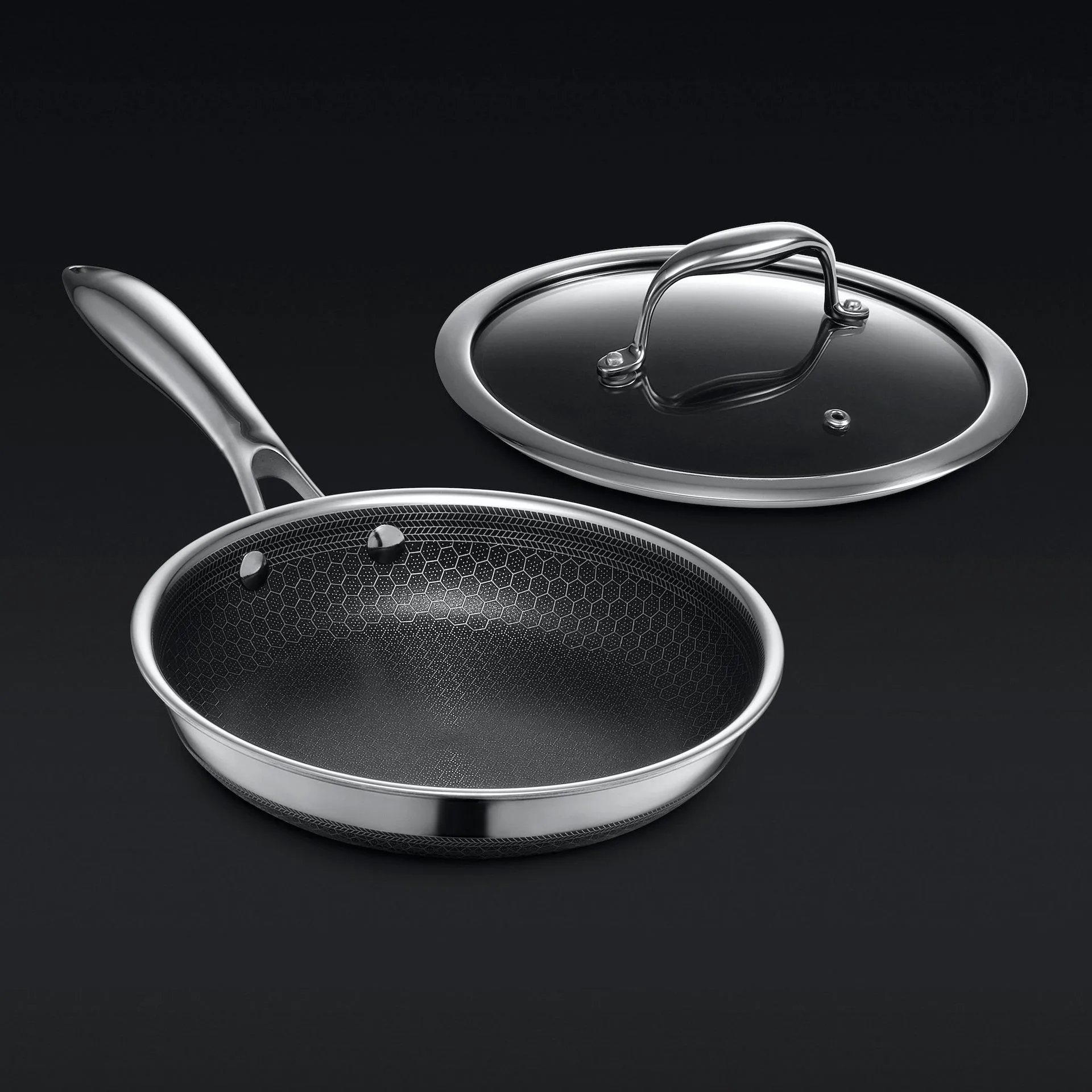
- Hybrid Fry Pan with Lid, 7": When you’re making something smaller (scrambling an egg or two; sizzling a burger patty; toasting nuts), reach for this portable-sized skillet. It’s the small-but-mighty pan that’s perfect for quick bites, and its easy cleanup makes it one you’ll be glad to have. While the wok is great for tossing and mixing, a smaller hybrid fry pan like the 7" version is better for single-serving tasks like eggs or toasting nuts — showing that hybrid cookware covers both big and small jobs in the kitchen.
Which wok fits you?
Best for
- Home cooks who want a single wok that handles stir-fry, soups, curries, and fried rice with easy cleanup
- Anyone who cooks on induction or glass-top stoves (traditional woks may not work well on these)
Not for
- Purists chasing authentic wok hei and willing to season and maintain a carbon steel wok
- Cooks who need extreme high heat for blistering stir-fry every time