What is Hyperfocal Distance?
Hyperfocal distance is a focusing technique that helps you get both the foreground and background of a landscape scene in sharp focus. When you set your lens to the hyperfocal distance, everything from half that distance to infinity appears acceptably sharp. It's especially useful with wide-angle lenses, where you want a close foreground element and a distant horizon both crisp.
This guide explains the concept and points you to a resource that walks through the process step by step. For a full, structured lesson, the Apprentice Series title Hyperfocal Distance for Landscape Photography covers the topic in depth.
Why It Matters for Landscape Photographers
In landscape photography, depth of field is a creative tool. A deep depth of field keeps everything from a rock in the foreground to a mountain peak in the distance sharp. Without understanding hyperfocal distance, you might focus on the distant subject and lose sharpness in the foreground, or focus too close and let the background go soft.
The technique gives you predictable control over sharpness. It's not guesswork: once you know the hyperfocal distance for your lens and aperture, you can place the focus point with confidence. The Hyperfocal Distance for Landscape Photography guide explains how to calculate and apply this in the field.
A Resource to Learn the Technique
-
Hyperfocal Distance for Landscape Photography: Hyperfocal Distance for Landscape Photography is part of the Apprentice Series and focuses on the topic of focus for landscape shooting. This dedicated guide provides a structured approach to mastering hyperfocal distance, making it easier to apply in real-world shooting conditions.
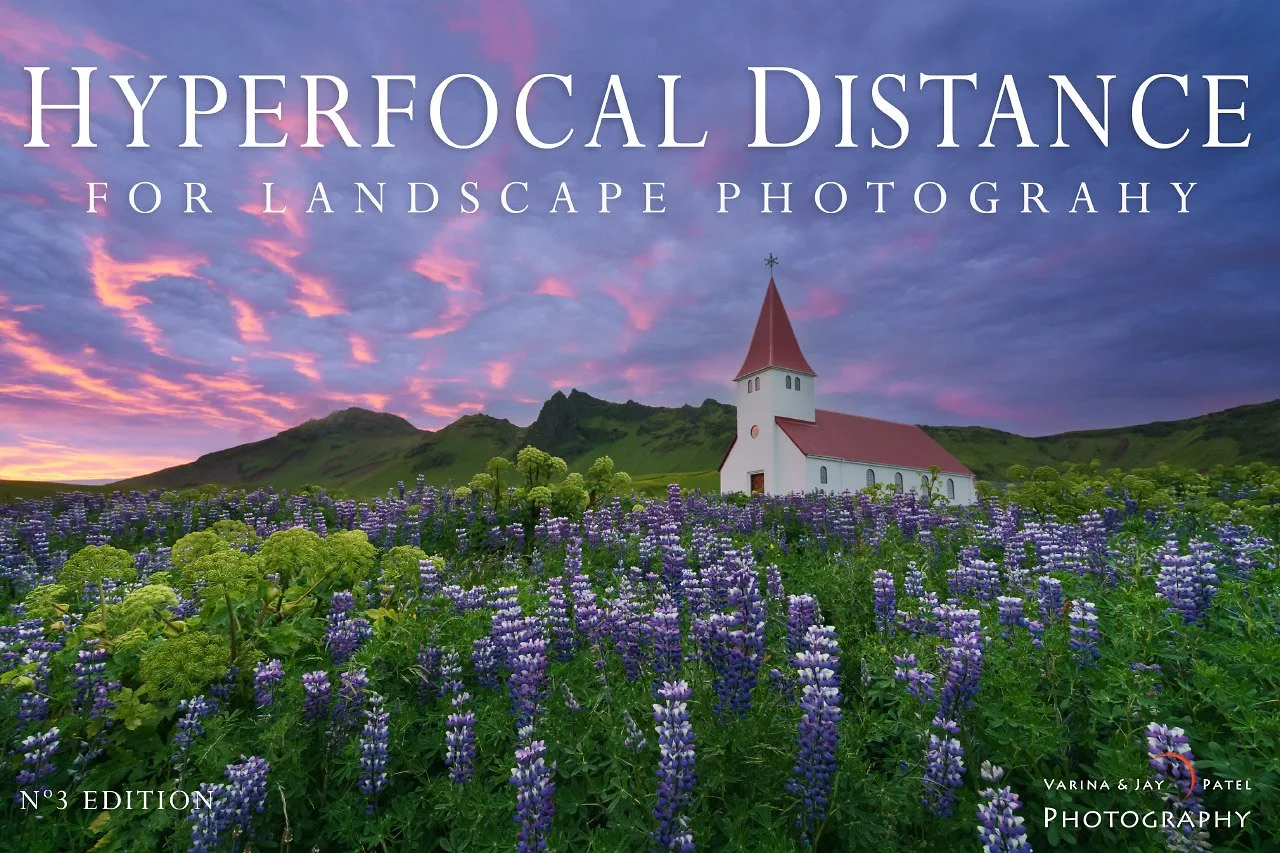
Hyperfocal Distance for Landscape Photography
How to Use Hyperfocal Distance in the Field
To apply hyperfocal distance, you need to know the focal length of your lens and the aperture you're using. Many photographers use a hyperfocal distance chart or a smartphone app to calculate the distance. Once you have the number, set your lens's focus ring to that distance. Everything from half that distance to infinity will be in acceptable focus.
For example, with a wide-angle lens at a typical aperture like f/11 on a full-frame camera, the hyperfocal distance might be around a few feet. That means you'd focus at that distance, and everything from half that distance to infinity would be sharp. The exact numbers vary by sensor size and lens, so it's worth checking for your specific gear.
The Hyperfocal Distance for Landscape Photography guide walks through this calculation and includes practical examples to build your confidence. It's a hands-on resource for anyone who wants to move beyond theory.
The Honest Trade-Offs
Hyperfocal distance is a powerful tool, but it's not always the best choice. If you're shooting a scene with no close foreground element, focusing at infinity might work just as well. And if you're using a very wide aperture for a shallow depth of field effect, hyperfocal distance won't apply.
Another consideration: the hyperfocal distance calculation assumes a specific circle of confusion, which varies by sensor size and viewing conditions. What's acceptably sharp for a web image may not hold for a large print. The technique gives you a starting point, not a guarantee.
The Hyperfocal Distance for Landscape Photography guide addresses these nuances, helping you decide when to use the technique and when to adjust your approach.