Quick Answer
Switch to hypoallergenic dog food when your dog shows persistent signs of food allergy, such as itchy skin, ear infections, or digestive issues, and your vet has ruled out other causes. Expect improvements within 4 to 8 weeks, but be prepared for a gradual transition and possible trial periods.
Recognizing Food Allergies in Dogs
Food allergies in dogs often appear as chronic itching, especially around the ears, paws, and rear, or as recurrent ear infections and gastrointestinal upset. Unlike environmental allergies, which may be seasonal, food allergies tend to cause year-round symptoms.
If you suspect a food allergy, the first step is to consult your vet. They can help rule out other causes and may recommend an elimination diet to pinpoint the offending ingredient, which is often a specific protein like beef, chicken, or dairy.
Why Protein Choice Matters
Many hypoallergenic dog foods use novel or single-source proteins that your dog hasn't been exposed to, reducing the likelihood of an allergic reaction. Silver carp, for example, is a freshwater fish that's less commonly used in commercial dog foods, making it a promising option for dogs with sensitivities to more common proteins.
When choosing a hypoallergenic food, consider the protein source and whether the food includes grains. Some dogs do well with grain-inclusive formulas, while others may benefit from grain-free options. The choice often depends on your dog's specific sensitivities and your vet's advice.
What to Expect After Switching
After switching to a hypoallergenic diet, you won't see instant results. It can take several weeks for your dog's system to clear the old allergens and for symptoms to subside. Typically, you should notice a reduction in itching and digestive issues within 4 to 8 weeks, but some dogs may take longer.
During the transition, it's crucial to avoid giving your dog treats, table scraps, or other foods that could contain the offending ingredients. Stick to the new diet exclusively to give it the best chance of working.
Decision Rules for Switching
- When to switch: Consider switching if your dog has persistent allergy symptoms (itchy skin, ear infections, GI issues) that don't respond to other treatments, and your vet has confirmed or suspects a food allergy. Keep a symptom diary for 2 weeks before switching to track baseline severity.
- How to transition: Over 7-10 days, gradually mix increasing amounts of the new hypoallergenic food with the old food, starting with 25% new food and increasing by 25% every few days, to minimize digestive upset. If your dog has a very sensitive stomach, extend the transition to 14 days.
- What to expect: Improvement in itching and digestion should appear within 4-8 weeks. If symptoms don't improve after 8 weeks, the food may not be the right match, and you may need to try a different protein source or consult your vet. Give the new food a full 8-week trial before deciding it doesn't work.
Product Facts
-
Archway Silver Carp Hypoallergenic Dog Food with Grains: Archway Silver Carp Hypoallergenic Dog Food with Grains is a new formula developed for allergy-prone dogs, using silver carp as a novel protein source. If your dog has never eaten fish, this food introduces a protein their system is less likely to react to, making it a strong candidate for an elimination diet.
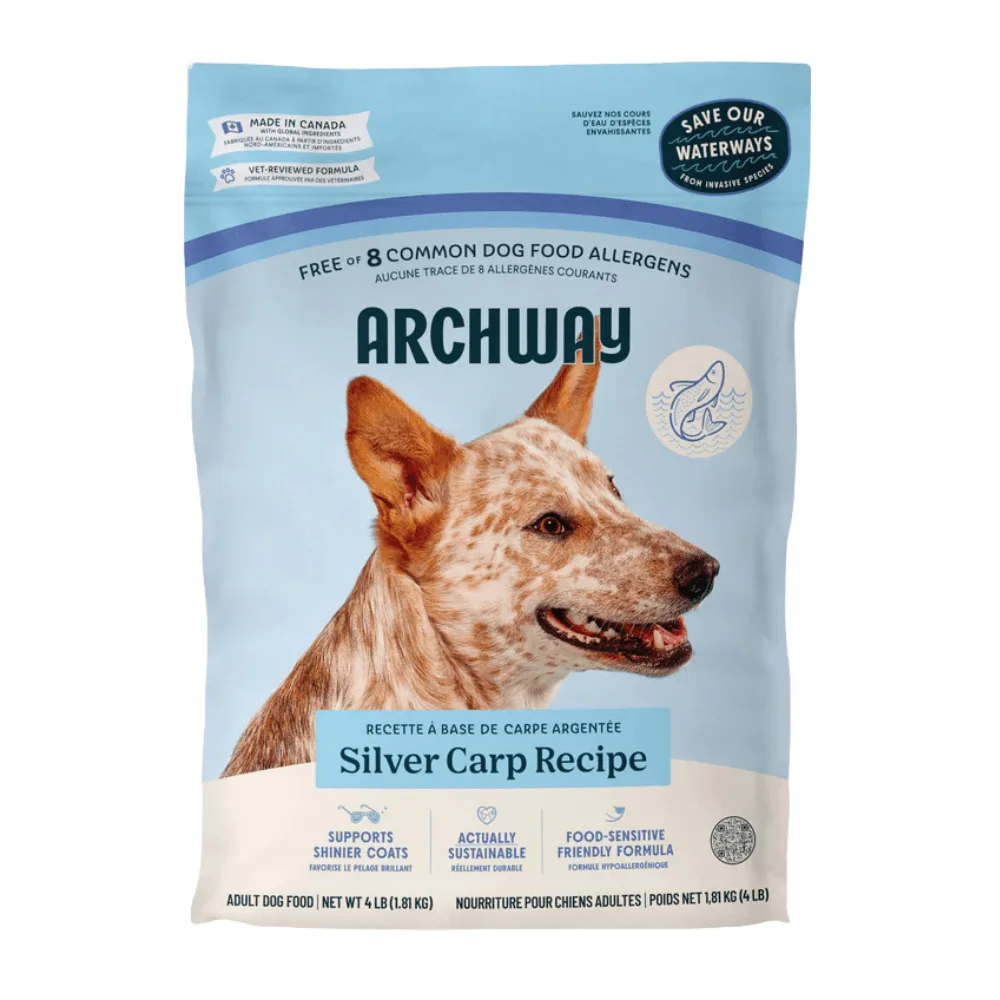
Archway Silver Carp Hypoallergenic Dog Food with Grains
Is This Food Right for Your Dog?
Best for
- Dogs with confirmed or suspected food allergies to common proteins like chicken or beef
- Owners looking for a grain-inclusive hypoallergenic option that provides balanced nutrition
Not for
- Dogs with a known fish allergy or those that have had adverse reactions to fish-based diets
- Dogs that require a grain-free diet due to specific grain sensitivities or medical conditions