Quick Answer
For a story that blends early literacy with a practical money lesson, 'I Want That!' stands out from typical picture books by focusing on a child's decision-making process.
What Makes 'I Want That!' Different
Most picture books for young children center on friendship, animals, or imaginative adventures. 'I Want That!' takes a different approach by addressing a real-world scenario: a child tempted by an ad on TV and the choice to spend or save. This makes it a useful tool for parents and educators who want to introduce basic financial concepts during storytime.
Trade-Offs to Consider
Because 'I Want That!' has a clear moral about saving money, it may feel more didactic than a purely entertaining picture book. Children who prefer whimsical or open-ended stories might not engage as readily. However, for readers who respond to relatable, everyday situations, this book provides a concrete lesson that sparks conversation.
Trade-Offs at a Glance
- Real-Life Relevance: 'I Want That!' mirrors a common childhood experience—seeing an ad and feeling the urge to buy. This makes the lesson immediately applicable.
- Narrative Focus: The story is tightly focused on the decision, leaving less room for subplots or fantasy elements. Children who love imaginative tales may miss that variety.
- Discussion Potential: The clear conflict and resolution naturally lead to questions like 'What would you do?' This supports deeper engagement than many purely entertaining books.
Product Facts
-
I Want That!: Cody is saving his money to buy some lacrosse equipment. When he sees an ad on TV for a cool toy, he has to make a decision. Will he make the right one? This plot gives children a clear example of weighing a want against a long-term goal, making the story a practical conversation starter about choices and priorities.
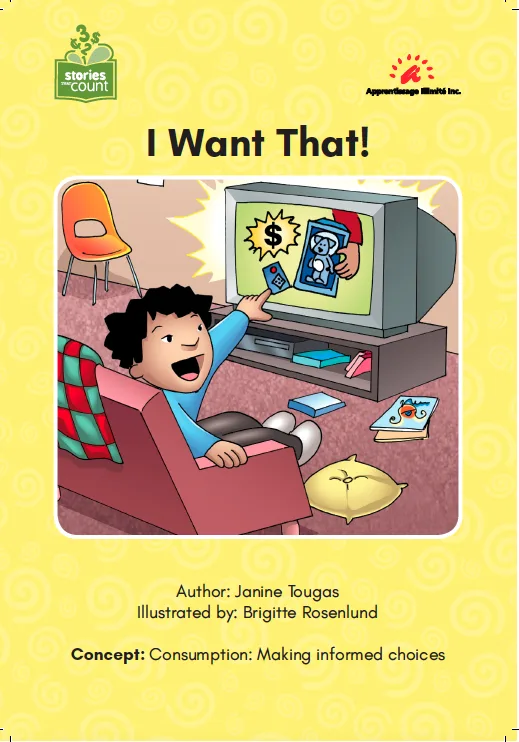
I Want That!
Who Should Choose This Book
Best For
- Parents and teachers wanting to introduce saving and spending concepts
- Children who enjoy relatable, everyday stories with a clear lesson
Not For
- Readers who prefer open-ended or highly imaginative picture books
- Storytimes focused solely on entertainment without a teaching goal