Quick answer
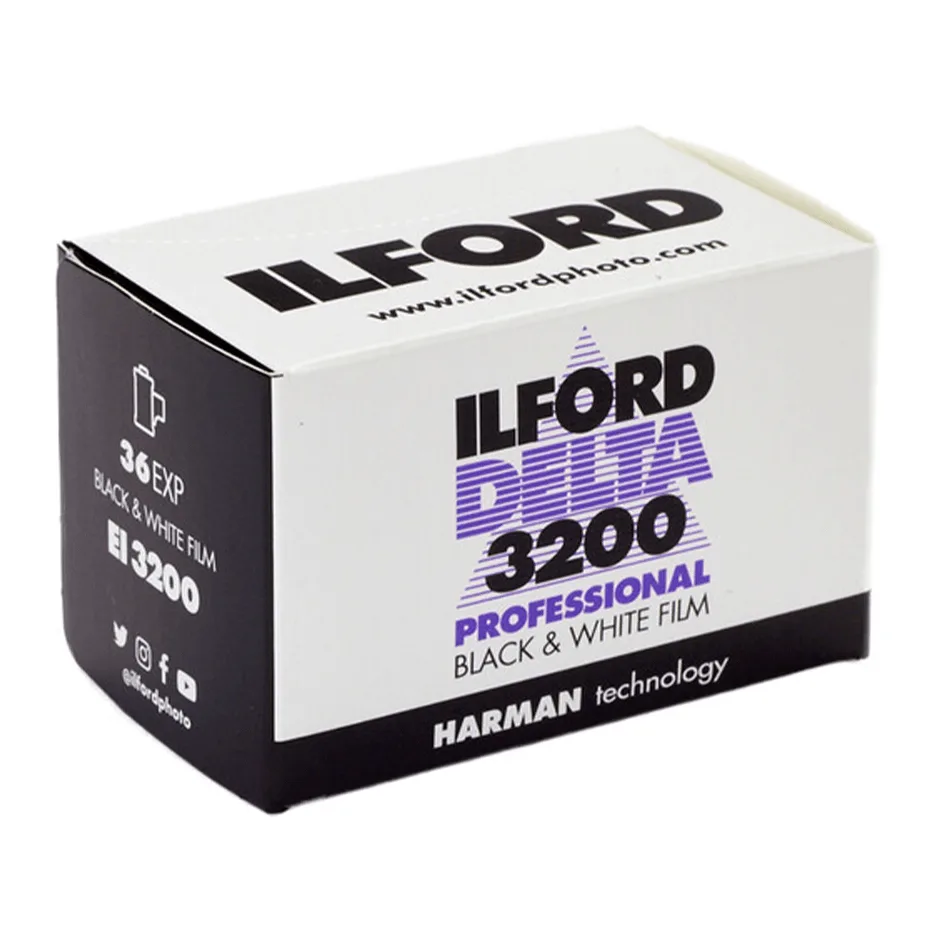
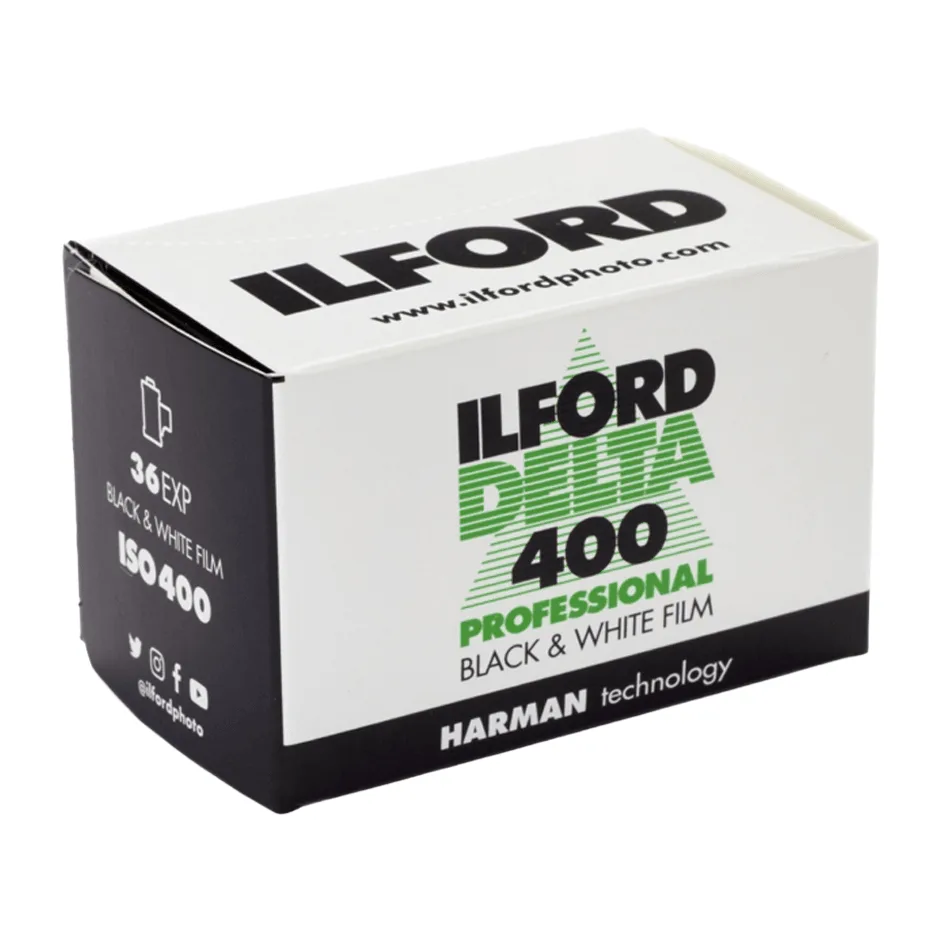
Buy Ilford Delta 3200 Professional when the light is genuinely bad and you want to keep shooting handheld at night or indoors; its ISO 3200 speed and very wide exposure latitude forgive metering mistakes. Buy Ilford Delta 400 Professional for everything else: fine grain, high sharpness, and enough latitude to push when you need more speed. If you shoot both, load Delta 400 as your default and keep Delta 3200 for the darkest rolls.
What the two film speeds actually change
The headline difference is two stops: Delta 3200 is rated ISO 3200, Delta 400 is rated ISO 400. Two stops is the gap between f/2 at 1/30 and f/2 at 1/125 in the same light, which is often the difference between a sharp handheld frame and a blurred one. Delta 3200 is described by Ilford as ideal for difficult lighting conditions, indoor scenes, and fast-moving subjects. Delta 400 is described as a high-speed film built on core-shell crystal technology for high sharpness with a fine, uniform grain structure.
Both are panchromatic black and white negative films in 35mm with 36 exposures, processed in standard chemistry, and both offer wide exposure latitude. Neither is a specialty process film, so a lab that handles ordinary B&W negatives can develop either one.
Grain: the real reason to pick Delta 400
Delta 3200's grain is described as unobtrusive, which is a fair way to put it for a film this fast, but it is still visibly present in 35mm, especially in flat midtones and skies. Delta 400's fine, uniform grain structure holds up better when you enlarge or crop. If your final output is a 16x20 print or a tight crop from a 35mm frame, Delta 400 gives you more room before grain becomes the subject of the photo.
That trade-off is not a defect in either film. Speed and grain move together in film design, and the question is which one your subject needs more. A dim jazz club at 1/60 needs the speed; a bright street at midday does not.
Push processing: what each film can take
Delta 400 is the more natural push candidate. Its fine grain and wide tonal range mean that rating it at 800 or 1600 and extending development is a routine way to gain speed while keeping a printable negative. You lose some shadow detail and gain contrast, but the structure of the image stays intact, which is why Delta 400 push processing is such a common working method for available-light shooters.
Delta 3200 already sits at the top of the speed range, so there is less headroom to push before contrast and grain run away. Its advantage is that you get ISO 3200 without changing your development time at all, which matters on a trip or a shoot where consistency is worth more than a marginally cleaner negative. Both films share wide exposure latitude, so a stop of metering error is generally recoverable on either.
How to decide before you load the camera
Ask what the light will be for most of the roll, not for the single best frame. If the answer is dim interiors, evening streets, or moving subjects after sunset, Delta 3200 keeps your shutter speed in handheld territory. If the answer is daylight with occasional shade, Delta 400 gives you a cleaner negative and the option to push the few frames that need it.
Carrying both is a legitimate strategy: Delta 400 in the camera for general shooting, Delta 3200 in the bag for when the light drops. PhotoLounge's mix-and-match pricing on 3 or more rolls makes that two-film kit cheaper per roll than buying singles, so there is little downside to keeping both on hand.
The trade-offs at a glance
- Speed vs. grain: Delta 3200 buys you two stops over Delta 400, but its grain is more visible in 35mm, particularly in smooth midtones and skies. Delta 400's fine, uniform grain survives enlargement and cropping better. Choose speed only if the light demands it; otherwise take the cleaner negative.
- Push headroom vs. native speed: Delta 400 can be pushed to 800 or 1600 with extended development, trading shadow detail for contrast. Delta 3200 delivers ISO 3200 at standard process times, with less room to push further before contrast and grain increase. Push Delta 400 when you want control; shoot Delta 3200 when you want ISO 3200 with no development changes.
- One film or two: Both films are 36-exposure 35mm panchromatic B&W negatives with wide exposure latitude and standard processing, so they share a workflow. The only decision is which one is in the camera when the light changes. If you shoot in mixed light, carry both rather than forcing one film to cover every roll.
Product facts
- Ilford Delta 3200 Professional Black and White Negative Film - 35mm Roll Film, 36 Exposures (ISO 3200): Ilford Delta 3200 Professional is a panchromatic B&W negative 35mm roll film, 36 exposures, ISO 3200/36° in standard process, described as high speed with very wide exposure latitude and unobtrusive grain. You can shoot handheld in genuinely dark conditions and still recover from a metering error, which is the whole point of a 3200-speed film.
- Ilford Delta 400 Professional Black and White Negative Film - 35mm Roll Film, 36 Exposures (ISO 400): Ilford Delta 400 Professional is a panchromatic B&W negative 35mm roll film, 36 exposures, ISO 400/27° in standard process, with core-shell crystal technology for fine grain and high sharpness plus wide exposure latitude and tonal range. It is the cleaner negative of the two, and its tonal range is what makes pushing to 800 or 1600 a practical option rather than a compromise.
Which film fits your shooting
Choose this if
- You shoot handheld indoors, at night, or at events where flash is not welcome — Delta 3200.
- You want a fine-grain, high-sharpness everyday B&W film and plan to push it to 800 or 1600 when needed — Delta 400.
- You enlarge or crop 35mm negatives and want grain to stay out of the way — Delta 400.
- You want one film that covers the darkest part of a trip without changing development — Delta 3200.
Skip it if
- You shoot mostly in daylight and want the cleanest possible negative — Delta 3200 is more speed than you need.
- You need ISO 3200 and cannot change development times — Delta 400 alone will not get you there without pushing.
- You want a color film for low light — neither of these is the right choice; look at a high-speed color negative instead.