What makes five-toe compression socks different
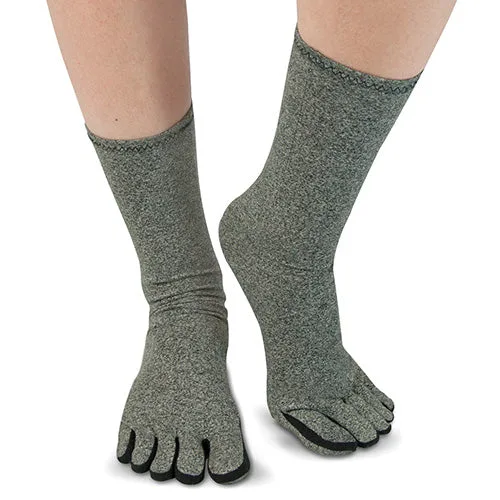
IMAK Compression Arthritis Socks are soft, cotton-rich socks that provide mild compression, warmth, and flexible coverage across your feet, ankles, and lower legs. Unlike a conventional sock with one shared toe box, each toe fits into its own fabric compartment. This five-toe construction separates the toes while preserving movement and allows the material to follow the shape of the forefoot more closely.
The individual toe compartments place more fabric around and between the toes than an ordinary sock. This design may appeal to you if you prefer less direct skin-to-skin contact between toes, a sock that follows the individual shape of your forefoot, or the feel of a five-toe sock rather than a standard crew sock.
At a glance: IMAK Compression Arthritis Socks
-
IMAK Compression Arthritis Socks | Five-Toe Mild Compression Pair: The socks are made of 92% cotton and 8% spandex and provide mild compression rather than a specified medical compression class. Cotton-rich fabric offers breathable warmth, while the mild compression is gentle and suitable for everyday wear when fitted properly.
IMAK Compression Arthritis Socks | Five-Toe Mild Compression Pair
-
IMAK Compression Arthritis Socks | Five-Toe Mild Compression Pair: Each toe fits into its own fabric compartment, separating toes while preserving movement. This design reduces direct skin-to-skin contact between toes and may be more comfortable for those with sensitive or overlapping toes.
-
IMAK Compression Arthritis Socks | Five-Toe Mild Compression Pair: The socks extend above the ankle into the lower calf and contain no rigid brace, arch insert, heel wedge, or adjustable strap. They provide flexible coverage without rigid support, making them suitable for daily wear but not a substitute for medical-grade hosiery or braces.
Benefits of mild compression and toe separation
The five-toe design offers several practical benefits. By separating each toe, the socks reduce friction and moisture buildup between toes, which can be a source of discomfort. The cotton-rich fabric provides warmth, which may be soothing for stiff or achy joints. The mild compression offers gentle support around the foot and ankle without the tightness of medical-grade hosiery.
However, it's important to understand what these socks are not. They are not corrective toe spacers, do not forcibly realign toes, and do not correct bunions or permanently change joint position. They are not classified as diabetic socks, medical-grade compression hosiery, anti-embolism stockings, or an orthopedic brace. They are designed for comfort and mild support, not as a treatment for medical conditions.
How to put on five-toe compression socks
Putting on five-toe socks is different from a regular sock. Follow these steps for a comfortable fit.
- Start with clean, dry skin: Apply the socks to clean, dry, and intact skin. Remove any rings or bracelets that could catch the fabric.
- Gather the sock toward the heel: This makes it easier to guide each toe into its compartment.
- Guide each toe into its compartment: Begin with the largest toe, then the others. Make sure each toe reaches the end without fabric folded underneath it. Do not force the sock into a restrictive toe box.
- Unroll the fabric evenly: Smooth the fabric over the ankle and lower leg. Avoid pulling the entire sock upward before the toes are properly seated, as this can leave fabric bunched between the toes.
- Check the fit: Ensure the fabric lies flat between the toes, the ankle fabric is smooth, and the sock is not overly restrictive. Toes should remain their normal color and temperature.
Choosing the right size and fit
Selecting the correct size is crucial for comfort and effectiveness. The IMAK Arthritis Socks come in three sizes based on men's and women's shoe sizes. Use the size chart to find your usual shoe size. If your feet differ in length, use the larger foot. Consider current swelling rather than shoe size alone. If your foot shape falls outside the listed size ranges, seek professional fit guidance.
Do not deliberately size down to create stronger compression. A smaller size can create excess pressure between the toes, around the ankle, or at the cuff. The socks should feel close and mildly supportive, not painful or restrictive. If you have bunions, hammer toes, or overlapping toes, make sure each toe can enter its compartment without force.
Footwear compatibility
The five-toe design adds fabric around the forefoot, so your footwear needs enough width and depth through the toe box. A roomy athletic shoe is often the easiest match. Walking shoes are usually suitable if the toe box is wide enough. Narrow dress shoes may feel crowded. Boots vary by lining and toe shape. Sandals will leave the individual toe sleeves visible. Always check for bunching at the front of the shoe, and walk indoors briefly before prolonged use.
A sock that fits correctly outside the shoe can still create unwanted pressure when worn in a narrow toe box. If you wear orthoses, confirm that the sock fits inside your footwear along with them.
Caring for your socks
To keep your socks in good condition, hand wash them in cold water and air dry completely. Do not use high dryer heat, bleach, or an iron. After washing, turn each toe compartment right-side out and ensure that no fabric remains folded inside. Replace the socks when worn fabric creates pressure, bunching, or an inconsistent fit.
When to avoid or seek guidance
Compression can be inappropriate in significant arterial disease. If you have known peripheral arterial disease, markedly reduced sensation, an active ulcer, open skin, unexplained swelling, or major foot-color changes, seek medical guidance before using the socks. Stop using them if they cause pain, numbness, tingling, skin irritation, swelling, or changes in toe color or temperature.
These socks are not intended for overnight use by everyone. People with reduced sensation or circulatory disease should seek guidance before overnight wear. They are not a substitute for prescribed compression hosiery, properly fitted footwear, or orthoses.