Quick answer
Choose in-ceiling speakers for overhead Atmos effects and unobtrusive whole-home audio; choose in-wall speakers for front left, center, and right channels where precise imaging matters. For most immersive setups, a combination of both delivers the best balance.
Sound dispersion and placement
In-ceiling speakers project sound downward, which is ideal for overhead effects in Dolby Atmos or for filling a room with ambient music. In-wall speakers, mounted at ear height, can be aimed more directly toward the listening position, which improves dialogue clarity and stereo imaging.
Installation and room layout
In-ceiling speakers are a great choice for rooms where wall space is limited by windows, artwork, or shelving. In-wall speakers require clear wall cavities and may need additional bracing, but they can be positioned more precisely for a dedicated home theater. Both require running speaker wire inside walls, so plan your routing before drywall work.
Aesthetics and flexibility
Both options keep your room looking clean, but in-ceiling speakers are often less noticeable because they sit flush with the ceiling. In-wall speakers can be placed at ear level, which may be more visible but also more effective for critical listening. If you might rearrange furniture later, in-ceiling speakers offer more placement flexibility.
Trade-offs to consider
- Soundstage vs. ambience: In-wall speakers at ear level create a more precise front soundstage for movies and music. In-ceiling speakers are better for ambient fill and overhead effects. Use in-wall for front channels and in-ceiling for surround or Atmos.
- Installation complexity: In-wall speakers may require more careful placement to avoid studs and achieve optimal ear height. In-ceiling speakers are often easier to place in open ceiling areas. Check your wall and ceiling cavities before committing.
- Flexibility for future changes: In-ceiling speakers are less tied to a specific listening position, making them more forgiving if you rearrange furniture. In-wall speakers are more location-sensitive. If you move furniture often, prioritize in-ceiling for ambient channels.
Product facts
-
Clearus C6LCR Dual 6.5" LCR In-Wall Speaker: The Clearus C6LCR is a dual 6.5" in-wall speaker that can serve as a left, right, or center channel and can be mounted vertically or horizontally. This flexibility makes it a strong choice for a front LCR setup where you need consistent timbre across the front soundstage.
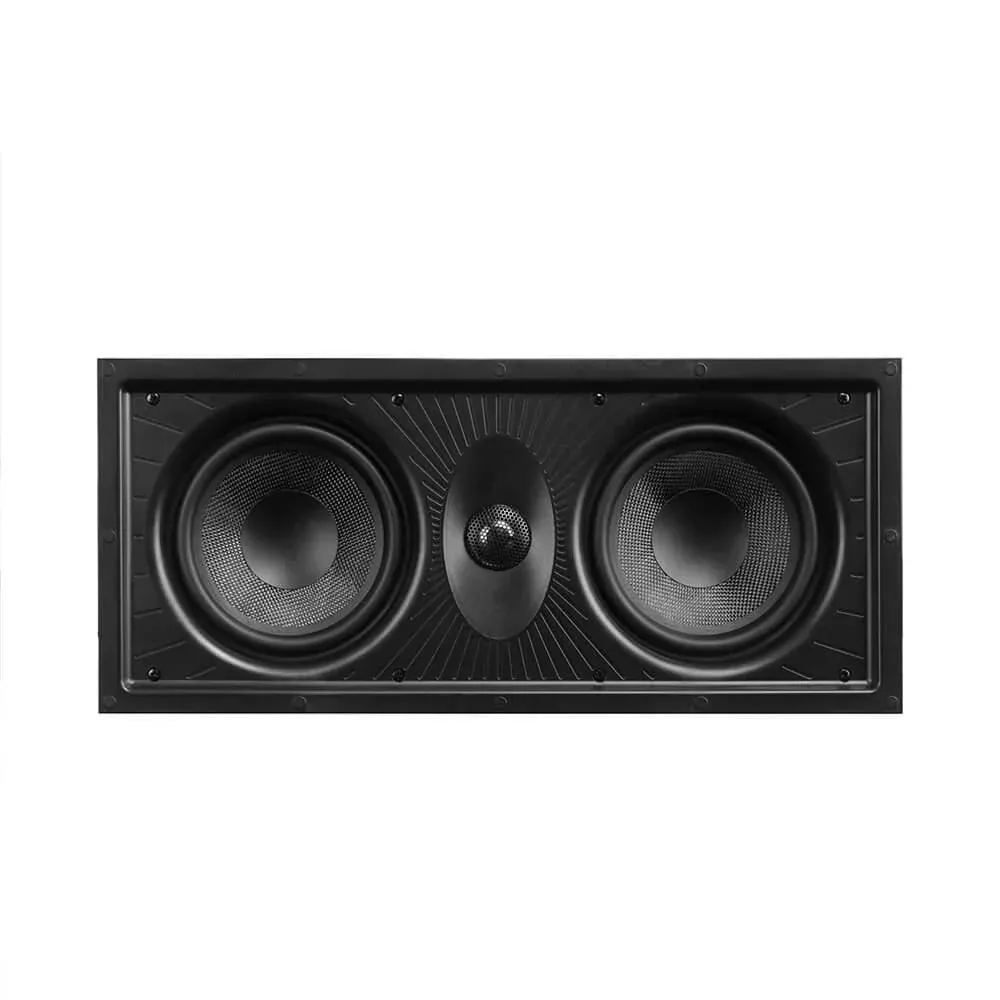
Clearus C6LCR Dual 6.5" LCR In-Wall Speaker
-
Theatrus T8C 8" In-Ceiling Speaker: The Theatrus T8C is an 8" 2-way in-ceiling speaker with an AMT tweeter and aluminum frame, designed to integrate with the Theatrus series. Its larger driver and premium tweeter make it a solid option for overhead Atmos channels or high-quality distributed audio.
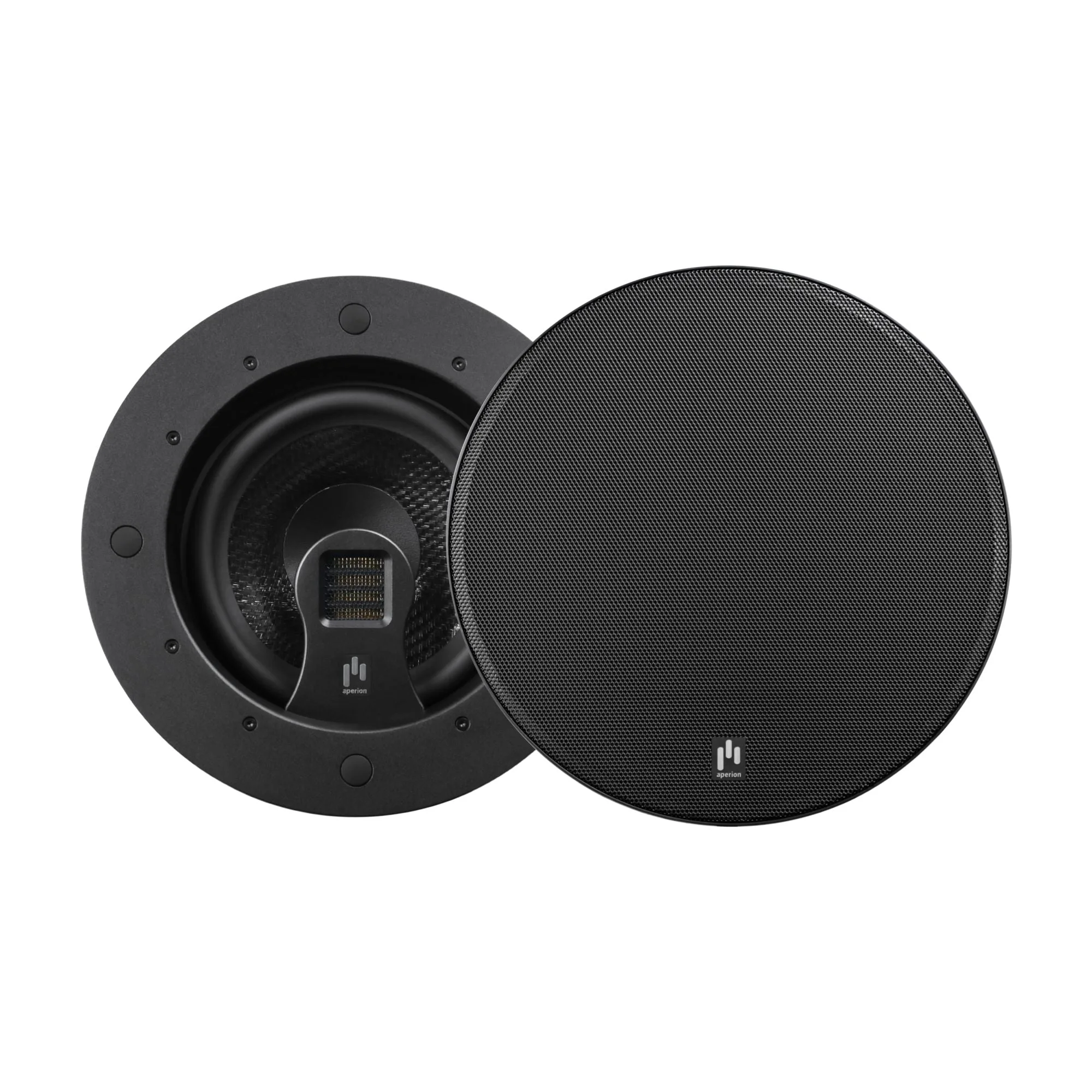
Theatrus T8C 8" In-Ceiling Speaker
Which should you choose?
Best for
- Home theater enthusiasts who want precise front imaging and dialogue clarity — choose in-wall LCR speakers.
- Whole-home audio or Atmos setups where overhead placement is needed — choose in-ceiling speakers.
Not for
- Rooms with limited ceiling access or no attic space — in-ceiling installation may be difficult; consider in-wall or on-wall alternatives.