Quick answer
Indoor climbing set safety comes down to three things: anchoring the set so it cannot tip, matching the set to your child's age and abilities, and checking the hardware and surfaces regularly. Choose a set with a clear weight and age range, install it on a solid wall or stable base, and supervise younger children until they can use it confidently.
Once a climbing set is in your playroom, the questions shift from which one to buy to how to keep it safe day after day. This FAQ covers the practical concerns parents raise most often: wall anchoring, age fit, floor surfaces, and what to check as your child grows.
The answers below apply to wooden indoor climbing sets generally, with examples from WoodandHearts sets where the catalog details help clarify a point. If a set does not list a specification, treat that as a question to ask the seller rather than assuming a safe default.
Do I need to anchor an indoor climbing set to the wall?
Any climbing set that a child pulls on, hangs from, or leans against should be secured according to the manufacturer's instructions. Freestanding pieces like a balance board or small arch may not need wall anchoring, but taller structures such as a Swedish wall or a wall-mounted climbing wall do. If the set includes a wall panel, use the supplied mounting hardware and fix it into studs or a suitable wall anchor rated for the load.
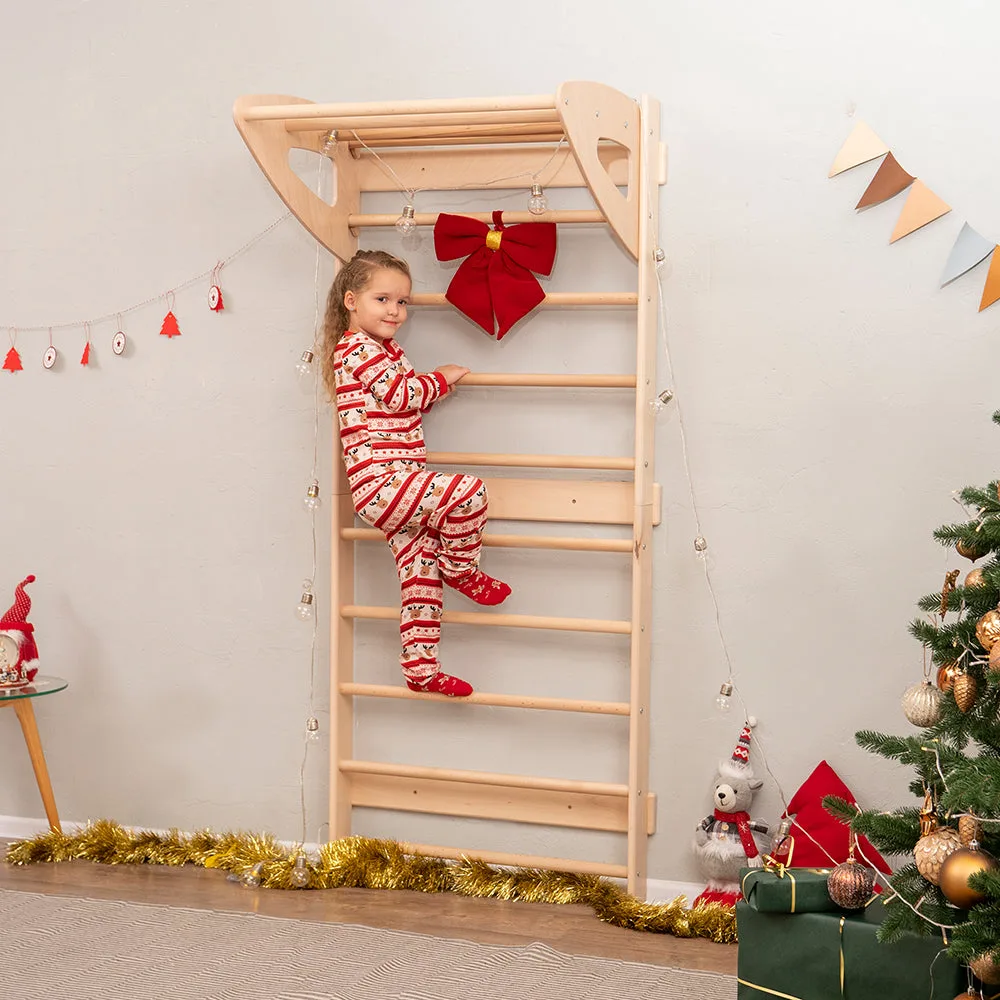
Swedish wall
If you rent or cannot drill into the wall, choose a freestanding option instead of skipping the anchor. A climbing set that shifts mid-move is a fall risk, and no amount of padding on the floor compensates for a structure that tips.
- Check the wall type before installation: drywall, plaster, brick, and concrete need different anchors.
- Never substitute hardware unless the replacement is rated for at least the same load.
What age is safe for an indoor climbing set?
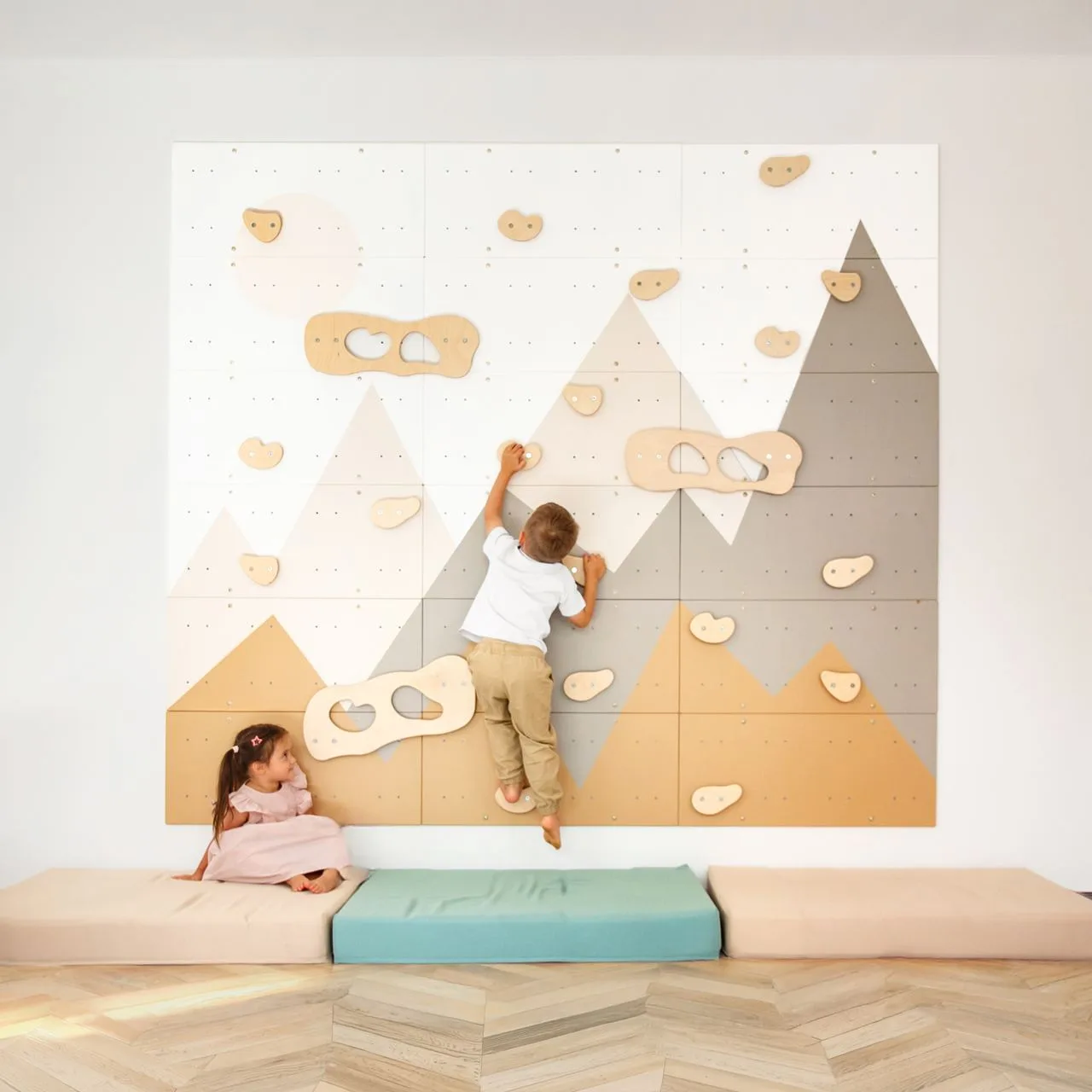
Age guidance varies by product, so use the manufacturer's stated range rather than a general rule. Some sets are designed for toddlers and preschoolers, while others, such as the Indoor Rock Wall, are described for ages 3 to 10. Younger children generally need closer supervision and simpler routes; older children can handle more complex climbing holds and higher reaches.
A good rule is to match the set's difficulty to your child's current ability, not their age alone. A 4-year-old who climbs confidently may use a set labeled for older children with supervision, while a cautious 7-year-old may prefer a lower, simpler configuration.
- Start with the lowest holds and shortest routes, then add difficulty as skills grow.
- Supervise children under 6 whenever they are on the set.
What should I put under an indoor climbing set?
A firm, flat surface is the priority. Carpet or a low-pile rug can reduce impact noise and provide some cushioning, but avoid thick, soft mats that can slide or shift under a climbing frame. If you use a crash mat, choose one that stays in place and does not create a tripping hazard at the edges.
Keep the landing zone clear of toys, furniture, and hard objects. A dedicated play area with a defined boundary helps children understand where the climbing zone ends and where the rest of the room begins.
- Check that the floor surface under the set is level and free of gaps.
- Secure or remove rugs that bunch up near the base of the set.
How do I check a climbing set for wear and tear?
Inspect the set weekly for loose screws, bolts, and connections. Wood can develop splinters or cracks over time, especially around drilled holes and joints. Run your hand along edges and climbing holds to feel for rough spots, and tighten any hardware that has worked loose.
Check the wall attachment points monthly if the set is anchored. Look for cracks in the wall, pulled anchors, or any movement in the frame. If you notice movement that tightening does not fix, stop using the set until it is repaired or replaced.
- Keep the manufacturer's assembly instructions and hardware list for reference.
- Re-tighten bolts after the first week of use, then check monthly.
Can two children use an indoor climbing set at once?
Unless the manufacturer states a capacity for multiple users, assume one child at a time. Two children on a compact set can shift the weight distribution and increase the chance of a fall. If you have more than one child, set clear turns and use a timer if needed.
For larger families, a bigger set such as the Playground Set with Monkey Bars may be designed for more active play, but still check the product details for any weight or user limits. When in doubt, supervise and enforce one-at-a-time use.
- Teach children to wait until the set is clear before starting their turn.
- Avoid using the set as a storage spot for toys or blankets.
Indoor climbing set safety FAQ
How often should I check the set?
Do a quick visual check before each use: look for loose bolts, splinters, or anything out of place. Do a deeper check monthly, including wall anchors if the set is mounted. Put a monthly reminder in your phone so it does not get skipped.
What if my child is between age ranges?
Use the lower end of the range as your guide and supervise closely. If the set feels too advanced, start with simpler configurations or a smaller set until skills catch up. When in doubt, choose the simpler setup and add difficulty later.
Can I install a climbing set on a rented wall?
Only with your landlord's permission and the right anchors for the wall type. If drilling is not allowed, choose a freestanding set that does not require wall mounting. Never skip anchoring on a wall-mounted set just because drilling is inconvenient.
Product details that affect safety
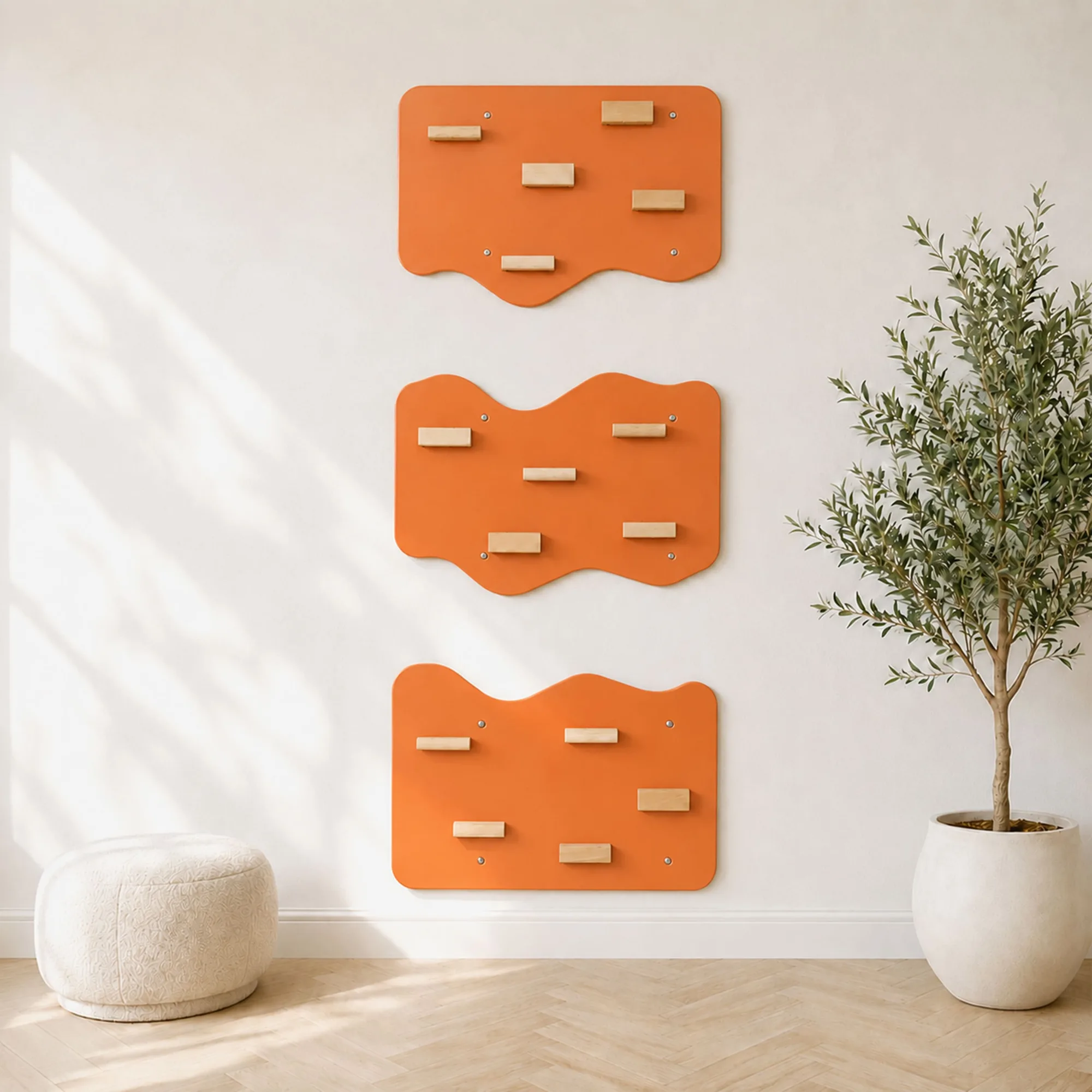
- Indoor Climbing Wall: The compact Indoor Climbing Wall from WoodandHearts is designed for even the smallest room, and toddlers and preschoolers can practice with ease, requiring no special preparation. A compact footprint means it can fit in a bedroom or small playroom, but you still need to anchor it and keep the landing zone clear.
- Indoor Rock Wall: The Indoor Rock Wall is described as a wooden climbing gym for energetic kids aged 3 to 10, bringing outdoor adventure safely inside. The stated age range helps you decide whether your child is ready, and it signals that supervision and setup should match the needs of older, more active climbers.
- Swedish Climbing Wall: The Swedish Climbing Wall includes a Swedish wall in Natural wood and 6 climbing panels in rectangular shapes, with panels available in 4 color variations. A wall-mounted set like this must be fixed securely to a suitable wall, and the panel configuration can be adjusted as your child's skills change.
Indoor climbing set safety is mostly about consistent habits: anchor properly, match the set to your child, and check it regularly. If you keep those three in place, the set can stay a safe and active part of your home for years.