Quick Answer
Choose an indoor infrared sauna if you want low-maintenance heat, easy 120V plug-in setup, and year-round use regardless of weather. Choose an outdoor barrel sauna if you have yard space, want a traditional steam experience, and enjoy the cool-down contrast of stepping outside.
Heat Type: Infrared vs Traditional
Infrared saunas use panels that warm your body directly, without heating the air as much. They typically reach lower temperatures (around 110–140°F) and are often preferred by people who find traditional saunas too intense. Traditional barrel saunas use a wood-burning or electric heater to warm the air and stones, producing higher heat and humidity, which some find more relaxing and traditional.
If you have a medical condition or are sensitive to high heat, infrared may be more comfortable. If you want the classic sauna experience with the option to pour water on stones for steam, a barrel sauna is the better fit.
Space and Setup Considerations
Indoor saunas are compact and can fit in a spare room, basement, or even a large bathroom. They require a flat floor and access to a standard 120V outlet – no special wiring needed for many models. Outdoor barrel saunas need a level, well-drained area with clearance for the door and benches, and they require a dedicated electrical circuit or a wood-burning setup.
If you rent or don't want to modify your home, an indoor infrared sauna is easier to install. If you have a permanent outdoor space, a barrel sauna becomes a backyard feature that doesn't take up indoor square footage.
Cost and Value
Indoor infrared saunas generally have a lower upfront cost than outdoor barrel saunas, especially when you consider the simpler electrical requirements. Barrel saunas often come with higher price tags but include more seating and a traditional heater. Consider the long-term value: an outdoor barrel sauna may increase your home's appeal, while an indoor unit is more likely to move with you if you relocate.
Compare not just the sticker price but also installation costs. A 120V infrared sauna can be a DIY project, whereas a 240V barrel sauna may require an electrician, adding to your total investment.
Decision Rules: Choose Your Sauna
- If you want year-round use regardless of weather: Choose an indoor infrared sauna. It works in any season and doesn't require you to brave the elements to enjoy a session. Check that you have a dedicated indoor space and a nearby 120V outlet.
- If you prefer a traditional sauna experience with steam: Choose an outdoor barrel sauna. The higher heat and ability to pour water on stones deliver the classic sauna feel that infrared cannot replicate. Ensure your yard has a level, well-drained area and access to the required power supply.
- If you have limited space or rent your home: Choose a compact indoor infrared sauna like the Knox 2-Person model. It plugs into a standard outlet and can be placed in a bedroom or home gym without major modifications. Measure your doorway and ceiling height before buying to ensure it fits.
Sauna Options to Consider
-
Rylan Indoor Infrared Sauna – 4 Person: The Rylan Indoor Infrared Sauna – 4 Person features ten infrared heater panels for full-body coverage and thicker cedar walls with an 8mm tempered glass door. This means even heat distribution and better insulation, making it a solid choice for a family or anyone who wants a spacious indoor sauna without the high heat of traditional models.
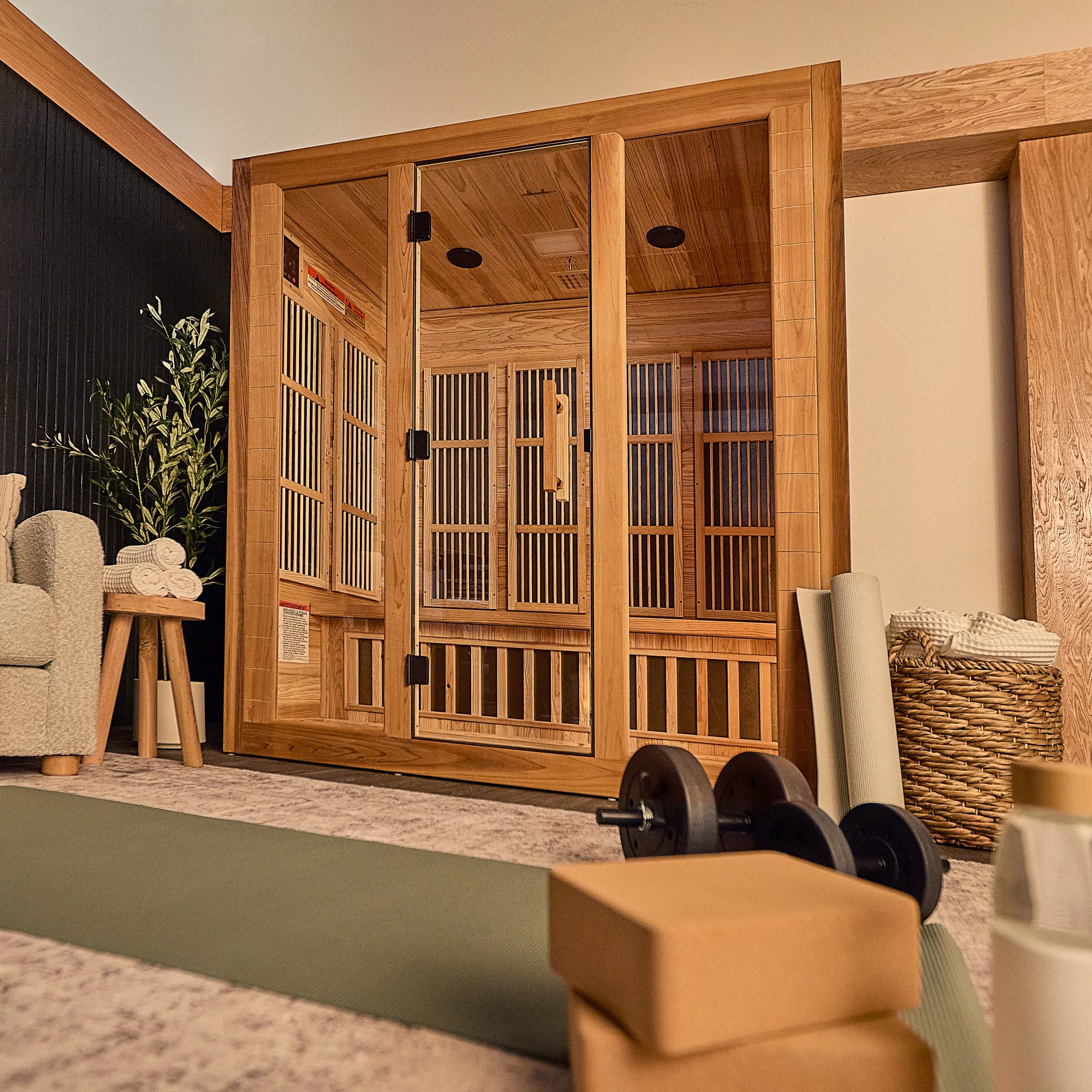
Rylan Indoor Infrared Sauna – 4 Person
-
Paxton Outdoor Barrel Sauna with Porch – 4-6 Person: The Paxton Outdoor Barrel Sauna with Porch – 4-6 Person includes a PrairieFire™ 9kW heater that reaches full temperature fast, plus two full-length linear benches and a covered porch. If you want a traditional outdoor sauna that heats quickly and accommodates a group, this model gives you the classic barrel experience with built-in cool-down seating.
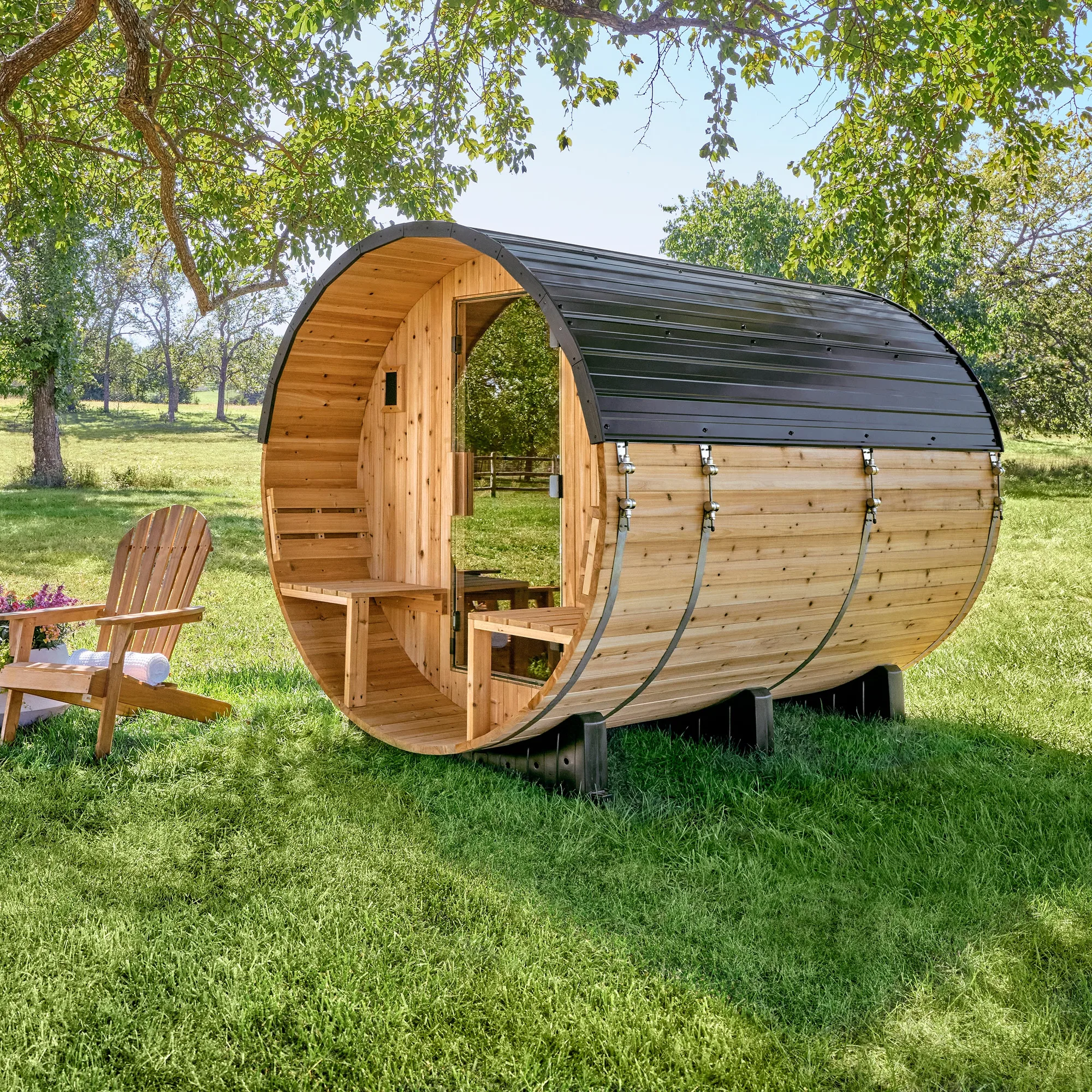
Paxton Outdoor Barrel Sauna with Porch – 4-6 Person
Who Each Sauna Type Suits Best
Best for
- Indoor infrared saunas: people who want low-heat, low-maintenance sessions and easy installation in an existing room.
- Outdoor barrel saunas: those with a permanent backyard space who enjoy the traditional heat-and-steam ritual and the cool-down contrast of stepping outside.
Not for
- Indoor infrared saunas: not ideal if you specifically want high-temperature, high-humidity traditional sauna sessions.
- Outdoor barrel saunas: not suitable for renters, those without outdoor space, or anyone who wants a sauna they can easily move.