Quick answer
For a small room, start with a wall-mounted or compact climbing set that uses vertical space rather than floor area. Measure your wall and floor clearance first, then choose a set whose footprint and mounting style match your room. If you have more floor space and want multiple activities, a larger all-in-one set can work, but it will dominate the room.
Small rooms can still hold a real indoor playground, but the set has to match the space. The biggest mistake buyers make is choosing by photos instead of by measurements. A climbing wall that looks compact online can still need a wide safety zone, and a playhouse with a slide needs a clear landing path.
This guide gives you concrete decision rules for fitting a small indoor playground set into an apartment, bedroom, or shared playroom. You will learn which product types suit tight spaces, what to measure before buying, and when a compact climbing set is the smarter choice over a full playground.
Measure These Three Things Before You Buy
Start with wall width, ceiling height, and floor clearance. Wall width decides whether a climbing wall or wall-mounted set fits. Ceiling height matters for anything with a swing, monkey bars, or a tall frame. Floor clearance is the open area in front of and around the set where a child can fall or land safely.
Write down the numbers and compare them to the product's footprint, not just its photo. If a product page does not list a clearance zone, treat that as a decision limitation: contact the store or choose a set with a simpler, flatter profile. A compact climbing set that mounts on the wall usually needs less floor space than a freestanding playground.
- Measure wall width at the mounting height, not just at the floor.
- Check ceiling height if the set includes a swing or monkey bars.
- Leave clear floor space in front of any climbing or sliding element.
Wall-Mounted vs Freestanding: Which Fits Your Room
Wall-mounted sets are the best fit for narrow rooms because they use vertical space and keep the floor open. They suit apartments, shared bedrooms, and playrooms where furniture already takes up floor area. The trade-off is that installation requires a suitable wall and some DIY confidence.
Freestanding playgrounds offer more activities in one unit, but they claim floor space permanently. They work better in a dedicated playroom or a large bedroom. If your room is multi-purpose, a wall-mounted compact climbing set will usually cause fewer layout problems than a full freestanding playground.
- Choose wall-mounted for narrow rooms and rentals where you can mount safely.
- Choose freestanding only if you can leave the floor area open long term.
- Check whether the set can be moved or stored if the room changes use.
Match the Set to Your Child's Age and Energy
Age range changes what you need. A toddler climber with a low platform and a cozy hut supports early movement and quiet play. A climbing wall with holds and a rope net suits older kids who want a challenge. Buying too advanced a set for a toddler can leave it unused; buying too simple a set for a 6-year-old can bore them quickly.
Look for a stated age range in the product facts and treat it as a starting point. If the range is broad, check which elements suit your child now and which they will grow into. A set that combines climbing, swinging, and a rest spot tends to stay in use longer than a single-purpose piece.
- Toddlers need low, stable elements and a soft landing area.
- Older kids need varied challenges like nets, bars, and holds.
- A set with several activity types usually gets more years of use.
Compact Climbing Set Options That Work in Tight Rooms
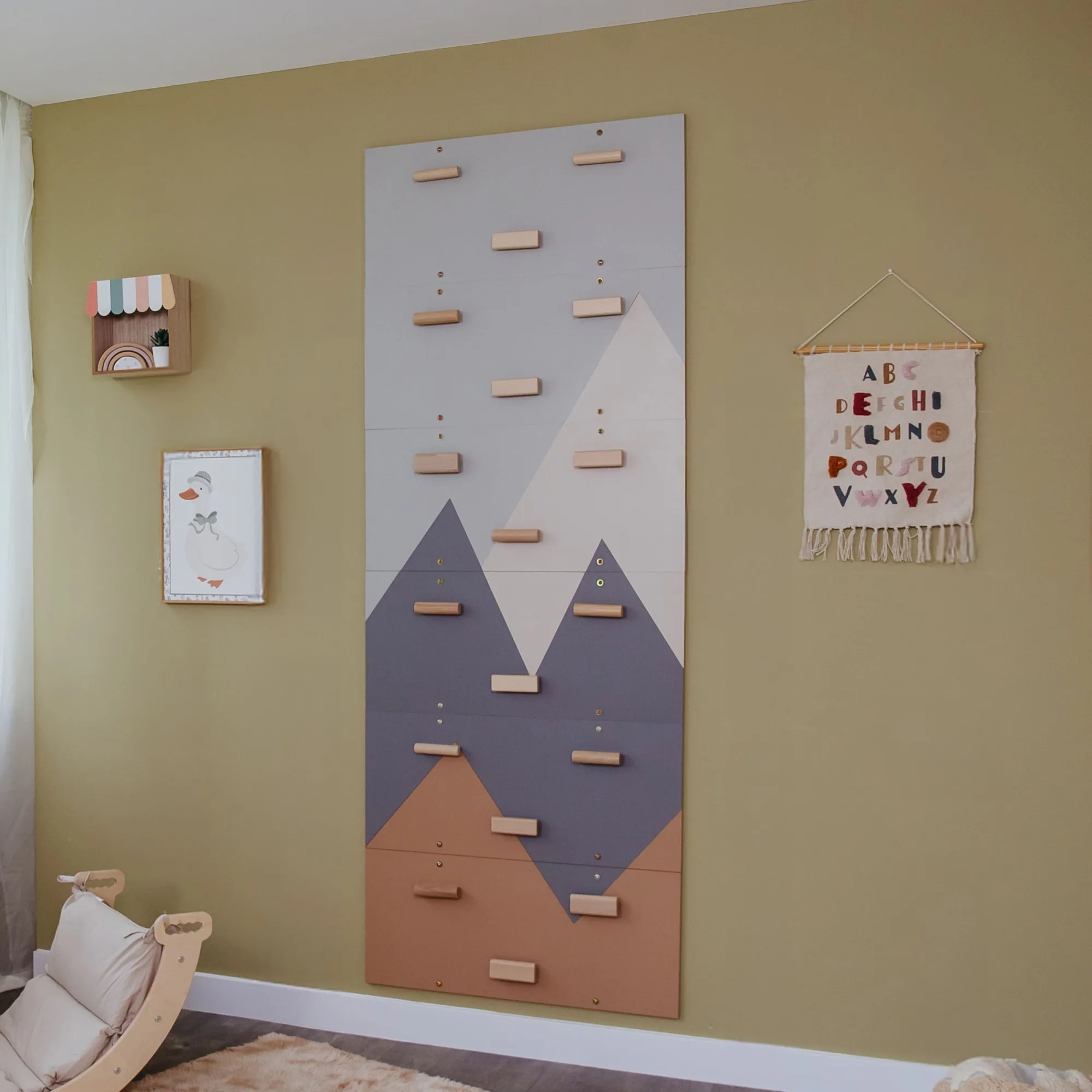
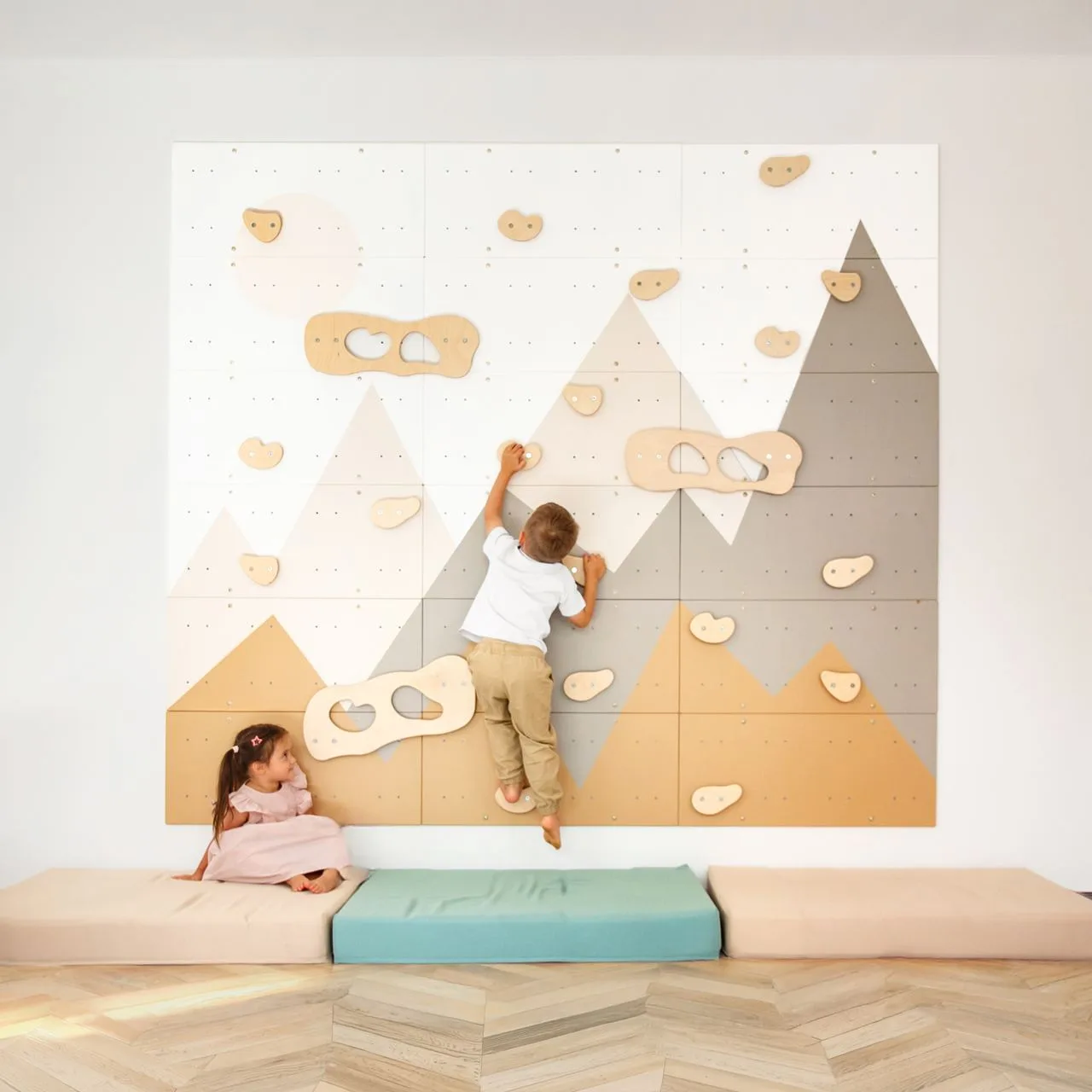
The Kids Indoor Climbing Wall “Mountain” is designed as a compact set that transforms a small room into an active environment. It is a strong fit when wall space exists but floor space does not. Because the catalog does not list a footprint or clearance zone, measure your wall and confirm mounting requirements before ordering.
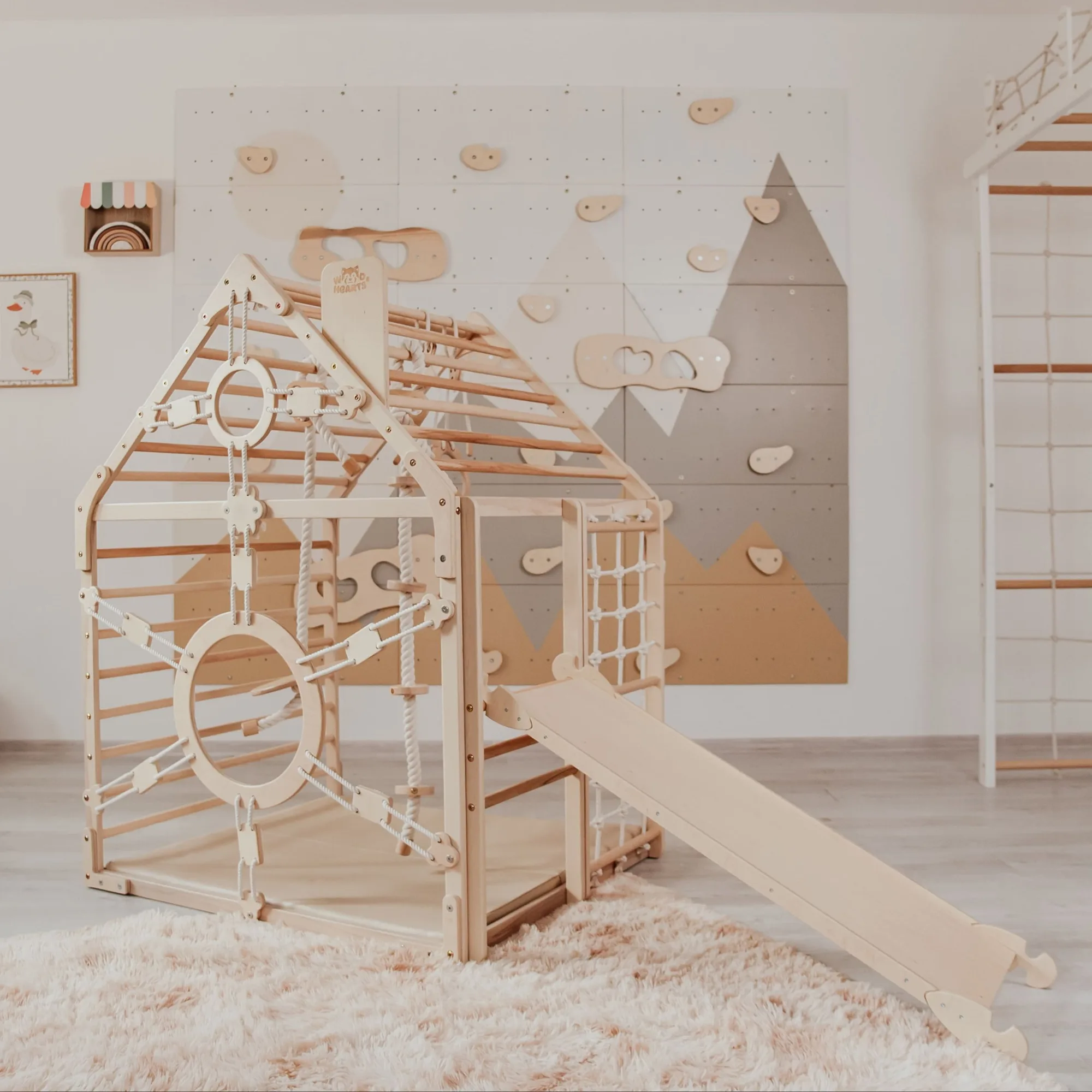
The Wooden Climbing Playhouse blends a Montessori-inspired climber with a kids’ hut and is listed for ages 1–6. It gives you climbing plus a quiet play or reading corner in one piece. It is a good middle option when you have a corner of floor space but not enough room for a full playground.
Wooden Climbing Playhouse
- Prioritize wall-mounted sets when floor area is the limiting factor.
- Choose a combined climber and hut if you also need a calm play zone.
- Confirm mounting hardware and wall type before installation.
When a Bigger All-in-One Set Makes Sense
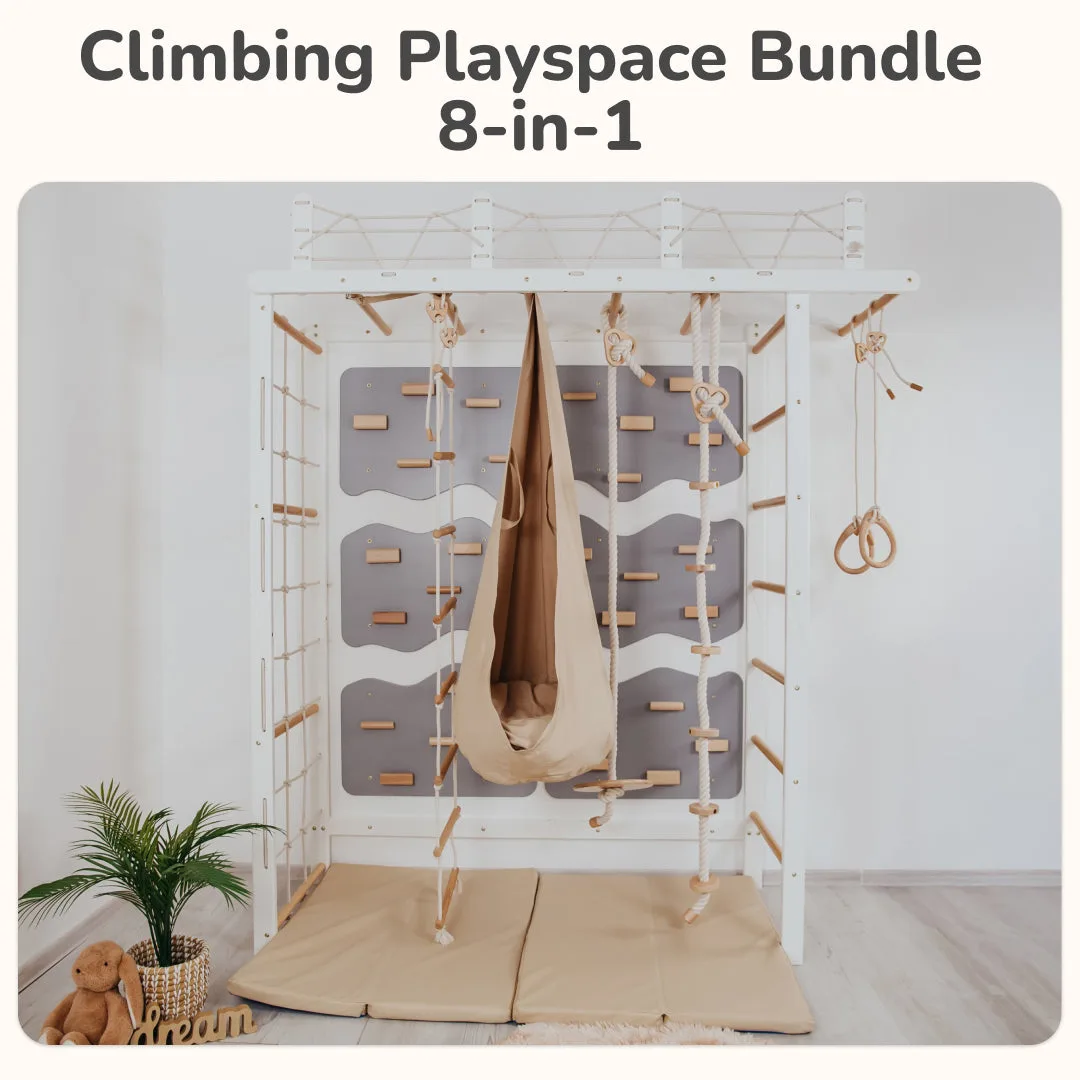
If you have a dedicated playroom, a larger all-in-one set can replace several single-purpose toys. The Climbing Indoor Playspace for Kids, Complete Climbing Set combines climbing structures, swings, and a cozy relaxation element for kids aged 3 and up. It is a full indoor adventure zone rather than a space-saving compromise.
The trade-off is clear: this type of set needs more room and becomes the center of the room. It suits families who can commit the floor area and want one durable setup instead of many small items. In a small shared bedroom, it will likely feel crowded.
- Choose an all-in-one set only for a dedicated play area.
- Check swing and climbing clearances before placing it against a wall.
- Expect it to define the room layout rather than blend into it.
Playroom Small Space Ideas That Keep Play Safe
Place the set against a solid wall and keep the open floor in front of it clear. Use a soft mat under climbing and landing zones, and store loose toys in bins or a shelf so they do not become trip hazards. Keep the path to the door and window unobstructed.
Rotate a few toys instead of storing everything at once. This keeps the floor clearer and makes the play space feel bigger. If the room is shared with a bed or desk, define the play zone with a rug so everyone knows where the equipment belongs.
- Put a soft mat under every climbing and landing area.
- Keep doorways, windows, and radiators clear.
- Rotate toys to reduce floor clutter.
Decision Rules for Small-Space Buyers
- Rule 1: Floor space under 2 square meters: Choose a wall-mounted or compact climbing set and keep the floor open. Avoid freestanding playgrounds with slides or swings. Wall space is your best asset in a tight room.
- Rule 2: Shared bedroom or multi-use room: Pick a set that mounts to the wall or fits a single corner, and define the play zone with a rug or mat. If the set blocks furniture or doors, it is too big.
- Rule 3: Dedicated playroom with open floor: An all-in-one set with climbing, swinging, and a rest spot can replace several smaller toys and stay in use longer. Commit the floor area only if the room is truly dedicated to play.
- Rule 4: Child under 3: Prioritize low, stable elements and a soft landing area. A combined climber and hut suits early movement and quiet play. Match the set to the child's current stage, not an older sibling's.
- Rule 5: Missing clearance information: If the product page does not state a footprint or safety zone, treat it as a decision limitation and confirm with the store before buying. Never guess a clearance zone for a climbing set.
Product Facts That Affect Fit
- Kids Indoor Climbing Wall “Mountain”: Described as a compact set that transforms any small room into a fun and active environment, with everything needed to stay active in a compact design. It is the clearest wall-space-first option when floor area is your main constraint.
- Wooden Climbing Playhouse: Blends a Montessori-inspired climber with a cozy kids’ hut and is listed for ages 1–6, serving as both a toddler climber and a comfortable space for play and reading. It covers active and quiet play in one footprint, which suits a corner of a small room.
- Climbing Indoor Playspace for Kids, Complete Climbing Set: A multifunctional setup for climbing, swinging, and active development for kids aged 3+, combining climbing structures, swings, and a relaxation element. It offers the most activity variety but needs more committed floor space than a compact wall set.
Who This Guide Is For
Best for
- Apartments and small bedrooms where floor space is limited
- Families who want active indoor play without a full playroom
- Buyers comparing wall-mounted and freestanding climbing sets
Not for
- Large dedicated playrooms where a full playground is the goal
- Outdoor use or weather-exposed spaces
- Buyers who cannot mount equipment to a wall and have no floor space
A small room can still hold a real indoor playground if you choose by measurements and mounting style, not by photos. Measure your wall, ceiling, and floor clearance, then pick the compact climbing set or playhouse that matches your space. If you have a dedicated playroom, a larger all-in-one set can work, but only if you can give it the floor area it needs.