Quick answer
Choose a dye inkpad for fast-drying everyday stamping and layered colour, a pigment inkpad when you want slow-drying colour you can blend or heat emboss, and a waterproof inkpad when you plan to paint or colour over your stamped lines. Many card makers keep one of each rather than trying to make a single pad do everything.
The inkpad you reach for changes how a stamped image looks, how long you wait before touching it, and whether you can add colour on top. Dye, pigment, and waterproof inks are built differently, so each one wins in a different situation.
This comparison looks at the trade-offs using real Crafter's Companion and Spectrum Noir options, so you can match the pad to the project instead of guessing.
How dye, pigment, and waterproof inks differ
Dye ink soaks into paper quickly and usually dries in seconds, which makes it the practical choice for mass-producing cards or stamping a background you want to handle straight away. The trade-off is that a fast dry time leaves little room to blend or manipulate the colour after stamping.
Pigment ink sits on the surface with a slower dry time, so you can blend shades or sprinkle embossing powder before the ink sets. That same slow dry time means you need to wait or heat set before rubbing the surface, and it can smear if you are impatient.
Waterproof ink is formulated to resist water and alcohol markers once dry, so stamped outlines stay crisp when you colour over them. It is the specialist of the three: excellent for line work, less useful when you want soft blended backgrounds.
- Match the pad to the next step, not just the stamp: blending, embossing, and colouring all demand different ink behaviour.
Drying time and blending trade-offs
Fast drying is a gift when you are stamping multiples, but it is a limitation when you want a gradient. Dye inks generally dry too quickly to move colour around with a blending tool, so if a soft blended background is the goal, a slow-drying pigment pad gives you working time.
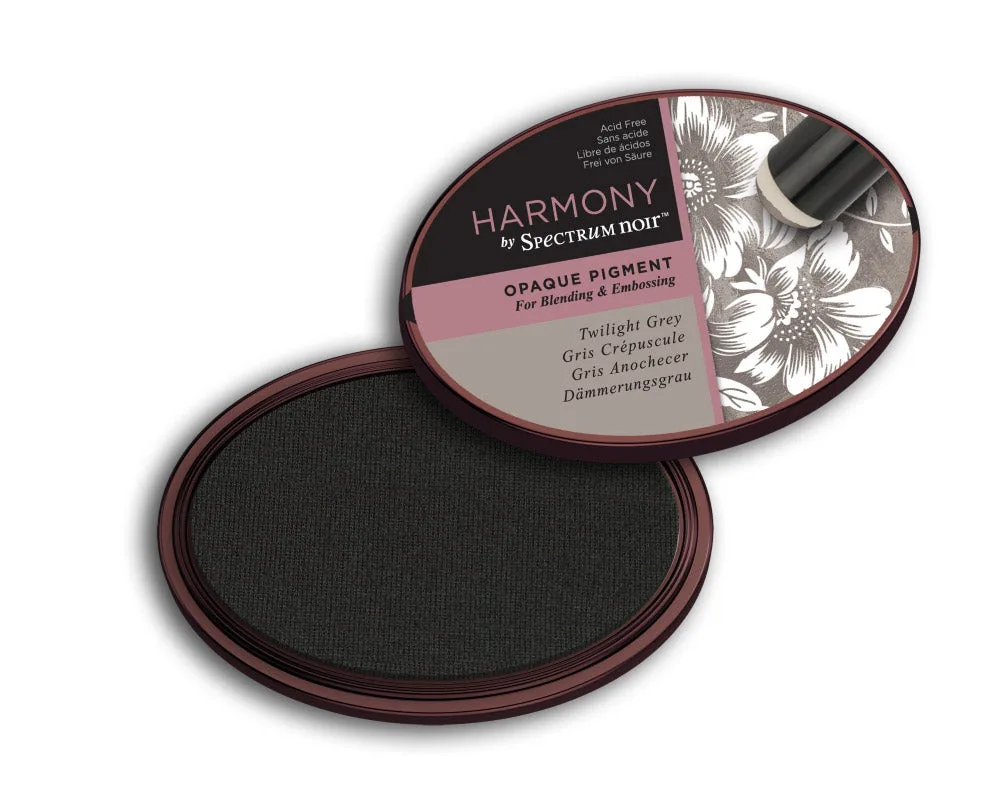
The Spectrum Noir Harmony Opaque Pigment Inkpad in Twilight Grey is a clear example of that trade-off: it has a rich, slow-drying consistency that gives you time to manipulate the shades, and the sticky texture lets you add a layer of clear embossing powder. That slow dry time is exactly why it needs a moment of care before you handle the card.
If you stamp with a pigment pad and then immediately stack your cards, you risk transfer. Give the surface time, or use a heat tool, before moving on.
- Test a new pad on scrap card first: drying time varies with paper coating and room humidity.
Embossing and waterproof ink for stamping
Embossing needs ink that stays wet long enough for powder to stick, which is why pigment inks are the usual partner for clear embossing powder. The Harmony Opaque Pigment Inkpad's slow-drying texture is designed for this, so you can pour powder over the stamped image and melt it without racing the clock.
Waterproof ink for stamping solves a different problem: keeping outlines sharp when watercolour or marker colour goes on top. If your stamped line bleeds the moment you add colour, the ink was not waterproof. Check the pad's stated purpose before you commit a whole colouring session to it.
You can combine the two approaches in one project: stamp and emboss an outline with pigment ink, then colour inside the raised lines. The embossed line acts as a small wall that helps contain wet media.
- For colouring over stamped lines, let waterproof ink dry fully before adding any wet medium.
Matching ink to your cardstock
Ink behaviour changes with the surface it lands on. Smooth, coated card takes a crisp impression and shows detail well, while textured or porous stock can pull ink into the fibres and soften the line. The Crafter's Companion A4 Smooth White Card Pack (250gsm) gives you a heavyweight, smooth blank canvas that suits die-cutting, embossing, stamping, and colouring, so it is a sensible baseline for testing how a new pad performs.
Heavier card also tolerates a little more moisture without buckling, which matters when you are blending pigment ink over a large area. If you are stamping on lighter paper, expect more curl and plan to flatten the finished piece.
For glitter and shimmer surfaces, ink sits on top rather than soaking in, so it can take longer to dry and may need heat setting. Keep a sheet of Crafter's Companion Glitter Card 10 Sheet Pack in Baby Pink nearby for accents, but stamp on the smooth card first and add glitter card as a layer rather than a stamping surface.
- Keep one smooth white card in your stash purely as an ink test sheet so you learn each pad's real dry time.
Trade-offs at a glance
- Dye ink: Dries fast and handles layered stamping well, but gives you almost no time to blend or reposition colour. Best when speed and clean repeat stamping matter more than soft gradients.
- Pigment ink: Slow-drying and blendable, with a sticky texture that holds embossing powder, but it stays wet longer and can smear if handled too soon. Best when you want to blend shades or heat emboss an outline.
- Waterproof ink: Keeps stamped lines crisp under watercolour or marker colour, but it is a specialist option rather than an all-purpose pad. Best when colouring over stamped line art is the main event.
Product facts
- Spectrum Noir Harmony Opaque Pigment Inkpad - Twilight Grey: Spectrum Noir Harmony Opaque Pigment Inkpads promise a sumptuous, fade-free colour with a rich, slow-drying consistency, giving you time to manipulate the shades, and their sticky, slow-drying texture allows you to add a layer of clear embossing powder. This is the pad to choose when you want to blend colour or heat emboss, but you must allow extra drying time before handling the card.
- Crafter's Companion A4 Smooth White Card Pack (250gsm) - 100 Sheets: This heavyweight white card is described as a perfect blank canvas for die-cutting, embossing, box making, stamping, and colouring, with 100 sheets included. A smooth, heavyweight surface gives you a consistent way to test how dye, pigment, and waterproof inks behave before you commit them to a finished project.
- Crafter's Companion Glitter Card 10 Sheet Pack - Baby Pink: This pack contains 10 sheets of glitter card in a baby pink shade, giving you a coordinated supply for layered designs and decorative accents. Glitter card is best used as a layered accent rather than a stamping surface, because ink sits on top and dries more slowly.
Which inkpad should you choose?
Best for
- Card makers who stamp multiples and want to handle the card immediately
- Crafters who blend soft backgrounds or heat emboss stamped images
- Colourists who paint or use markers over stamped outlines
Not for
- Anyone hoping one pad will dry instantly and also stay wet for blending
- Crafters who never heat set and often stack wet projects
- Projects where the stamped surface is glitter card rather than smooth cardstock
Pick the inkpad for the step that comes after stamping. If you blend or emboss, a slow-drying pigment pad like the Spectrum Noir Harmony Opaque Pigment Inkpad earns its place. If you colour over the lines, choose a waterproof pad. For everything else, a fast-drying dye pad keeps your card making moving.