Quick answer
To install a quick-release scope mount on your Blaser, choose the correct INNOMOUNT QD base for your optic type, attach it to the rifle's rail, and torque the screws to spec. The lever system allows fast removal and return to zero without tools.
Choosing the right mount for your optic
Quick-release mounts are not one-size-fits-all. The INNOMOUNT QD line offers three variants: a standard rail-LM version for most scopes, a Picatinny version for accessories like red dots, and a dedicated thermal version for night-vision and thermal devices. Using the wrong variant can prevent proper fit or compromise zero retention.
If you use a thermal or night-vision scope, the thermal-specific mount ensures the correct eye relief and clearance for larger objective lenses. For standard daylight scopes, the standard rail-LM mount provides a universal solution. The Picatinny version is best if you frequently swap between different accessories.
Tools and preparation
You will need a torque wrench (inch-pounds), a hex key set, and a clean, stable work surface. Ensure the rifle is unloaded and the action is open. Clean the rail surface on the Blaser or Sauer rifle to remove oil or debris that could affect mount alignment.
Step-by-step installation guide
- 1. Attach the base to the rifle: Place the INNOMOUNT QD base onto the Blaser or Sauer rail. Align the recoil lug with the corresponding slot on the rail. Hand-tighten the two clamping screws evenly until the base sits flush. Common mistake: over-tightening one screw first can tilt the base. Alternate turns to keep it level.
- 2. Torque the base screws: Use a torque wrench set to the manufacturer's specification (typically 15-20 in-lbs for these mounts). Tighten the screws in a cross pattern to ensure even pressure. Checkpoint: after torquing, verify the base does not rock or slide. If it moves, re-torque or check for debris.
- 3. Mount the scope rings or optic: If using separate rings, attach them to the base first. For a one-piece mount, place your scope or optic into the saddle, align the reticle level, and tighten the ring screws evenly to the recommended torque (usually 15-18 in-lbs). Common mistake: over-torquing ring screws can distort the scope tube. Use a torque wrench and never exceed 20 in-lbs.
- 4. Test the quick-release lever: Engage and disengage the lever several times. The mount should click into place with a positive stop. When locked, the lever should be parallel to the rail and require moderate hand force to open. If the lever is too loose or too tight, adjust the clamping screw on the lever mechanism per the manufacturer's instructions.
- 5. Confirm zero retention: After mounting, bore-sight the rifle and fire a group. Remove and reattach the mount three times, then fire another group. Compare point of impact. A properly installed QD mount should return to zero within 0.5 MOA. Checkpoint: if zero shift exceeds 1 MOA, re-check base torque and lever engagement. Some thermal scopes may require a specific mount variant for consistent return.
Mount options at a glance
-
Montage rapide pour Blaser et Sauer: The INNOMOUNT QD for Blaser and Sauer - Rail LM is a universal quick-release mount compatible with a wide range of optics. It offers a secure, repeatable zero for most standard scopes, making it a versatile choice for hunters and sport shooters.
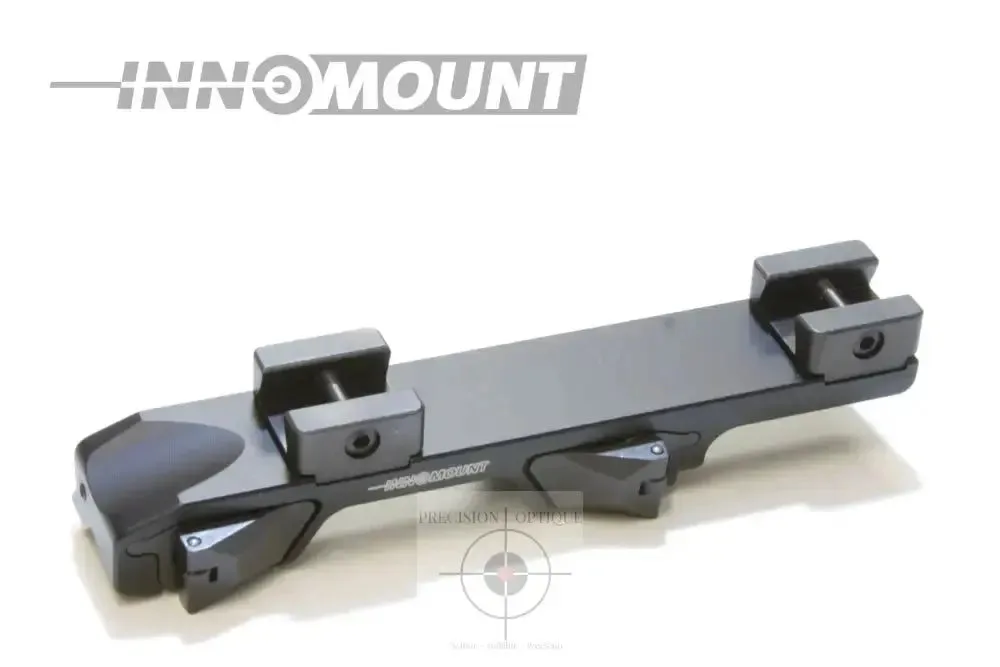
Montage rapide pour Blaser et Sauer
-
Montage amovible Blaser - Sauer - thermique: The INNOMOUNT QD for Blaser - Sauer - Thermique is optimized for thermal scopes like Pulsar Thermion and Hikmicro Stellar. It provides the correct eye relief and clearance for larger thermal optics, ensuring reliable performance in low-light conditions.
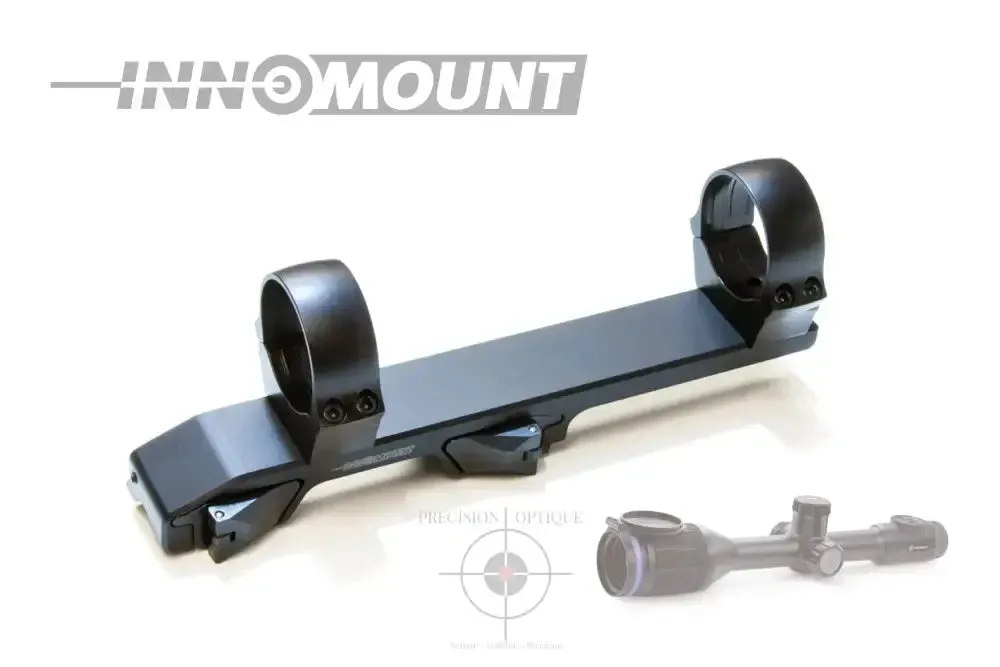
Montage amovible Blaser - Sauer - thermique
-
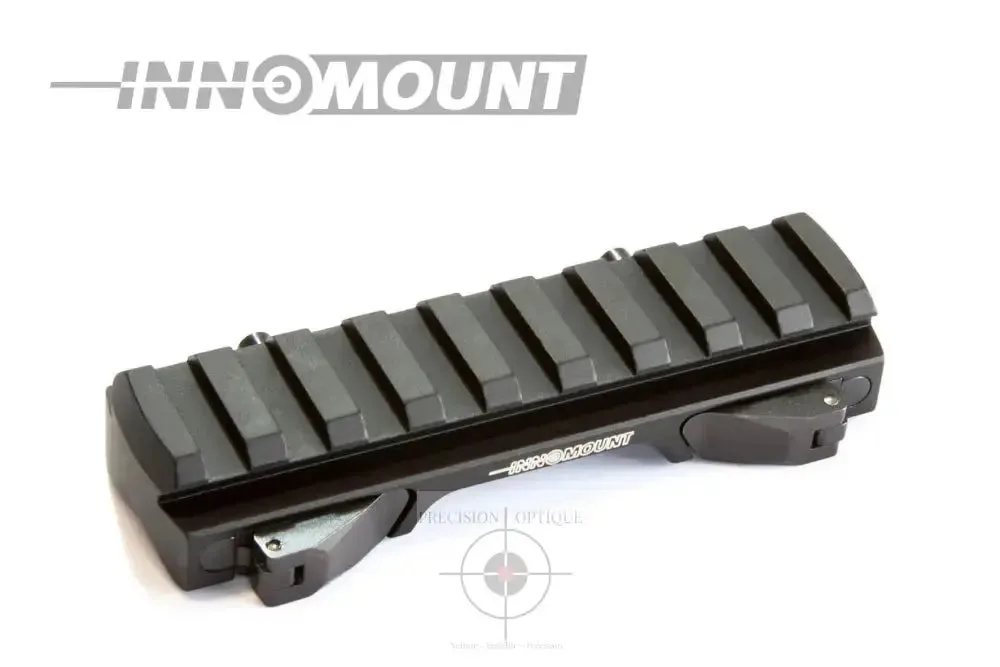
Montage rapide amovible Blaser - Sauer - Picatinny: The INNOMOUNT QD for Blaser - Sauer - Picatinny is a lightweight mount designed for Picatinny rails. It allows you to attach a variety of Picatinny-compatible accessories, such as red dots or laser aiming modules, without adding unnecessary weight.