Quick Answer
For most yards, an in-ground dog fence like the F600 offers reliable, customizable containment with a dual-collar system and adjustable correction levels—ideal for training multiple dogs with different temperaments.
Why Choose an In-Ground Fence Over a Wireless System?
In-ground fences let you define exact boundaries, including irregular shapes and narrow pathways, which wireless systems often cannot handle. The buried wire also avoids signal interference from metal buildings or hills that can disrupt wireless setups. However, installation requires digging a trench or using a wire-stapling tool, so it takes more upfront effort than a plug-and-play wireless fence.
Key Trade-Offs to Consider
In-ground systems are more permanent and less portable than wireless options. If you move frequently, a wireless fence may be more practical. Also, if your yard has very rocky soil or extensive tree roots, burying the wire can be challenging. In those cases, consider a wireless fence or a professional installation.
Decision Rules for Installing an In-Ground Dog Fence
- Plan the Boundary Layout: Walk your yard and mark the desired boundary with flags. Avoid areas with buried utility lines (call 811 before digging). Keep the wire at least 10 feet from metal fences and power lines to prevent signal interference. Draw a map of your boundary before buying wire—most kits include 500 feet, but you may need extra for large yards.
- Choose a Wire Burial Method: You can bury the wire 1–3 inches deep using a lawn edger or trenching tool, or staple it to the ground with landscape staples for temporary or no-dig setups. Burying protects the wire from lawnmowers and foot traffic but takes more time. For a permanent solution, bury the wire. For rentals or test runs, stapling works fine.
- Set the Correction Level Per Dog: Start at the lowest level and test the collar on your arm. Increase by one level at a time until your dog reacts with a mild surprise (ear flick, head turn). Use the dual-collar system to assign different levels for each dog if they have different temperaments. Always train with flags and verbal cues first—the correction is a backup, not the primary training tool.
- Test the Boundary Width: After burying the wire, walk the boundary with the collar to ensure the warning zone and correction zone are consistent. Adjust the transmitter’s boundary width control if the zone is too narrow or too wide. A 6–10 foot boundary width gives your dog enough room to turn back before receiving a correction.
Product Spotlight
-
F600 In-Ground Dog Fence: Dual-collar system: Train and manage different dogs with separate collars from one fence system. You can train one dog while the other stays contained, or set different correction levels for each dog without buying a second base unit.
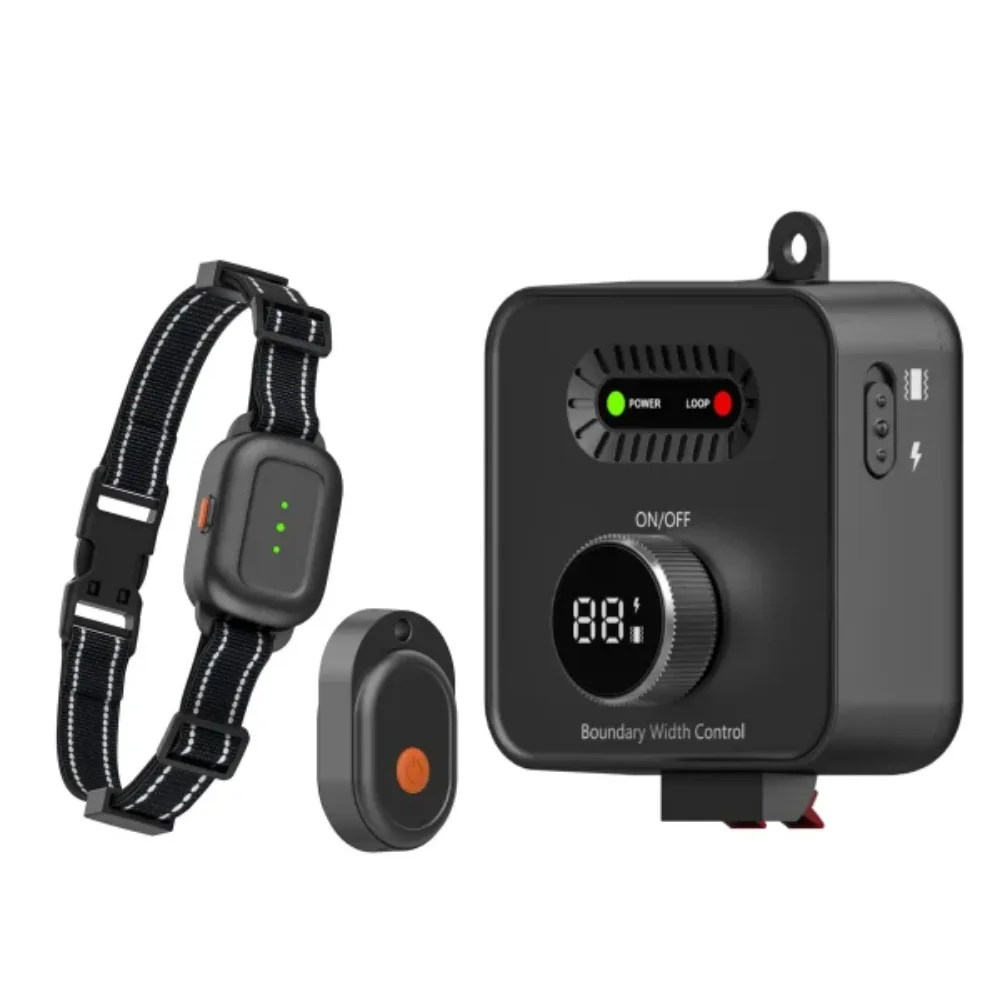
F600 In-Ground Dog Fence
-
F600 In-Ground Dog Fence: Adjustable correction levels: 10 levels of signal strength so you can match each dog’s temperament. Start with a low level for a sensitive dog and increase gradually for a stubborn or high-drive dog—no one-size-fits-all approach.
-
F600 In-Ground Dog Fence: Disconnection alert: Indicator warns you if the boundary wire is cut or disconnected. You’ll know immediately if the fence stops working, preventing escapes before they happen.
Is an In-Ground Fence Right for You?
Best for
- Homeowners with irregularly shaped yards who need custom boundary shapes
- Multi-dog households that want separate correction levels for each dog
- Owners who prefer a permanent, low-maintenance containment solution
Not ideal for
- Renters or frequent movers who need a portable system
- Yards with extremely rocky soil or dense tree roots that make burying wire difficult
- Owners who want a completely wireless, no-installation setup