Quick answer
Store unopened Instax Mini film in a cool, dry place—ideally between 41°F and 77°F (5°C and 25°C)—and away from direct sunlight, heat, and humidity. Keep the film in its original foil pouch until you're ready to load it into your camera. Once loaded, shoot the whole pack within a few weeks and avoid leaving the camera in a hot car or damp bag.
Why Instax Film Goes Bad: Temperature and Humidity
Instant film is a chemical sandwich: the developer pod, the reagent layer, and the light-sensitive emulsion all react when you press the shutter. Heat speeds up those reactions before you want them to happen, while humidity can warp the paper backing and cause mottled development. Cold slows the chemistry but can also cause condensation if you move film from a cold space to a warm room without letting it acclimate.
The fix is stable, moderate conditions. A closet shelf or a drawer away from radiators, kitchen stoves, and bathroom steam works well. If you live in a very humid climate, add a silica gel packet to your storage box—just don't let it touch the film directly.
How to Read the Instax Film Expiration Date
Every box of Fujifilm Instax film carries an expiration date printed on the packaging. That date assumes the film has been stored under reasonable conditions. Past the date, the film doesn't become dangerous, but you may notice weaker contrast, a color shift (often toward yellow or green), or uneven development. For critical shots, use fresh film; for casual snapshots, expired film can still work if it's been kept cool and dry.
If you're unsure how old a pack is, check the box before you buy. Retailers like Austin Camera rotate stock, but it's still smart to glance at the date when you receive your order.
Storing Film in the Camera and on the Go
Once you load a pack into your Instax Mini camera, the film is exposed to ambient conditions every time you open the film door or take a shot. Try to shoot the entire pack within a few weeks—not months—especially in hot or humid weather. If you're traveling, keep the camera in a padded bag and avoid leaving it in a parked car, where temperatures can easily exceed 100°F (38°C).
For air travel, pack film in your carry-on rather than checked luggage. Cargo holds get cold, and the X-ray scanners used for checked bags are stronger than those for carry-on. Hand inspection is usually fine if you ask, but the film's foil pouch offers some protection for typical carry-on screening.
When to Replace Film Instead of Trying to Save It
If you've stored film properly and it's still within date, but your prints come out blank, very dark, or with strange streaks, the problem may be the camera rather than the film. Test with a fresh pack before you blame your storage. If a new pack works, the old film was likely compromised by heat, humidity, or age.
For instant film that's more than a year past its expiration date, or that's been stored in a hot garage, don't count on it for important moments. Use it for experiments or skip it entirely. Fresh film is inexpensive compared to missing a shot you cared about.
Diagnosing Common Instant Film Storage Problems
- Prints come out washed out or low contrast: Likely cause: film has been exposed to heat or is past its expiration date. Corrective action: check the date on the box and store new film in a cool, dry place. If the film is fresh, test your camera with a different pack. If a fresh pack fixes it, your storage was the issue.
- Colors look off (yellow, green, or muddy): Likely cause: age or humidity. Corrective action: use silica gel in storage and avoid humid rooms. If the film is expired, expect some shift; for critical shots, buy fresh film. Slight shifts are normal with expired film; severe shifts mean it's time to replace.
- Film pack won't load or jams: Likely cause: physical damage or swelling from moisture. Corrective action: inspect the pack for warping. Store film flat and dry. If the pack is damaged, don't force it—use a new one. Never force a damaged pack; you could damage the camera.
- Prints have dark or light streaks: Likely cause: uneven development from temperature swings or a camera roller issue. Corrective action: let film acclimate to room temperature before shooting. If streaks persist with fresh film, clean the camera's rollers. If cleaning doesn't help, the camera may need service.
Film options that store well
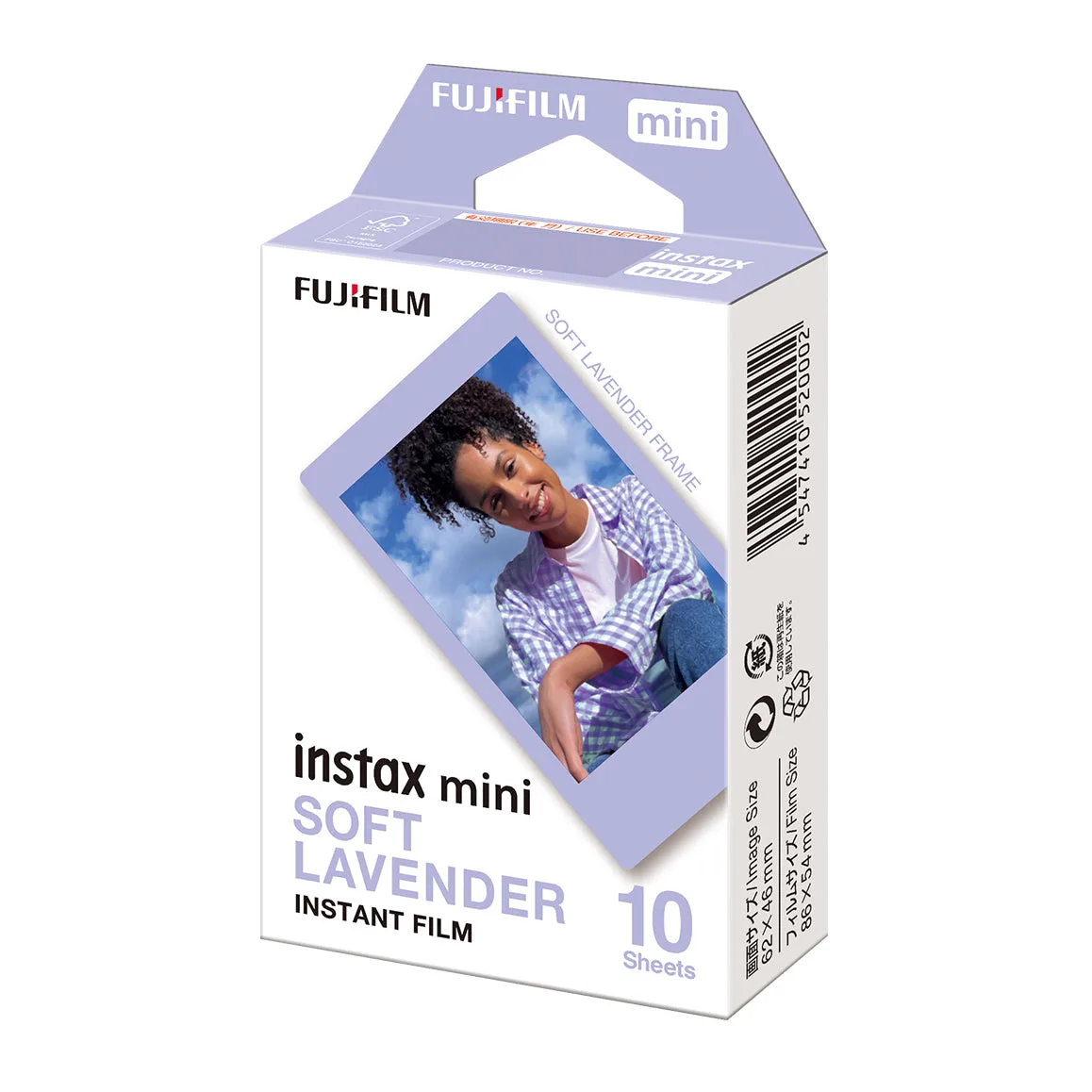
- Fujifilm Instax Mini Soft Lavender Instant Film - 10 Exposures: Fujifilm Instax Mini Soft Lavender Instant Film offers 10 exposures per pack and is designed for use with Instax Mini instant cameras. The film produces instant prints with a soft lavender color tone. This film's pastel tone is part of its appeal, so storing it properly keeps that color consistent. Its 10-exposure pack size means you can finish a pack before storage conditions become an issue.