Quick answer
Start with one silicone bowl and one food your baby already tolerates. Press the suction base flat against a clean, dry tray, offer a small scoop, and let your baby explore the bowl with hands or spoon. Keep portions tiny and expect more play than eating in the first week.
Set up the bowl before the food goes in
A silicone bowl only earns its keep if the suction actually holds. Wipe the tray or table with a damp cloth, dry it, then press the base down and twist slightly. If the surface is textured, dusty, or slick with oil, the seal will fail no matter how hard you push. A deeper well also helps here: runny foods stay put instead of climbing the sides, which gives your baby a better chance of scooping something up.
Pick a first food that suits a bowl
Bowls are built for soft, spoonable textures. Yogurt, oatmeal, mashed avocado, and thin purees sit low and stay in the well, so a spoon can sweep through them. Dry or crumbly foods slide around and frustrate a new self-feeder. If you are still in the puree stage, a bowl is the natural next step after a flat plate. If your baby is already grabbing at your spoon, the bowl becomes the practice zone for dipping and lifting.
Let your baby lead the first few sessions
Put a small amount in the bowl, hand over a spoon, and resist the urge to guide every motion. Your job is to keep the bowl anchored and the mood light. Most babies will bang the spoon, turn it over, and reach into the bowl with a fist before they ever bring food to their mouth. That is not failure; it is the hand-to-mouth mapping that comes before real self-feeding. End the session when interest fades, not when the bowl is empty.
Handle the throw-and-fling phase
Around eight to twelve months, many babies discover they can launch a bowl off the tray. A suction base buys you a few seconds, not a guarantee. If the bowl is being tested, keep your hand near the rim, offer a second spoon to redirect, and avoid turning it into a game by reacting big. If suction keeps failing on your tray, try a different spot or a smooth mat underneath. Some trays simply have too much texture for any suction bowl to grip well.
Clean and store it so it stays useful
Silicone bowls are usually dishwasher-safe on the top rack and easy to rinse by hand, but check the manufacturer's care instructions for your specific bowl. Food oils can leave a film that weakens suction, so wash the base with dish soap rather than just rinsing. Let it air dry fully before stacking. If the bowl starts to smell or feel tacky after repeated use, a bake in the oven at a low temperature is sometimes recommended for silicone, but only if the brand's care guide says so.
Step-by-step: introducing the bowl
- Clean and dry the tray: Wipe the feeding surface with a damp cloth and dry it completely before pressing the suction base down. A dry, smooth tray is the difference between a bowl that stays and one that slides. Checkpoint: press the base and try to lift the bowl gently. If it pops off, the surface is the problem, not the bowl.
- Add one familiar food: Spoon in two or three tablespoons of a food your baby has already eaten without issue. A new food plus a new bowl is two variables at once, which makes it hard to tell what went wrong if mealtime unravels. Checkpoint: if your baby refuses, stop and try again tomorrow with the same food.
- Offer the spoon, not the bite: Hand your baby a spoon and let them dip it into the bowl themselves. Pre-loading a spoon and handing it over is fine, but let them bring it to their mouth. Expect the first attempts to land on the cheek, the bib, or the floor. Checkpoint: one spoon for you, one for your baby, so you are not wrestling a single spoon back and forth.
- Keep portions small: A full bowl invites sweeping, dumping, and frustration. Start with a shallow layer and refill as needed. A deeper bowl holds runny foods better, but it does not need to be full to work. Checkpoint: if food is being painted rather than eaten, reduce the amount and try again in a few minutes.
- End on a calm note: Watch for turning away, arching, or dropping the spoon repeatedly. Those are signs the session is over. Wipe hands, remove the bowl, and move on without a cleanup battle. Next step: repeat the same routine at the next meal so the bowl becomes familiar, not novel.
Product facts
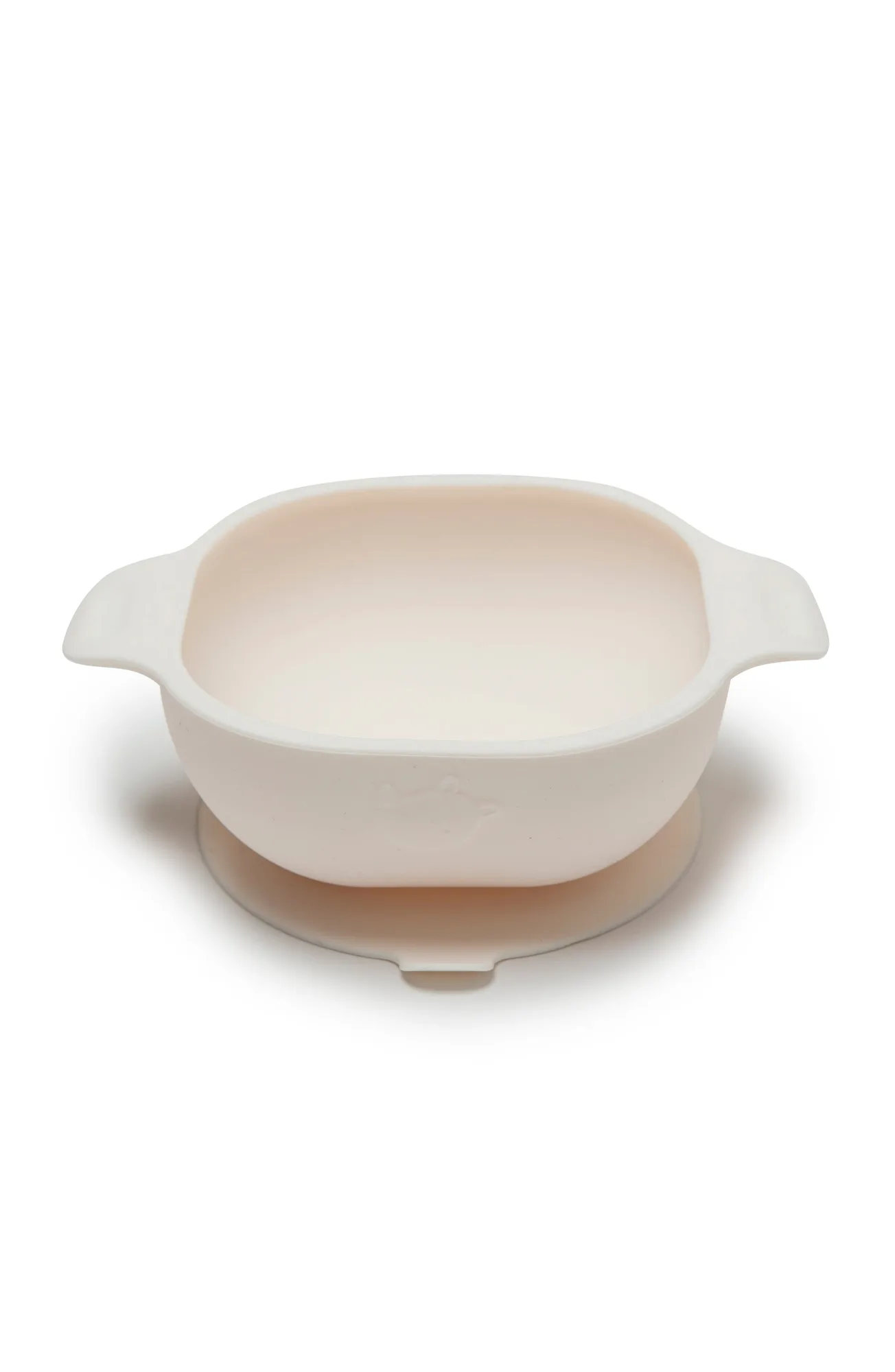
- Silicone Baby Bowl - Cream: A suction snack bowl in Cream with side handles and a wide suction base; a deeper well than the plates, for yogurt, oatmeal, and soup. The deeper well and handles make it easier for a baby to scoop soft first foods and for you to hold the bowl steady during practice.
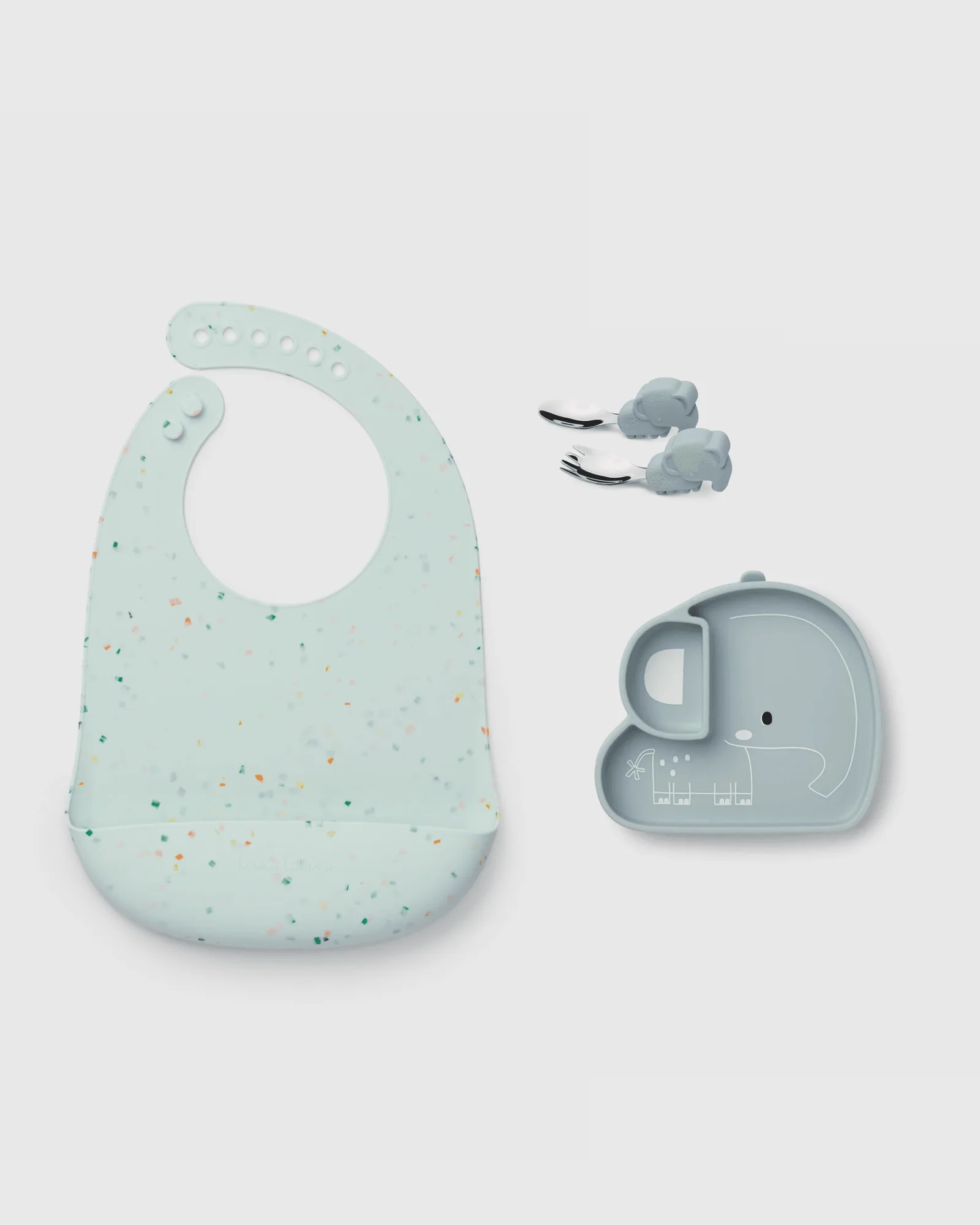
- Baby Learning & Feeding Bundle - Elephant: A coordinated feeding bundle in Elephant with a snack plate, silicone bib, and learning utensils. If you are starting solids from scratch, the bundle covers the bib and utensils you will reach for in the same session as the bowl.