Quick answer
The IQ Sorting House Brown is best for families who want one open-ended wooden toy that grows with a toddler instead of being outgrown in a month. If your child is around 18 months to 3 years and you have floor space for a small house-shaped sorter, it earns its place. If you need something that packs flat for travel or fits a tiny apartment shelf, choose a smaller Moover wooden toy instead.
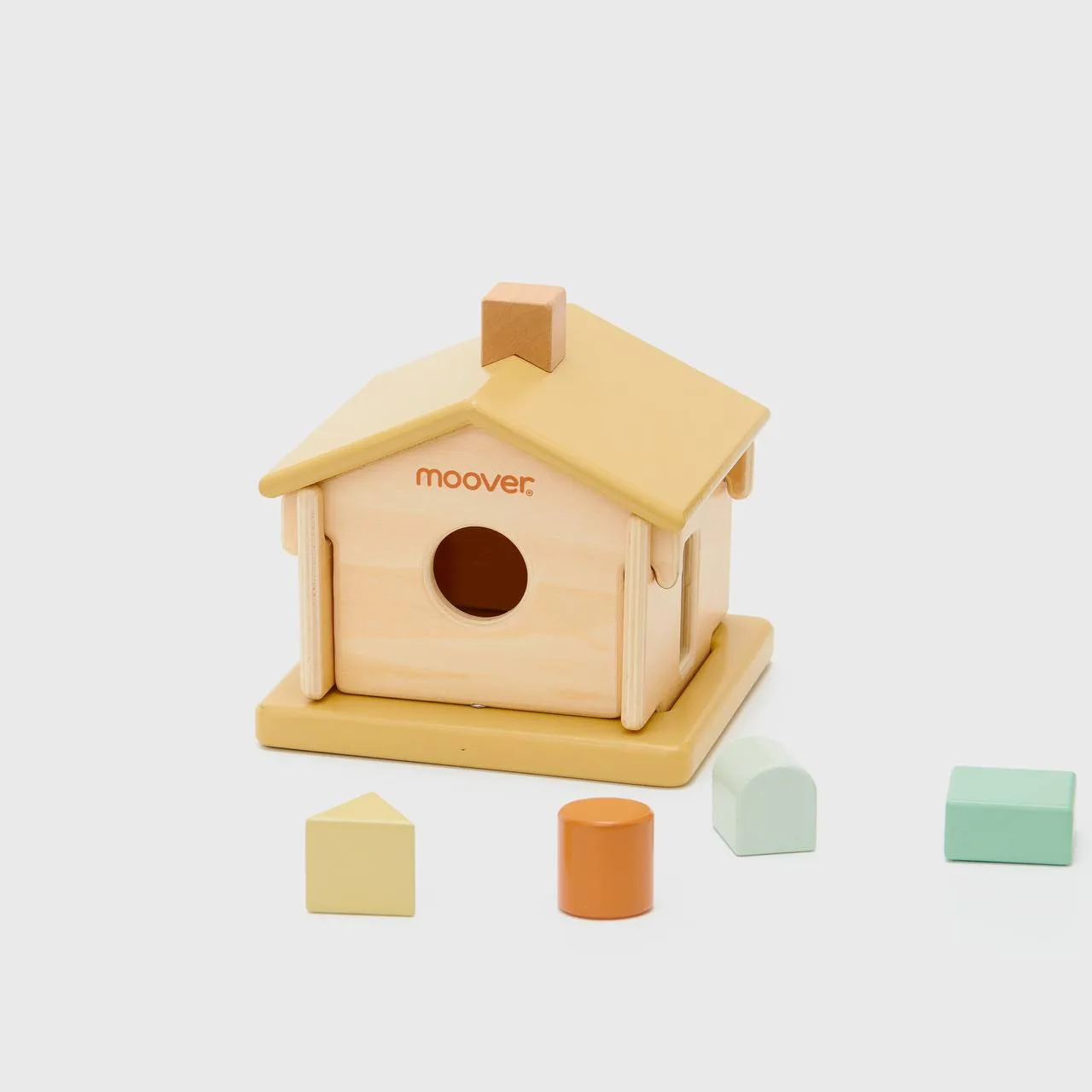
IQ Sorting House Brown
Most sorting toys do one job: drop the shape in the hole, then repeat until the child loses interest. A house-shaped sorter is different because it invites pretend play at the same time, which is why parents searching for toddler cognitive toys keep landing on this format.
This guide walks through the skills the IQ Sorting House Brown actually supports, what to check before buying, and how it compares with other wooden sorting options. It also covers the practical trade-offs, including space, age fit, and what to do when your child is ready for the next challenge.
What shape sorting house benefits look like in real play
A shape sorter builds fine motor control because the child has to rotate a piece in their fingers until it lines up with the opening. That hand-eye coordination work is quiet and repetitive, and it is exactly the kind of practice toddlers need before they start holding crayons or spoons with control.
The house format adds a second layer. Once the shapes are in, children often start narrating: someone is home, someone is sleeping, the door opens and closes. That shift from sorting to storytelling is where color shape recognition toys turn into language and role-play practice, and it is why the toy tends to stay in rotation longer than a flat puzzle board.
- Watch for the moment your child stops sorting and starts talking about the pieces, that is the play value widening.
- Keep the pieces in one shallow tray so cleanup stays easy and pieces do not migrate under the sofa.
How to judge a wooden sorting toy before you buy
Check three things: the size of the smallest piece, the finish, and how the lid or roof opens. Small pieces are a choking risk for children still mouthing toys, so a sorter aimed at 18 months and up should have chunky shapes. For finish, look for water-based, non-toxic paint, which is the standard on Moover wooden toys and matters because toddlers put everything near their mouths.
Then think about access. A sorter that requires lifting a heavy lid or twisting a tight knob will frustrate a two-year-old and end up on a shelf. The best version is one your child can open, fill, and empty without adult help, because independent repetition is what builds the skill.
- Pick pieces up and feel the edges, smooth, rounded corners matter more than a fancy finish.
- Test the opening mechanism yourself before handing it over, if it is stiff for you, it is too stiff for a toddler.
Where the IQ Sorting House Brown fits in a toy rotation
Sorting toys work best as part of a small rotation rather than as the only thing on the shelf. Keep it out for a week or two, then swap it for a ride-on or a doll stroller and bring it back later. The return usually triggers a new round of play because the child has new words and new ideas to bring to it.
If you already own a Moover Ride-on Bike 4 wheels Light green, the sorting house pairs well because one is active and one is seated and quiet. Alternating between them gives a toddler both gross motor and fine motor work in the same play session without either toy becoming stale.
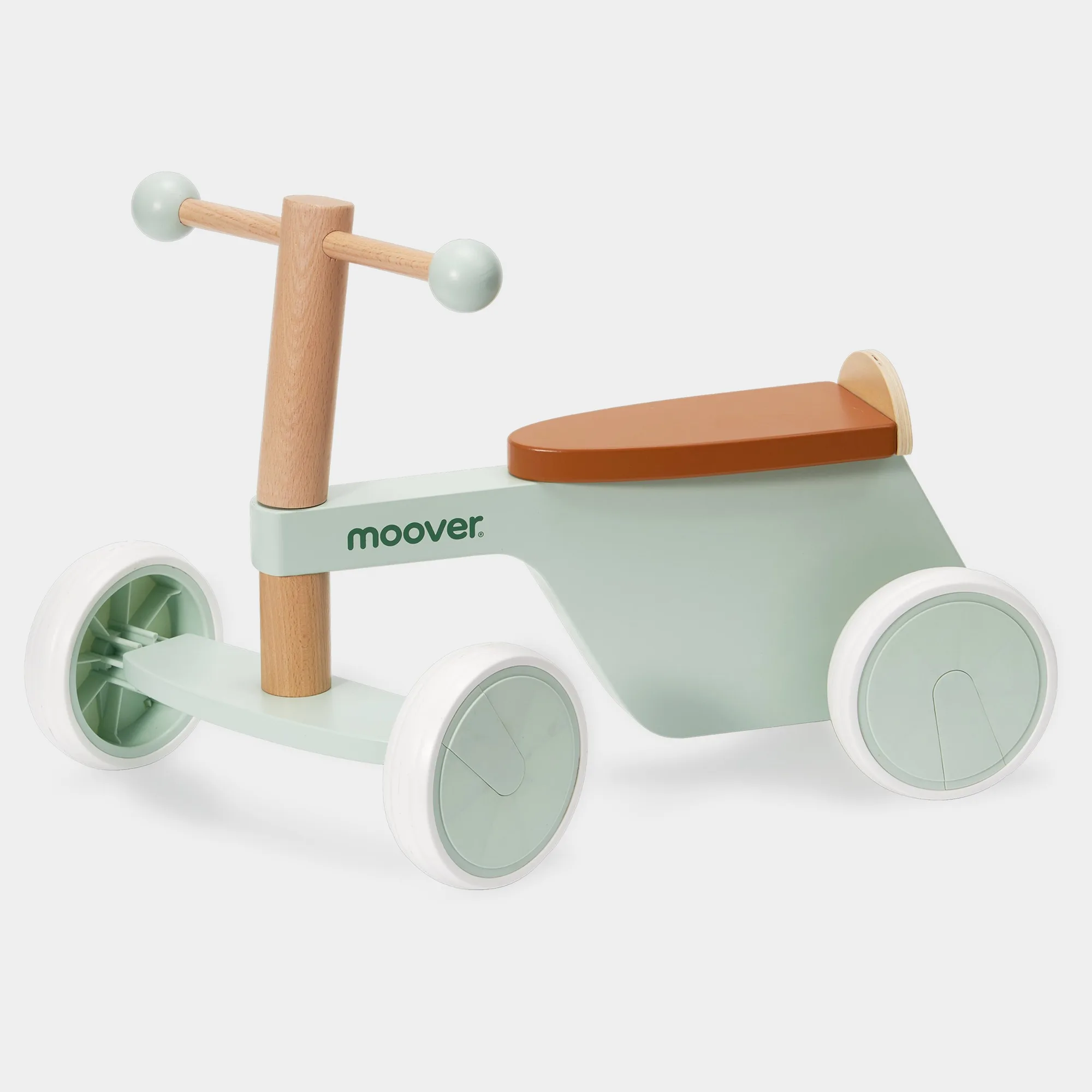
Ride-on Bike 4 wheels Light green
- Store pieces in a cloth bag rather than a sealed bin so a child can help tidy up independently.
- Rotate every 10 to 14 days, not every day, so the toy has time to be fully explored.
Decision rules for choosing a wooden sorting toy
- If your child is under 18 months: Skip the IQ Sorting House Brown and start with a larger, simpler wooden toy with no removable small parts. Mouthing is still the main way this age explores, so piece size is the deciding factor. Age floor first, features second.
- If your child is 18 months to 3 years: Choose the sorting house. This is the window where shape matching, color naming, and early pretend play all develop at once, and a house-shaped sorter supports all three. This is the sweet spot for the purchase.
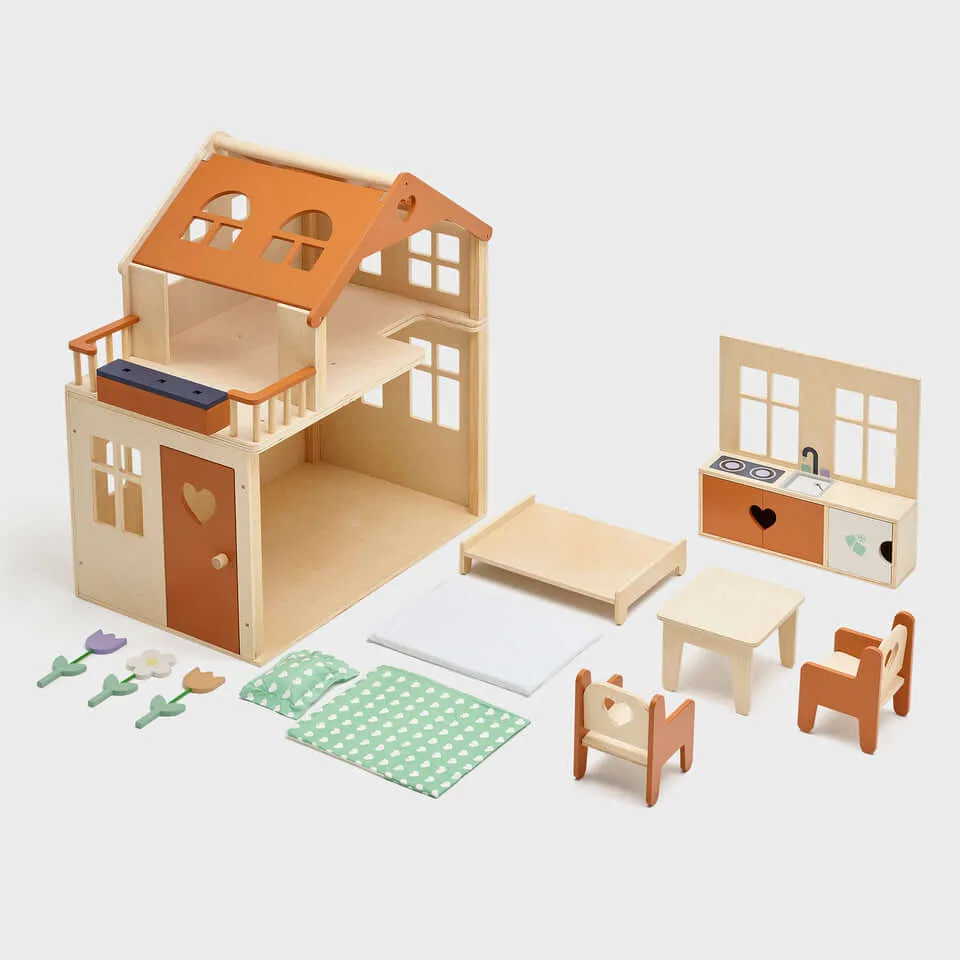
- If your child is already 3 or older: Look at the Doll House - Brown instead. Its moving oven, fridge, and staircase give an older child the mechanical cause-and-effect that a basic sorter no longer provides. Match the toy to the current skill, not the birthday.
- If floor space is tight: Measure the footprint before ordering and compare it with your existing toy storage. A sorter that has to live in a closet will not get used, no matter how good it is. Storage decides usage more often than price does.
Product facts worth knowing
- Ride-on Bike 4 wheels Light green: Solid wood with environmentally-friendly, water-based, non-toxic paint, designed for 18+ months to build motor skills and encourage role-play, and it operates with no noise. It is the active counterpart to a seated sorting toy, and the quiet operation means it works in apartments where noise carries.
- Doll House - Brown: Birch plywood with water-based, non-toxic paint, for 36 months and up, with moving parts including an oven, fridge, and staircase, and assembly required at 65 x 43 x 74 cm. It is the natural next step once a child has outgrown a simple sorter, but the 36-month age floor and assembly mean it is not a substitute for a toddler sorter.
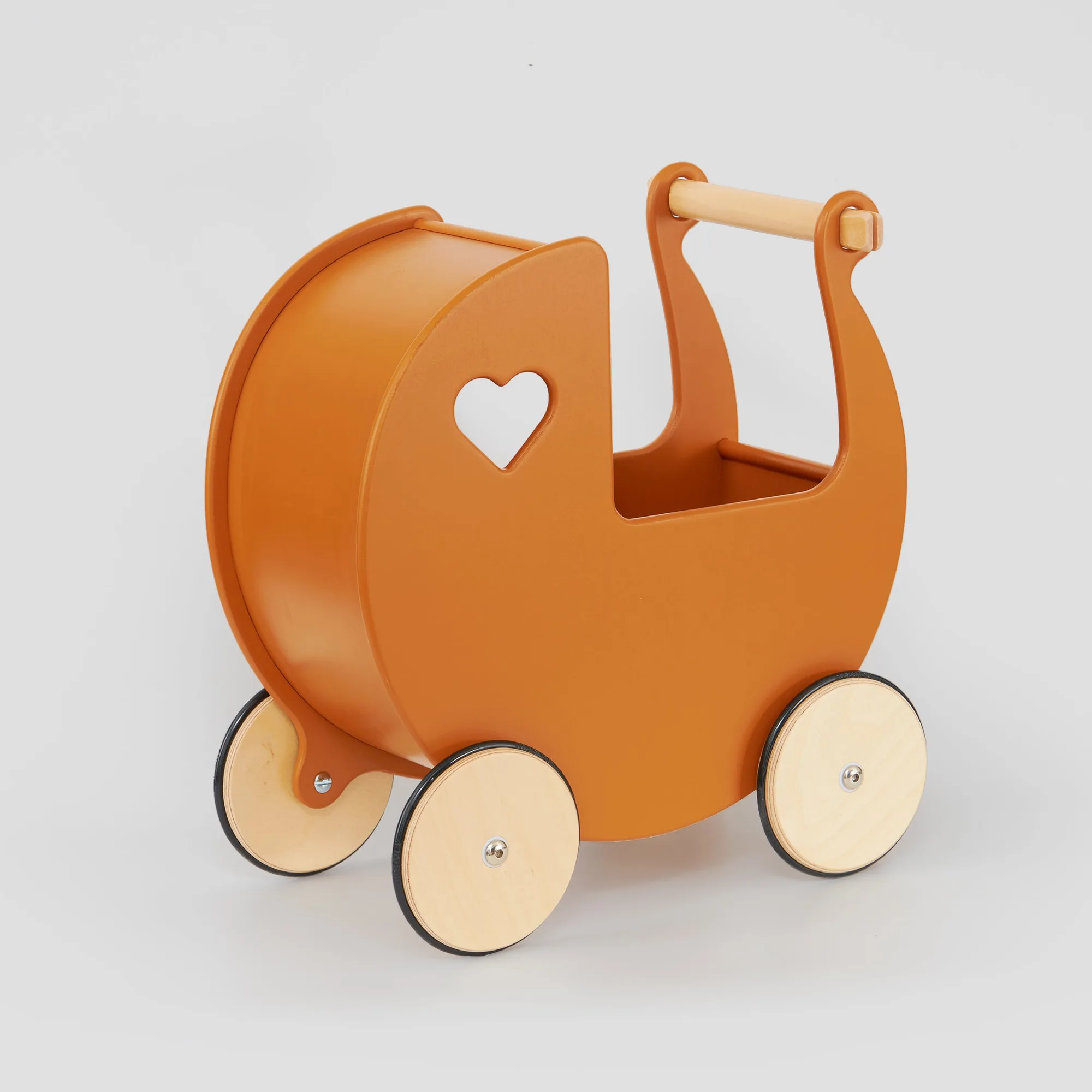
- Traditional Doll Stroller Brown: Part of the Moover Classic line of wooden mobility toys, Danish-designed, and it ships with free bedding. If your toddler's play is already leaning toward caretaking and role-play rather than sorting, a stroller may hold attention longer than a shape sorter.
Who the IQ Sorting House Brown is right for
Best for
- Families with a toddler between 18 months and 3 years who want one toy that covers sorting, color naming, and pretend play.
- Parents who prefer wooden toys with water-based, non-toxic paint and a calm, quiet play option alongside active ride-on toys.
- Households that already rotate toys and want a sorter that returns to the shelf with fresh appeal.
Not for
- Children under 18 months who still mouth small pieces.
- Families with very limited floor or shelf space who need a compact, packable toy.
- Older preschoolers who have moved past shape matching and need moving parts and building play instead.
The IQ Sorting House Brown earns its place when the age and the play space line up. Buy it for the 18-month to 3-year window, keep it in a rotation rather than out all the time, and plan your next step toward a Doll House - Brown or a ride-on once sorting stops being the challenge.