Quick answer
For athletes, iron bisglycinate helps maintain healthy red blood cells and oxygen transport. Start with 18–27 mg daily, ideally taken on an empty stomach with vitamin C, and monitor your levels with a blood test every 3–6 months.
Why athletes need more iron
Iron is essential for forming hemoglobin, the protein in red blood cells that carries oxygen to working muscles. During intense training, athletes lose iron through sweat, foot-strike hemolysis, and increased red blood cell turnover. The CDC notes that up to 16% of some populations are iron deficient, and female athletes, endurance runners, and vegetarians are at higher risk.
Iron bisglycinate vs. other forms
Iron bisglycinate is a chelated form that is gentle on the stomach and has high bioavailability. Unlike ferrous sulfate, it is less likely to cause constipation or nausea, making it a practical choice for daily use during training cycles.
How to take iron bisglycinate for athletic performance
- Step 1: Confirm your need with a blood test: Before supplementing, ask your doctor for a ferritin and complete blood count (CBC) test. Low ferritin (below 30 ng/mL) indicates depleted iron stores even if hemoglobin is normal. Common mistake: assuming you are deficient without testing; excess iron can be harmful.
- Step 2: Choose the right dosage: For most athletes, 18–27 mg of elemental iron per day is a safe starting point. Female athletes or those with confirmed deficiency may need up to 60 mg daily, split into two doses. Common mistake: taking the entire dose at once if you have a sensitive stomach; splitting doses improves tolerance.
- Step 3: Time it correctly: Take iron bisglycinate on an empty stomach (at least 1 hour before or 2 hours after a meal) to maximize absorption. Pair it with a source of vitamin C, like a glass of orange juice, to enhance uptake. Common mistake: taking iron with coffee, tea, or calcium supplements, which block absorption.
- Step 4: Monitor and adjust: Re-test your iron levels every 3–6 months while supplementing. If ferritin normalizes, reduce the dose or switch to maintenance (18 mg every other day). Common mistake: continuing a high dose indefinitely without re-testing, which can lead to iron overload. If you experience constipation, try a gentler form like iron bisglycinate or reduce the dose.
Product facts
-
Iron Bisglycinate: Iron is essential to the formation and function of healthy red blood cells. Adequate dietary iron is required for blood cells to efficiently transport oxygen throughout the body. For athletes, efficient oxygen delivery directly impacts endurance, recovery, and overall performance.
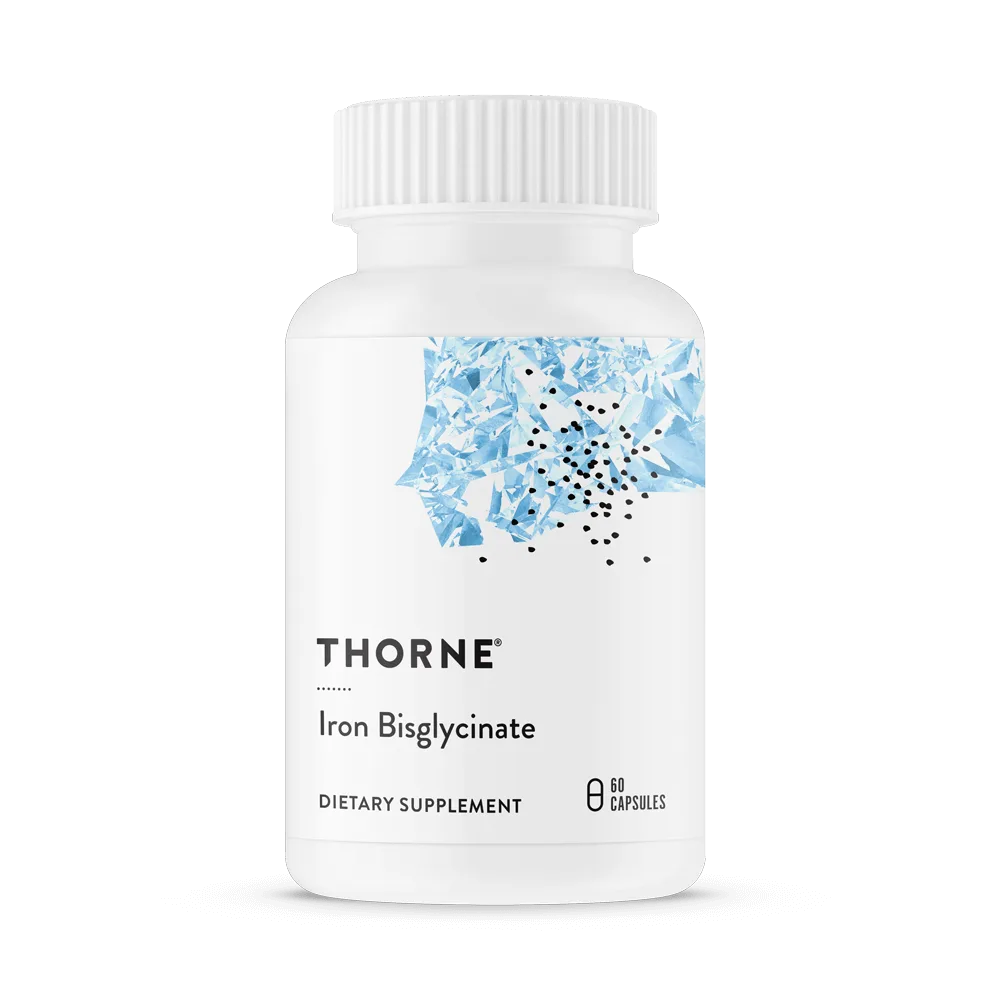
Iron Bisglycinate