Quick answer
Choose iron gummies if your priority is supporting iron intake in a form designed to be easier on digestion, especially if you have heavy periods, an iron deficiency, or high training loads. Choose vitamin D gummies if your priority is covering the gap left by limited sun exposure and few dietary sources, particularly in autumn and winter. If both apply, they are separate nutrients with separate jobs, so you can take them on the same daily schedule rather than treating it as an either-or decision.
What each gummy is actually formulated to do
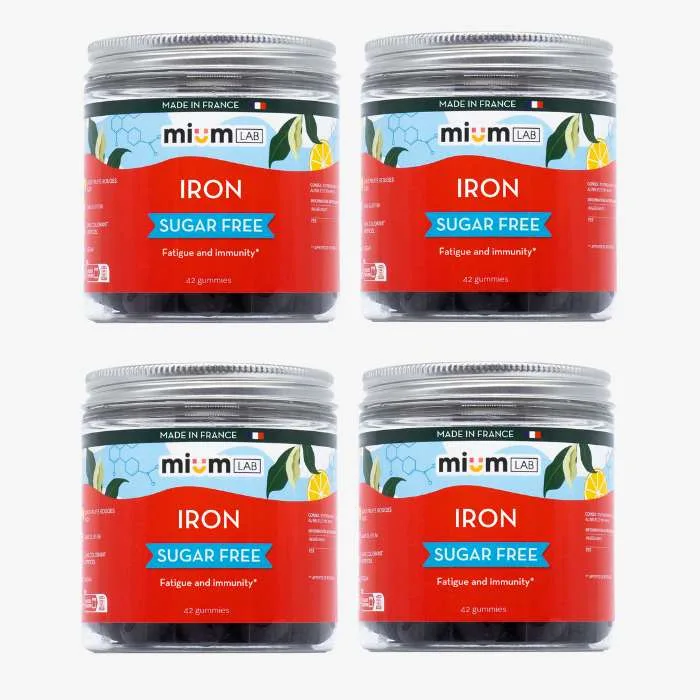
Iron gummies from Mium Lab are built around micro-encapsulated ferric saccharate, a highly dosed form of iron that uses double protection to preserve quality and make it easier to digest. That formulation choice matters because the most common reason people abandon iron supplements is digestive discomfort, not forgetting to take them. The catalog lists the intended audience directly: people with iron deficiency, women with heavy periods, and sportspeople with increased iron needs.
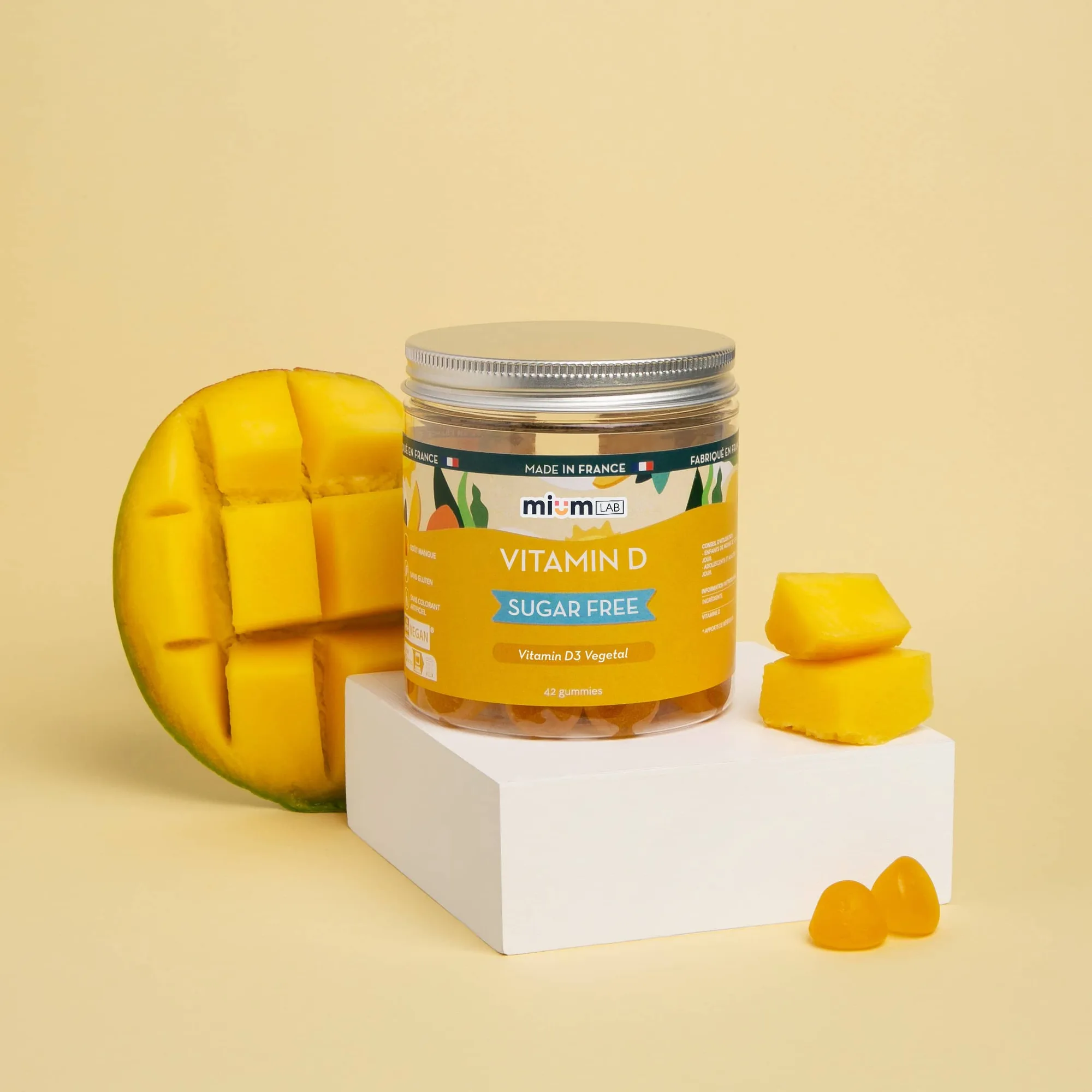
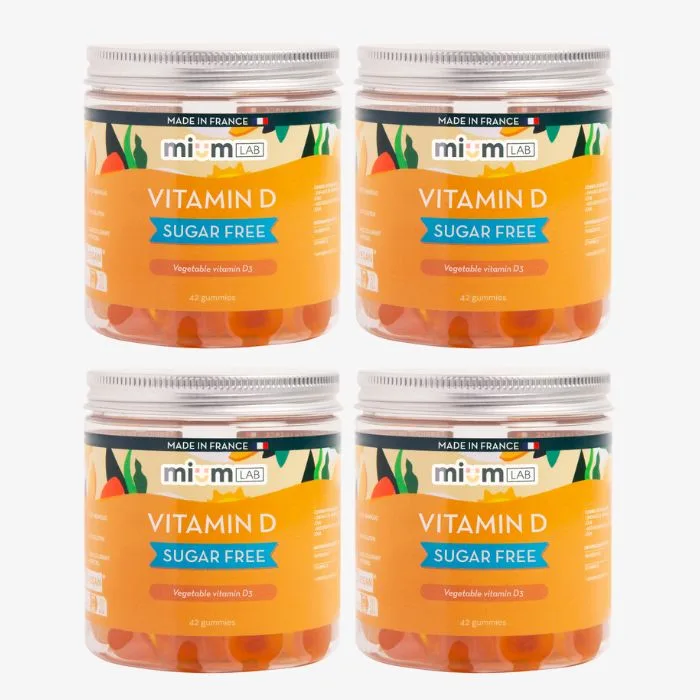
Vitamin D gummies take a different route. The catalog states that 80% of vitamin D needs are covered by sun exposure through the skin and the remainder by food, and that very few foods contain any. Supplementation is described as essential to avoid deficiencies, particularly in autumn and winter. The gummies are sugar-free, plant- and vitamin-based, and come in a natural mango flavour at 2 gummies per day.
How the daily routine compares
Both products use the same simple rhythm: 2 gummies per day at any time of day, for at least 3 weeks. That consistency is the main practical advantage of a gummy format over capsules or tablets, because there is no water requirement and no timing puzzle to solve. If you already take a kids multivitamin or another gummy in the household, the routine overlaps neatly.
The difference shows up in pack sizing. Iron gummies are available as a super pack of 4 x 21 days, and vitamin D gummies come in both a single 21-day size and a 4 x 21-day super pack. The super pack format reduces how often you need to reorder, which is useful if you are committing to a multi-week routine rather than testing whether a gummy fits your day.
Where the trade-offs actually land
Iron is the more targeted choice. Its benefits are tied to a specific need, and the catalog names that need openly: deficiency, heavy periods, and increased demand from sport. If none of those apply to you, iron is not a general-purpose daily gummy, and taking it without a reason adds cost and routine without a clear purpose.
Vitamin D is the broader seasonal choice. Because sun exposure and food cover most but not all of the need, the gap widens in autumn and winter. That makes vitamin D gummies a reasonable default for people who spend most of the day indoors or live somewhere with limited winter daylight. The trade-off is that vitamin D will not address iron-related fatigue, and iron will not address a sunlight-driven vitamin D gap.
Can you take both?
Yes, and there is no conflict described in the catalog facts. They are different nutrients with different roles, and both use the same 2-gummies-per-day, any-time-of-day instruction, so stacking them is a scheduling question rather than a compatibility one. The practical caution is simpler: more gummies is more daily commitment, so only add the second product if you can keep the routine going for at least 3 weeks.
If you are unsure which one you actually need, start with the one that matches a specific signal in your life. Heavy periods or a diagnosed deficiency point to iron. Indoor work, dark winters, or low dietary intake point to vitamin D. Guessing between them is less useful than matching one to a real reason.
Iron vs. vitamin D: the trade-offs
- Targeted need vs. seasonal gap: Iron gummies address a specific, named need such as deficiency, heavy periods, or increased athletic demand. Vitamin D gummies address a gap created by limited sun exposure and few dietary sources, which widens in autumn and winter. Pick iron for a known need, vitamin D for a seasonal or lifestyle gap.
- Digestive formulation vs. flavour and format: Iron uses micro-encapsulated ferric saccharate with double protection for easier digestion. Vitamin D is sugar-free, plant- and vitamin-based, and mango-flavoured. If digestion has stopped you before, the iron formulation is the relevant difference; if taste and sugar content drive compliance, vitamin D is the easier daily habit.
- Single size vs. super pack flexibility: Vitamin D gummies come in a 21-day size and a 4 x 21-day super pack. Iron gummies are listed as a super pack of 4 x 21 days. Test with a single 21-day size when you are unsure; commit to a super pack once the routine has stuck.
- Stacking both: Both use 2 gummies per day at any time of day for at least 3 weeks, so there is no scheduling conflict in the catalog facts. Add the second product only if you can sustain the routine for the full 3 weeks.
Product facts
- SUGAR-FREE IRON GUMMIES | Super Pack | 4 x 21 days: Formulated with iron in the form of highly dosed micro-encapsulated ferric saccharate, with double protection to preserve quality and make it easier to digest. The formulation targets the main reason people stop taking iron: digestive discomfort. If you have abandoned iron before, this is the detail worth checking.
- SUGAR-FREE IRON GUMMIES | Super Pack | 4 x 21 days: Intended for people with iron deficiency, women with heavy periods, and sportspeople with increased iron needs. This is a targeted supplement, not a general daily gummy. If none of these groups describe you, vitamin D or a multivitamin is the more sensible starting point.
- SUGAR-FREE VITAMIN D GUMMIES | Sustains the immune system | 21 days: Sugar-free, plant- and vitamin-based vitamin D gummies in a natural mango flavour, at 2 gummies per day at any time of day. Sugar-free and mango-flavoured makes daily compliance easier, and the any-time dosing removes the timing question entirely.
- SUGAR-FREE VITAMIN D GUMMIES | Super Pack | 4 x 21 days: Available as a super pack of 4 x 21 days. The super pack suits a committed multi-month routine and cuts reorder frequency, while the single 21-day size is better for testing fit first.
Which one fits you
Best for
- Women with heavy periods who want to support iron intake without digestive problems
- People with a diagnosed iron deficiency or increased iron needs from sport
- Anyone who spends most of the day indoors or lives with limited winter daylight and wants vitamin D coverage
- Households that already run a gummy routine and want a consistent 2-per-day format
Not for
- People without a specific iron need who are looking for a general daily gummy
- Anyone expecting vitamin D gummies to address iron-related fatigue
- Children under 4, who should use the kids multivitamin gummies instead
- People who cannot commit to a 3-week minimum routine