Quick Answer
Irrigation saline and sterile saline are essentially the same when used for wound cleaning: both are sterile 0.9% sodium chloride solutions. The main difference is labeling and intended use—irrigation saline is specifically marketed for cleaning wounds, while sterile saline may have broader applications. For minor cuts and abrasions, either works safely, but always check the label to ensure it's sterile and not for injection.
Why the Labels Differ
The terms 'irrigation saline' and 'sterile saline' are often used interchangeably, but the label matters. Irrigation saline is specifically intended for wound cleaning and irrigation, meaning it's sterile and free of additives. Sterile saline, on the other hand, may be marketed for multiple uses, such as moistening dressings or cleaning medical equipment. Both are 0.9% sodium chloride, but the intended use is clearly stated on the packaging.
Key Similarities and Differences
Both irrigation and sterile saline solutions are sterile, contain 0.9% sodium chloride, and are not for injection. They are used to clean minor cuts, burns, abrasions, and skin irritations. The main difference is labeling: irrigation saline is specifically designed for wound irrigation, while sterile saline may be used for other purposes like moistening dressings. Always check the label to ensure it's sterile and suitable for your intended use.
How to Choose Between Irrigation and Sterile Saline
- For wound cleaning: Use irrigation saline if the label specifically says 'irrigation'—it's sterile and designed for flushing out debris from cuts and scrapes. Sterile saline also works, but ensure it's labeled for wound care. Check the label for 'sterile' and 'not for injection' before using.
- For moistening dressings: Sterile saline is ideal for moistening absorbent wound dressings to keep them from sticking. Irrigation saline can also be used, but it may be more expensive if you only need to dampen a dressing. Choose sterile saline for dressing care to save money if you're not irrigating wounds.
- For sensitive skin or allergies: Both irrigation and sterile saline are free of antimicrobials and other additives, making them safe for sensitive skin. However, if you have a known allergy to any ingredient, check the label carefully. Always read the ingredient list, even for sterile solutions.
Product Facts
-
Irrigation Sterile Saline Solution 0.9%. 100ml Bottle: McKesson Medical Saline is used in hospitals and doctors offices nationwide. It is a sterile 0.9% sodium chloride solution in a 100 mL bottle, comparable to Medline Sterile Normal Saline. This means you're getting a hospital-grade sterile saline solution that's safe for cleaning minor wounds and moistening dressings, without any added antimicrobials or substances.
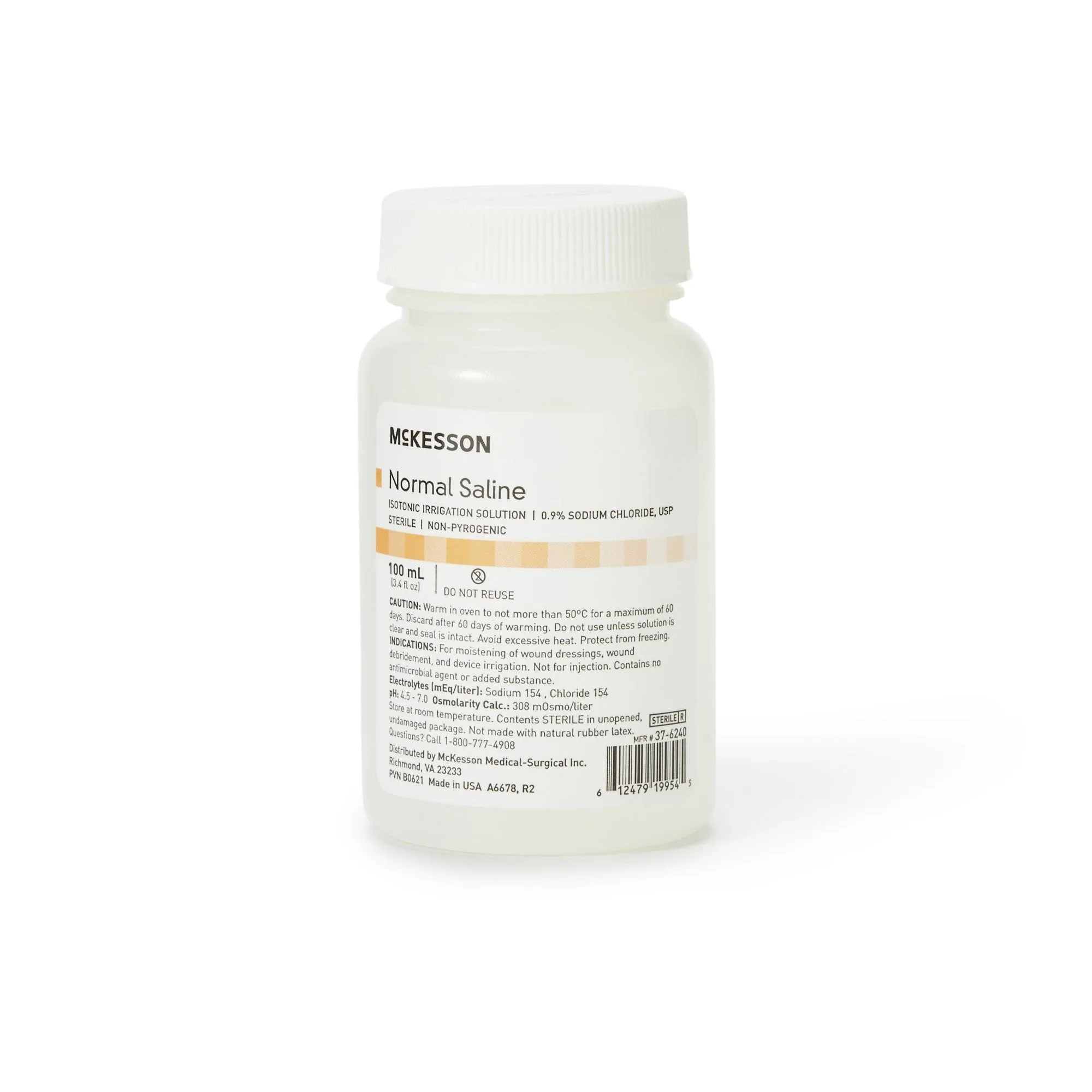
Irrigation Sterile Saline Solution 0.9%. 100ml Bottle
Which Should You Choose?
Best for
- Home first aid kits for cleaning minor cuts and scrapes
- Moistening wound dressings to prevent sticking
Not for
- Injection or any medical procedure requiring sterile irrigation of deep wounds—use a prescription solution instead