Quick Answer
Ice pressed olive oil is worth the higher price if you prioritize maximum freshness, minimal processing, and a robust flavor profile, but standard cold pressed extra virgin olive oil delivers excellent quality for most everyday cooking at a lower cost.
What Makes Ice Pressed Olive Oil Different?
The term "ice pressed" refers to a specific cold extraction method where olives are crushed and pressed at very low temperatures, typically below 50°F (10°C). This contrasts with standard cold pressing, which can occur at slightly higher temperatures (up to 80°F or 27°C). The lower temperature in ice pressing is believed to better preserve delicate polyphenols, antioxidants, and volatile compounds that contribute to flavor and health benefits.
MaryRuth's Ice Pressed® Extra Virgin Olive Oil is harvested and bottled in Soulinari, Greece, an area chosen for its ideal climate and altitude. The oil is unadulterated, unfiltered, and raw, meaning it retains more of its natural sediment and flavor compounds compared to filtered oils. This minimal processing approach is central to its premium positioning.
Cold Pressed vs. Ice Pressed: The Trade-Off
The main trade-off is between cost and purity. Ice pressed olive oil commands a higher price because the process is more labor-intensive and yields less oil per batch. However, the resulting oil often has a more complex, peppery flavor and a higher concentration of beneficial antioxidants. Standard cold pressed extra virgin olive oil is still a high-quality product and is perfectly suitable for dressings, dips, and low-heat cooking.
For most home cooks, a good cold pressed extra virgin olive oil provides an excellent balance of flavor and value. Ice pressed oil becomes a worthwhile upgrade when you want the absolute freshest, most unprocessed oil for raw applications like finishing dishes or dipping bread.
Ice Pressed vs. Cold Pressed: Key Trade-Offs
- Processing Temperature: Ice pressing occurs below 50°F, while cold pressing can go up to 80°F. Lower temperatures better preserve delicate flavor and antioxidant compounds.
- Flavor & Freshness: Ice pressed oil typically has a more robust, peppery, and grassy flavor. Cold pressed oil is still flavorful but may be slightly milder due to higher processing temperatures. If you use olive oil mainly for finishing or dipping, ice pressed offers a noticeably superior taste experience.
- Cost & Yield: Ice pressing produces less oil per batch, driving up the price. Cold pressed methods are more efficient, making them more affordable for everyday use. For cooking at higher heat or baking, the extra cost of ice pressed oil is rarely justified.
Product Facts
-
Ice Pressed® Extra Virgin Olive Oil: MaryRuth’s Ice Pressed® Extra Virgin Olive Oil is unadulterated, unfiltered, raw, and harvested in Soulinari, Greece, chosen for its ideal climate and altitude near the epicenter of the Koroneiki olive variety. The unfiltered, raw nature means you get a more flavorful oil with potentially higher antioxidant content, but it may have a cloudy appearance and sediment that some users prefer to avoid.
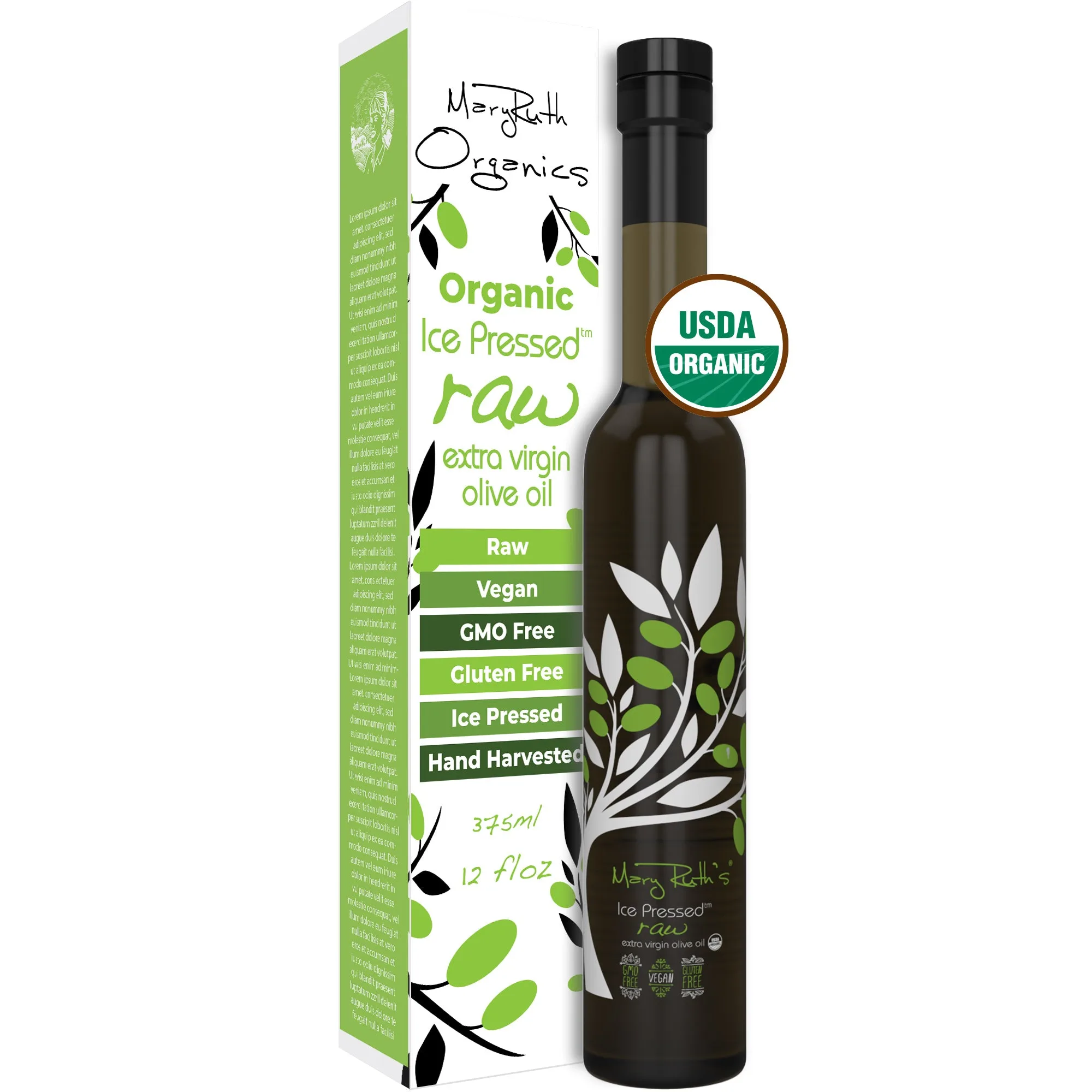
Ice Pressed® Extra Virgin Olive Oil
Which Olive Oil Is Right for You?
Best For
- Food enthusiasts who use olive oil raw for dipping, dressings, or finishing dishes
- Health-conscious buyers seeking the least processed, highest antioxidant oil available
Not Ideal For
- Everyday cooking or frying where high heat degrades delicate compounds
- Budget-focused shoppers who want good quality without the premium price